Spying on the South–Olmsted and Horwitz in the South 160 years apart

Spying on the South:  An Odyssey Across the America Divide

By Tony Horwitz

Published 2019

Read Oct 2025

Tony Horwitz was a Pulitzer Prize winning journalist who said “I love the past and the present in equal parts.  If I’m doing only history, I feel restless to get out on the road and explore the contemporary scene.  And if I’m focusing only on the present day, I want to pause and duck into an archive and flesh out the history of what I’m seeing.” (1)

In this book, Tony Horwitz documents his travels along the path Fredrick Olmsted took in 1853-1854 while reporting for the brand-new publication, The New York Times.  Horwitz purposefully travels via similar means where possible—a barge on the Ohio River, a steamboat on the Mississippi River, mules in Texas—and to visit the same towns and plantations that Olmsted visited where possible.   

We learn about Fredrick Olmsted and why he was taking this journey.  Olmsted, who had dallied in a variety of occupations without settling on any of them, wanted, in part, to see for himself what slavery was really about and to learn if it might be possible for the north and south to peacefully settle their differences by dealing with factual accounts.  Simiarly Horwitz was interested in seeing the south firsthand in current times to better understand it. 

Horwitz’s compares and contrasts what he sees on his trip with Olmsted’s which happened 160 years earlier.  The trip along the Mississippi was especially interesting to this reader.  The steamboat that took Horwitz south was a river cruise ship vs a working boat carrying Olmsted which was taking south product—both material and human.  Horwitz’s steamboat cruise stopped at plantations that were fully working in Olmsted’s day and are now tourist stops that gave a glimpse of the history Olmsted saw. 

Olmsted and Horwitz each spend quite a bit of time in Texas, which is pertinent since it is so large and, as Horwitz notes, quite diverse.  His ability to speak about what he’s witnessing in the present and to also give pertinent historical information was quite engaging for this reader.  His observations about the parallels between modern-day concerns about migration across the southern border of the US and the concerns Mexicans had when whites from the east began migrating into Texas are quite relevant and provide an interesting perspective of that part of Texas and on the current migrant situation.  

Both men were quite adept at engaging with people they met during their travels.  Olmsted’s previous foray into farming and working on a ship likely gave him conversation starters.  Horwitz was willing to participate in local activities including mud-racing which surely enabled people to warm up to him.  And he was good at having a beer or two to lubricate discussions.  Olmsted’s views of the south evolved over the course of his travels and so did Horwitz’s — because of their close interactions with the people they met.  

Horwitz’s journey occurred during the run-up to the 2016 election, a time when persistent differences between “red” and “blue” were beginning to form into major divisions.  This interestingly parallels the time of Horwitz’s journey when the division between north and south regarding slavery policies were beginning to boil over.  As we progress through a second Trump administration, it seems an especially interesting time to read this book and gain some understanding of the way people think in this part of the country now and 160 years ago.  Is it different?  Read the book to find out!

The last chapter gives a look at Olmsted’s life post this trip and helps us understand how he came into the profession for which most of us remember him—as a designer of many parks throughout the east.  We learn he architected well beyond these parks as well.

This is a great book for discussion as demonstrated by this reader’s book discussion group recently.  The discussion reinforced some things this reader learned while reading and introduced additional perspectives and learnings as well. 

The photo is Olmsted in 1857
China Dolls–historical fiction from Lisa See

China Dolls

By Lisa See

Published 2014

Read June 2025

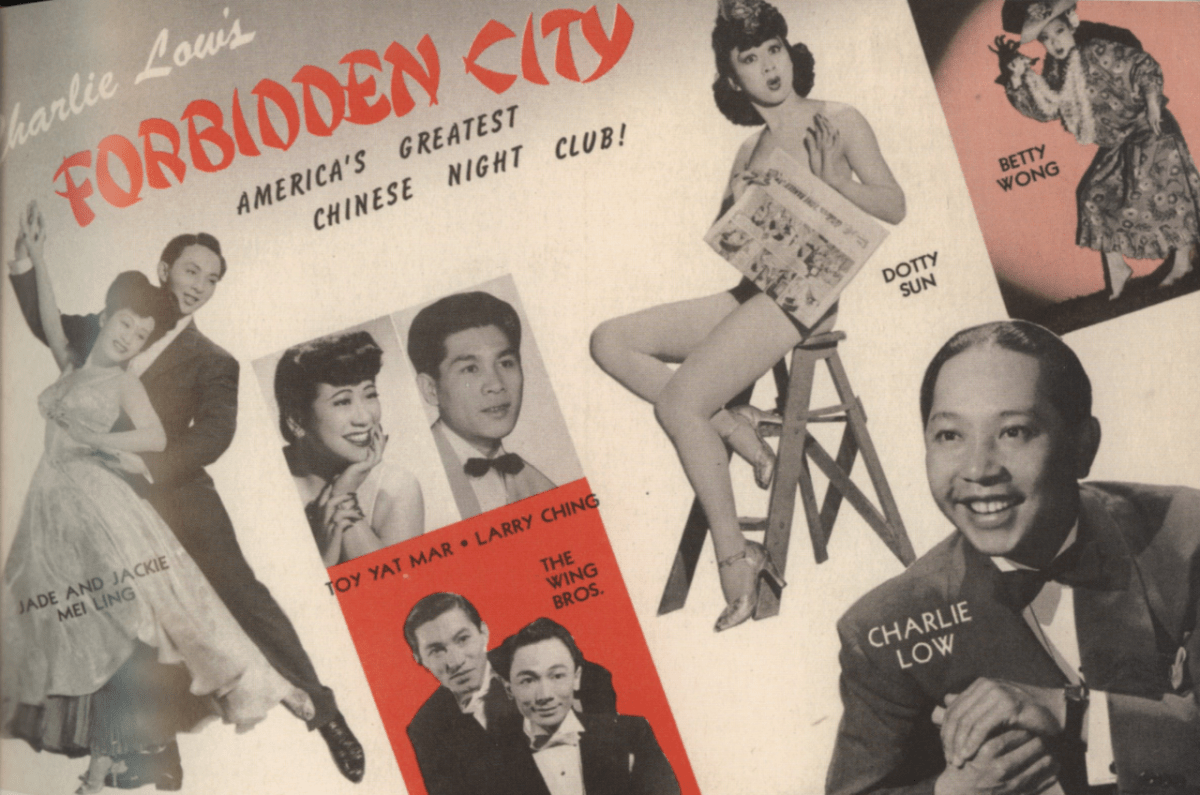
This book is classified as historical fiction which is appropriate, in this reader’s view, and the type of historical fiction that this reader likes.  There are real elements, including the Chinese American nightclub in San Francisco, The Forbidden City, and the internment camps for Japanese Americans during World War II.  We learn about these through a fully fictional story that focuses on the fictional characters, their hopes and dreams of stardom, and their relationships, rather than telling the story of a real historical figure. 

Grace is a Chinese American person from Plain City, Ohio.  Her family was the only Chinese American family in the small town and surrounding area, so she was not particularly knowledgeable about Chinese culture.  She was a star of the dance studio in her small town, and she dreams of becoming a star.  Her mother helps her leave town unbeknownst to her abusive father.  She arrives in San Francisco hoping to land a role in the 1939 Golden Gate International Exposition ( a real thing), but she fails.  She finds her way to Chinatown and asks for help from a stranger to find a nightclub she might work for.

Helen is the stranger Grace encountered.  She is from a strict and wealthy Chinese American family and lives in the family compound.  Despite her family’s disapproval she manages to get hired at The Forbidden City with help from Grace and Ruby.

Ruby is an aspiring dancer who is more streetwise than either Grace or Helen.  It turns out that Ruby is an American citizen not of Chinese ancestry but rather Japanese.  She hides this as The Forbidden City only hires Chinese and Chinese Americans. 

Narration flows across the three characters in separate chapters and tells of their hopes and dreams, successes and failures, and secrets as they progress their careers during the days of Chinese American nightclubs in San Francisco and while they are dancers at the successful Forbidden City nightclub.  World War II has substantial impact on the city and on these characters as citizens and visitors alike with Japanese background are herded into internment camps.

While the book gives an informative view of this time of Chinese nightclubs in San Francisco and the barriers and possibilities for success in show business for Chinese Americans, it is also a well written story about friendship and the impact of being in career competition with your friends.  It also gives a view of the impact of WWII and the internment camps from the view of these citizens, not all of whom are accepted to be equal citizens of the US.  In addition, it gives us the perspective of these citizens as they experience discrimination as Chinese Americans.  Helen’s character provides us a view of the challenges of honoring one’s cultural values which trying to be a member of the broader American culture.

This reader appreciated the extensive research done by the author to be able to draw a good picture of this period for this particular slice of the population.  This reader was fascinated that the while the Forbidden City touted itself to be an exotic showcase of 100% Chinese performers and was 100% staffed by people of Chinese descent, its audience was about 100% white, including a high fraction of military personnel on shore leave. 

This reader will seek other Lisa See novels to continue to explore historical times and places she chooses to show her readers. 

Foregone–compelling story from Russell Banks

Foregone

By Russell Banks

Published 2021

Read Aug 2025

This reader took a break from Louise Penny this summer and read a book by an author that has been highly reliable for this reader to provide an interesting read.

Leonard Fife entered Canada from the US in 1968, presumably to avoid the draft.  He became a documentary film maker and taught this subject at the graduate school level.  His wife, Emma, was one of his students.  She left her husband and children to be with him, and she has been with him as a producer for many years. Leonard is now quite ill and in hospice in his home.  He has invited another of his students, Malcolm, to make a documentary film about him.  The present day story line evolves over a few days of filming.

Malcolm is hoping Leonard will talk about the making of some of his great documentaries, but Leonard has other ideas.  He doesn’t answer the questions Malcolm wants him to address.  Rather, he focuses on telling his life story from the beginning. It’s not clear whether Leonard is going to make it more than a day.  Each time there is a pause, his nurse requests he take a rest.  Emma wants him to stop as well both because what he is saying isn’t pretty and because she too knows he needs to rest.  She threatens to leave the room, but he insists she stay.  He says he is telling the story for her. Leonard wants Emma to know his story.  Maybe she doesn’t want to know his whole story, but Leonard doesn’t want to die without her knowing it.

Bank’s prose is unrelenting and we also at times wish Leonard would stop but we know he won’t, and we know Banks won’t let us and we are glad for that too.

The Island of Sea Women-historical fiction from Lisa See

The Island of Sea Women

By Lisa See

Published 2019

Read Sept 2025

Lisa See gives us another fine historical fiction novel.  This one is set on Jeju Island, 51 miles south of the Korean peninsula.  We learn about life under the Japanese occupation 1910-1945 and the even more turbulent times following WWII when the Korea was divided in two with the north a spoil for the Soviet Union and the south being a spoil for the US.  The April 1948-May 1949 uprising in Jeju against the government plays a significant part of the story.  This reader enjoyed learning about the history of these times and the perspective of the Jeju residents about the various occupations.

The story rolls out in two arcs. 

During the first part of this story, we learn much about the structure of life on Jeju for families of haenyeo families.  The women bring in the income for the family by diving for sea animals and make the major decisions.  Their husbands stay at home, take care of the home and the children.  Boys are important for the family as the first-born son will ensure the parent’s remains are appropriately tended over their lifetime.  They are sent to school, paid for by the earnings of the mother and sisters who are divers.  Daughters are treasured because they will become divers and bring in revenue for their family before they are married and will provide for their own family after they marry.  Basically, the roles and actions of the wife and husband are reversed from other cultures, but inheritance and responsibility for caring for the souls of the deceased parents and grandparents etc falls to the sons.  Thus a single son is important and having multiple daughters is celebrated.

The primary story tells the story of Mi-ja, an orphaned daughter of a Japanese collaborator, and Young-sook, the daughter of the local diving collective’s leader.  It starts during the Japanese occupation of Korea.  Young-sook’s mother takes Mi-ja under her wing when she comes to their village after her parents’ deaths to live with her aunt and uncle.  She and Young-sook become very close friends as they both train to become haenyeo, women divers who harvest sea animals for sale. 

On Young-Sook’s first dive, her companion does not follow instructions and becomes engulfed by an octopus.  While she survives, her brain is damaged, and she requires supervision and care for the rest of her life.  Later, Young-Sook’s mother dies in a diving accident while helping her daughter.  Do-Soeng, mother of the damaged girl, takes over Young-Sook’s mother’s job as leader of the diving collective.

Young-Sook and Mi-Ju travel north to other diving sites for a season.  On their return to their village, they meet a handsome young man who Young-Sook fancies greatly although they don’t speak.  Young-Sook’s grandmother arranges marriages for each of the girls.  Young-Sook to Jun-bu, the son of Do-Soeng, and Mi-Ju to that handsome young man who turns out to be the wealthy son of a Japanese collaborative and who also works for the Japanese.  These events strain the relationship of the two women.  Mi-Ja moves to Jeju city with her husband.  Young-Sook’s marriage is a happy one while Mi-Ja’s is not.  Mi-Ja returns to her village for a short time to interact with her gods and hopefully increase her chances of becoming pregnant.  Both women become pregnant with their first children just before another trip of diving away from the village.  They dream that Young-Sook’s daughter and Mi-Ja’s son will marry someday. 

Events become more difficult for everyone after the US gains control of the government.  The people are surprised that there is even less freedom than when under the Japanese and any talk of being independent from the US is taken labels that person a communist.  We learn there are anti-communist purges following the 4.3 Incident, a strike that leads to a brutal encounter with the government.  Young-Sook’s husband, her first-son, and sister-in-law are executed at the Bukchon massacre in the village of Buckhon-ri, along with 300-400 others (this is a real event).  Mi-Ja and her son were present at the event as well but protected from harm due to her husband’s status in the government (Japanese collaborators were hired by the US back government).  Young-Sook asked Mi-Ja to help save her family but she did not do this.  This results in a rift between the women that continues through the rest of the story.  Young-Sook turns away from her youngest daughter, born after the massacre, when she marries Mi-Ja’s son. 

The second story arc occurs over a few days in 2008.  Young-Sook’s granddaughter and great-granddaughter arrive in Young-Sooks’ village from the US where Young-Sook’s daughter and son-in-law moved after their marriage.  This second arc tells the attempts the great-granddaughter makes to connect with Young-Sook.  The ending of this story will be left for you to discover.

Lisa See creates a fully engaging story of two girls who become friends, wives, and mothers.  She uses their story to help us understand both the society and culture of the island and the truly brutal situation Jeju residents suffered at the hands of the US-backed government after WWI.  She led this reader to learn more about the history of the island and the haenyeo sea divers.  See does an excellent job of helping us learn about various cultures and their histories through well drawn characters and their stories.  This reader will read more from this author, and she fully recommends this book to others.