China Dolls–historical fiction from Lisa See

China Dolls

By Lisa See

Published 2014

Read June 2025

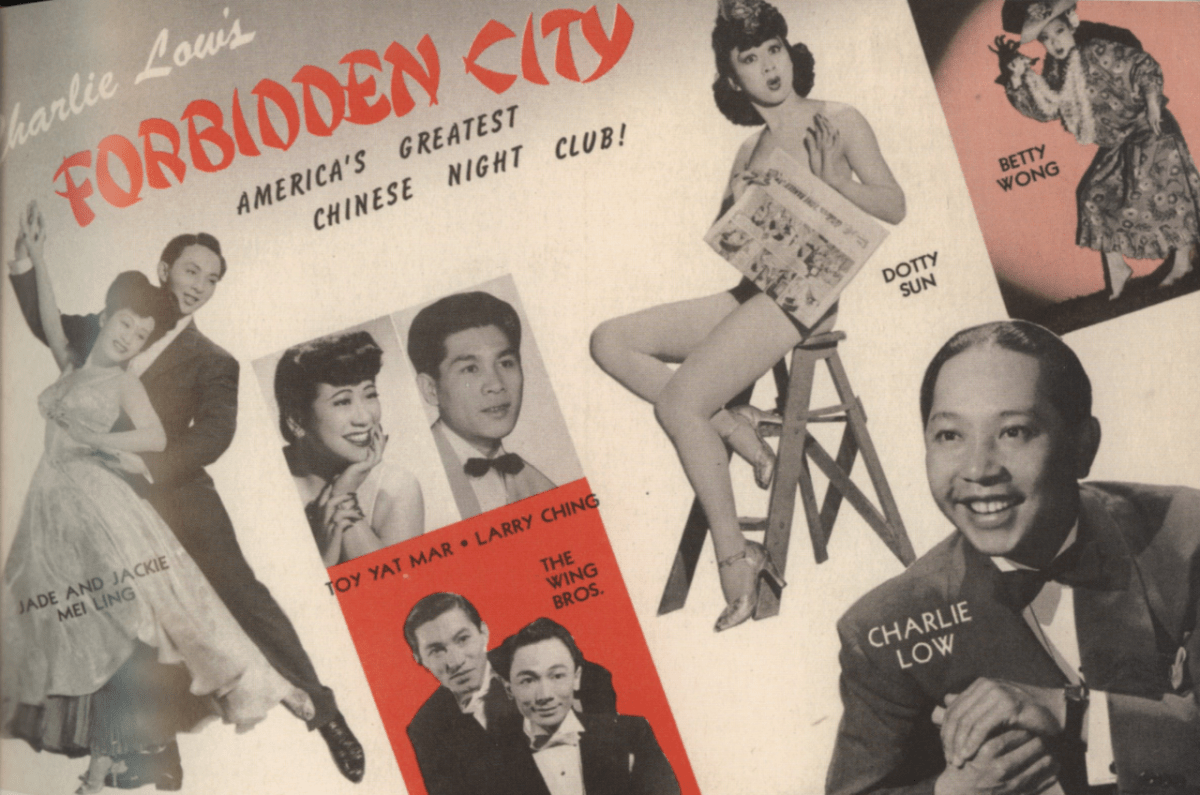
This book is classified as historical fiction which is appropriate, in this reader’s view, and the type of historical fiction that this reader likes.  There are real elements, including the Chinese American nightclub in San Francisco, The Forbidden City, and the internment camps for Japanese Americans during World War II.  We learn about these through a fully fictional story that focuses on the fictional characters, their hopes and dreams of stardom, and their relationships, rather than telling the story of a real historical figure. 

Grace is a Chinese American person from Plain City, Ohio.  Her family was the only Chinese American family in the small town and surrounding area, so she was not particularly knowledgeable about Chinese culture.  She was a star of the dance studio in her small town, and she dreams of becoming a star.  Her mother helps her leave town unbeknownst to her abusive father.  She arrives in San Francisco hoping to land a role in the 1939 Golden Gate International Exposition ( a real thing), but she fails.  She finds her way to Chinatown and asks for help from a stranger to find a nightclub she might work for.

Helen is the stranger Grace encountered.  She is from a strict and wealthy Chinese American family and lives in the family compound.  Despite her family’s disapproval she manages to get hired at The Forbidden City with help from Grace and Ruby.

Ruby is an aspiring dancer who is more streetwise than either Grace or Helen.  It turns out that Ruby is an American citizen not of Chinese ancestry but rather Japanese.  She hides this as The Forbidden City only hires Chinese and Chinese Americans. 

Narration flows across the three characters in separate chapters and tells of their hopes and dreams, successes and failures, and secrets as they progress their careers during the days of Chinese American nightclubs in San Francisco and while they are dancers at the successful Forbidden City nightclub.  World War II has substantial impact on the city and on these characters as citizens and visitors alike with Japanese background are herded into internment camps.

While the book gives an informative view of this time of Chinese nightclubs in San Francisco and the barriers and possibilities for success in show business for Chinese Americans, it is also a well written story about friendship and the impact of being in career competition with your friends.  It also gives a view of the impact of WWII and the internment camps from the view of these citizens, not all of whom are accepted to be equal citizens of the US.  In addition, it gives us the perspective of these citizens as they experience discrimination as Chinese Americans.  Helen’s character provides us a view of the challenges of honoring one’s cultural values which trying to be a member of the broader American culture.

This reader appreciated the extensive research done by the author to be able to draw a good picture of this period for this particular slice of the population.  This reader was fascinated that the while the Forbidden City touted itself to be an exotic showcase of 100% Chinese performers and was 100% staffed by people of Chinese descent, its audience was about 100% white, including a high fraction of military personnel on shore leave. 

This reader will seek other Lisa See novels to continue to explore historical times and places she chooses to show her readers. 

The Island of Sea Women-historical fiction from Lisa See

The Island of Sea Women

By Lisa See

Published 2019

Read Sept 2025

Lisa See gives us another fine historical fiction novel.  This one is set on Jeju Island, 51 miles south of the Korean peninsula.  We learn about life under the Japanese occupation 1910-1945 and the even more turbulent times following WWII when the Korea was divided in two with the north a spoil for the Soviet Union and the south being a spoil for the US.  The April 1948-May 1949 uprising in Jeju against the government plays a significant part of the story.  This reader enjoyed learning about the history of these times and the perspective of the Jeju residents about the various occupations.

The story rolls out in two arcs. 

During the first part of this story, we learn much about the structure of life on Jeju for families of haenyeo families.  The women bring in the income for the family by diving for sea animals and make the major decisions.  Their husbands stay at home, take care of the home and the children.  Boys are important for the family as the first-born son will ensure the parent’s remains are appropriately tended over their lifetime.  They are sent to school, paid for by the earnings of the mother and sisters who are divers.  Daughters are treasured because they will become divers and bring in revenue for their family before they are married and will provide for their own family after they marry.  Basically, the roles and actions of the wife and husband are reversed from other cultures, but inheritance and responsibility for caring for the souls of the deceased parents and grandparents etc falls to the sons.  Thus a single son is important and having multiple daughters is celebrated.

The primary story tells the story of Mi-ja, an orphaned daughter of a Japanese collaborator, and Young-sook, the daughter of the local diving collective’s leader.  It starts during the Japanese occupation of Korea.  Young-sook’s mother takes Mi-ja under her wing when she comes to their village after her parents’ deaths to live with her aunt and uncle.  She and Young-sook become very close friends as they both train to become haenyeo, women divers who harvest sea animals for sale. 

On Young-Sook’s first dive, her companion does not follow instructions and becomes engulfed by an octopus.  While she survives, her brain is damaged, and she requires supervision and care for the rest of her life.  Later, Young-Sook’s mother dies in a diving accident while helping her daughter.  Do-Soeng, mother of the damaged girl, takes over Young-Sook’s mother’s job as leader of the diving collective.

Young-Sook and Mi-Ju travel north to other diving sites for a season.  On their return to their village, they meet a handsome young man who Young-Sook fancies greatly although they don’t speak.  Young-Sook’s grandmother arranges marriages for each of the girls.  Young-Sook to Jun-bu, the son of Do-Soeng, and Mi-Ju to that handsome young man who turns out to be the wealthy son of a Japanese collaborative and who also works for the Japanese.  These events strain the relationship of the two women.  Mi-Ja moves to Jeju city with her husband.  Young-Sook’s marriage is a happy one while Mi-Ja’s is not.  Mi-Ja returns to her village for a short time to interact with her gods and hopefully increase her chances of becoming pregnant.  Both women become pregnant with their first children just before another trip of diving away from the village.  They dream that Young-Sook’s daughter and Mi-Ja’s son will marry someday. 

Events become more difficult for everyone after the US gains control of the government.  The people are surprised that there is even less freedom than when under the Japanese and any talk of being independent from the US is taken labels that person a communist.  We learn there are anti-communist purges following the 4.3 Incident, a strike that leads to a brutal encounter with the government.  Young-Sook’s husband, her first-son, and sister-in-law are executed at the Bukchon massacre in the village of Buckhon-ri, along with 300-400 others (this is a real event).  Mi-Ja and her son were present at the event as well but protected from harm due to her husband’s status in the government (Japanese collaborators were hired by the US back government).  Young-Sook asked Mi-Ja to help save her family but she did not do this.  This results in a rift between the women that continues through the rest of the story.  Young-Sook turns away from her youngest daughter, born after the massacre, when she marries Mi-Ja’s son. 

The second story arc occurs over a few days in 2008.  Young-Sook’s granddaughter and great-granddaughter arrive in Young-Sooks’ village from the US where Young-Sook’s daughter and son-in-law moved after their marriage.  This second arc tells the attempts the great-granddaughter makes to connect with Young-Sook.  The ending of this story will be left for you to discover.

Lisa See creates a fully engaging story of two girls who become friends, wives, and mothers.  She uses their story to help us understand both the society and culture of the island and the truly brutal situation Jeju residents suffered at the hands of the US-backed government after WWI.  She led this reader to learn more about the history of the island and the haenyeo sea divers.  See does an excellent job of helping us learn about various cultures and their histories through well drawn characters and their stories.  This reader will read more from this author, and she fully recommends this book to others. 

Wandering Stars—more from Tommy Orange

Wandering Stars

By Tommy Orange

Published 2024

Read Feb 2025

Tommy Orange’s new book is presented in 4 parts:  Prologue; Part One:  Before; Part Two:  Aftermath; Part Three:  Futures.   

The Prologue provides some historical perspective to the book that follows, first commenting on the Sand Creek massacre and then discussing two parts of history involving Richard Henry Pratt, a Brigadier-General in the US Army.  Pratt supervised Native American prisoners of war held at Fort Marion in St. Augustine, Fl.  He later founded the Carlisle Indian Industrial School in Pennsylvania.    He is known for using the phrase “kill the Indian, save the man” in reference to the ethos of the school and efforts to forcibly assimilate Native Americans into white American culture (1). 

Part One: Before is the prequel to There, There.  It is historical fiction that covers three generations of the Star/Bear Shield/Red Feather family that precedes characters in the remaining sections of the book.  This section is great historical fiction, as defined by this reader, as it sets characters in the time and place of real events—Sand Creek massacre, Fort Marion, and the Carlisle Indian School.  The stories of Jude Star, Victor Bear Shield, and Charles star directly interact with Richard Henry Pratt and give a picture of what Native Americans endured under the US Government’s active program to distinguish Native Americanism and replace it with Christian American beliefs and conduct.  Charles’ daughter, Victoria, is raised by white foster parents and denied her history until her foster mother’s death.  She has two daughters by different men who are the grandmother (Jacquie) and great-aunt/guardian (Opal) of Orvil who went to the Powwow in There, There.  Her story is the connection to There, There’s sequel that follows in Part Two: Aftermath.

Part One: Before covers a very long period of time—from the Sand Creek massacre in 1864 to 2018 in only about one hundred pages so the reader gets only small but potent glimpses of the family’s history through a variety of voices.  This reader left the section somewhat exhausted and very sad at what these family members endure through the various approaches to erase anything of their history and culture.  

Part Two: Aftermath is a sequel to There, There.  While some reviewers indicate the book stands on its own, which in many ways it does, this reader would advise reading There, There first to have a better understanding of the characters in this section and the events that transpire before and during the Powwow. 

This section slows down dramatically compared with Part One: Before.  In about one hundred pages we live with Orvil as he tries to recover from the gunshot wound that he suffered at the Powwow he attended in an attempt to connect with his Native American culture through dancing.  He descends into drug addiction as he moves from the pain killers, prescribed to help him with the pain of his wound and surgery, to a drug mixture concocted by Sean’s dad.  Sean is the adopted son of white parents.  His mother previously died of a debilitating disease.  Sean’s dad, a pharmacist, had tried to mitigate her pain and heal her through a variety of drug mixtures.  He has since left his job and makes a living (of sorts) selling these drugs with the help of Sean, and eventually Orvil.  Sean learns that his background includes Native American DNA in addition to the African DNA that his appearance has already made clear.  This provides him even more confusion about who he is than he had prior to learning this.

This section also spends time with Orvil’s brothers Loother and Lony, their great aunt/guardian Opal, and their grandmother Jacquie.  We watch as they all try to find their way through the aftermath of the Powwow, Opal’s (presumed) cancer diagnosis and treatment, and Jacquie’s reconnection to her family as she tries to stay sober.  Their paths are wide and varied but it’s clear they are trying to forge connections with each other but are living solitary and lonely lives. 

This section was also brutal to read for this reader as it’s occurring in essentially present day.  Lives like these are not outliers   Parts One and Two both include situations of adoption of non-white children by white parents.  The difficulties commonly faced by adopted children of a longing to know their “real” parents and family are compounded by orders of magnitude when they are clearly “non-white” and trying to exist in “white” society with little or no acknowledgement that this is trauma inducing. Although Orvil and his brothers live with their great-aunt/guardian who is related by blood, they are struggling to understand how they fit into white society.  There, There discussed that Opal discouraged them from trying to be “Native American” and we now understand part of the source of that.  Opal had no connection to her Native American culture save knowledge that her mother was Native American but raised “white”. 

Part Three: Futures consists of two chapters.  The first chapter is narrated by Orvil and tells of his rehab and life since then.  He survived!  We also learn that Sean survives also.  The second chapter is a letter from Lony, who had run away near the end of Part Two: Aftermath.    While this reader was glad that the lives of all these characters took a turn for the better even if not fully wonderful, this reader also wondered if this was really part of Orange’s plan for the novel.  Did his editors or publisher “kindly suggest” he end the book with some light in their lives?  This reader has done research to learn the answer to that question, partly because maybe that’s a question best left unanswered.

Ultimately, this reader recommends reading this book (after reading There, There) and discussing it with others.  It has a huge amount to say to all our society about many topics.  It’s quite pertinent in this time as the US struggles with its response to the thousands of people who are trying to become Americans and who aren’t “white”. 

Miss Morgan’s Book Brigade—Historical Fiction about Jessie Carson

Miss Morgan’s Book Brigade  

By Janet Skeslien Charles

Published 2024

Read Nov 2024

This book came on this reader’s reading list via a book discussion group at a local library.  This reader read the entire 486 pages over a three-day period—clearly it was engaging.

The book primarily is set in 1918 and is a fictionalized account of Jessie Carson, a librarian who joined the American Committee for Devasted France (French name abbreviated CARD) in 1918 and brought books and libraries to an area in France very near the front of the war.  The CARD work was initiated by and overseen by Anne Morgan, daughter of financier J.P. Morgan and his second wife, Fanny.   Readers learn about the CARDs, as members of the committee call themselves and their work to support the local civilians whose villages have been nearly destroyed.  They also play a role in evacuating these folks when the front moves towards them again. 

There is a second narrative line set in 1987 and appears to be a purely fictional account of Wendy Peterson who works in the Remembrance department at the New York Public Library while attending a graduate workshop on writing.  Over the course of the book, she moves from discovery of Jessie Carson and the CARDs as part of her assignment to prepare electronic scans of original documents to committing to write their story.  Of course there is a love story in this narrative.

This reader was midway through the book before confirming that Jessie Carson was a real historical figure whose story was being fictionalized and not someone who was a fictional character who worked with the CARDS and observed their actions.  The latter is this reader’s preferred approach which is exemplified in Dreamers of the Day.  While I enjoyed the concept of a “private library of the mind” that the Jessie character uses to help her through challenges—-remembering favorite phrases from various books, this reader does not favor the approach of making up such thoughts nor telling the reader of her thoughts of intimacy with the presumed fictional character, Tom.  Certainly, this brings the historical figure to life for the reader and the literary phrases are enjoyable for readers, lack of proof of this particular “life” for this historical figure grates this reader, but certainly not all readers. 

The author provides in her twenty-page Author’s Note section biographical sketches of each of the actual historical figures she fictionalizes.  She also describes how she created characters that are not real historical figures but were suggested by actual historical figures.  This was much appreciated by this reader. 

This reader recommends this book to learn about the heroic efforts of the CARDs to support French victims of the war, of its creator Anne Morgan, and of Jessie Carson’s heroic efforts to bring reading back into their lives and especially to overcome the then view of how libraries should be run and for whom.  Jessie Carson certainly revolutionized libraries in France through her work as a CARD and her subsequent work in Paris to establish new libraries and new library education programs.  This reader is much more informed about these significant figures.  This reader only adds the caution that it is a fictionalized account of Jessie Carson and several other historical figures.  However, given the apparently very limited primary records about her (in contrast to the personal correspondence available for Gertrude Bell:  Queen of the Desert, Shaper of Nations) it may be difficult to provide any account of her beyond that provided at the end of the book and this fictionalized account is more engaging reading.

The Dictionary of Lost Words—Interesting Historical Fiction Well Done

The Dictionary of Lost Words

By Pip Williams

Published 2020

Read July 2021

This novel is an example of the type of historical fiction this reader most appreciates: the story of a fictional character in the midst of real people that works in a believable way.  In this case Esme is the daughter of a fictional lexicographer working on the Oxford English Dictionary (OED) in the early 1900’s.  

We get a sense of the “scrippy”, the corrugated iron shed on the side of Sir James Murray’s house, known as the Scriptorium, and of the process used to create the dictionary.  Murray, the primary editor, started compiling the dictionary in 1879 and worked on it until his death in 1915.  Although not complete at his death, a number of volumes had been published.  The dictionary was completed in 1928.  In this fictionalized account, a (real) famous photo of those working on the OED near the time of Murray’s death was taken by Esme, thus explaining why she doesn’t appear in this photo.  Esme and her maid develop an interest in finding “women’s words” —those that have different meaning for women than men and which will tend to be excluded from the OED as their usage isn’t demonstrated in published works. 

The author uses Esme’s story also to show life for young women during this tumultuous time as the suffragette movement is well underway. Between Esme’s story and that of her maid, the author demonstrates the restrictions on the possibilities for women at the time. 

Both aspects of the book are informative and the author’s storytelling abilities drive the reader through both stories.    

In an addendum, the author describes how she fictionalized the events and people and what liberties she did and did not take.  This reader appreciates the extensive research done by the author, found the addendum quite helpful, and thinks she made excellent fictionalization decisions. 

Hamnet—a possible story of Shakespeare, Anne, and their son

Hamnet

By Maggie O’Farrell

Published 2020

Read June 2021

O’Farrell’s fiction gives us a possible story of Hamnet Shakespeare, the only son of William Shakespeare,   who died at age eleven.  The novel alternates between the stories of the last days of Hamnet and that of the courtship and marriage of William Shakespeare and Anne Hathaway to just after Hamnet’s death.  O’Farrell never actually names Shakespeare or give Anne’s last name in the book, but her story isn’t inconsistent with the limited history we have of Shakespeare.

This reader is always a little wary of fictionalized accounts of actual lives.  This particular novel avoided the aspects this reader dislikes—providing dialog of the person being described, especially when it pertains to how they are feeling about a situation. 

Her account is believable and engaging.  The descriptions of the concern felt by Hamnet of his sister’s illness, the birth of Anne’s first child, and especially the depth of her grief at Hamnet’s death are all very well done.

This reader does recommend this fictionalized account of this part of Shakespeare’s life as one that provides a look at aspects of his life and his family.

A Long Petal of the Sea: Excellent Historical Fiction

A Long Petal of the Sea

By Isabelle Allende

Published 2019

Read Jan 2021

The title of the New York Times Review of this book is perfect:  Pablo Neruda Saved Thousands of War Refugees.  Isabel Allende Imagines Two of Them.  Allende has written a wonderful and powerful example of historical fiction:  image characters that are living through the period and events the author wishes to explore; engage the reader in the lives of the characters; engage the reader in wondering more about the period and events described.  Allende hits the mark on all of these.

The story starts in Spain near the end of the Spanish Civil War shortly before Franco wins.  Victor Dalmau, a medic, escapes to France over the Pyrennes with the patients he is serving. He finds himself in a concentration camp built by the French for fleeing Spanish refugees.   Roser, a  piano student of Victor’s father and whom the family takes in during the war,  also lands in this concentration camp with her newborn son whose father, Guillium, has been killed in the civil war and who is Victor’s brother. 

Pablo Neruda, a poet and Chilean diplomat in France, manages to convince his government to accept 2000 refugees.  He outfits a cargo ship, selects the refugees per Chile’s specifications, and gets the refugees to Chile.  Victor can be accepted, but only if he is married.  He convinces Roser to enter a platonic marriage with him to  save Guillium’s child and they become two of  the 2000 refugees Chile accepts.

The book slowly takes us through this buildup, across the ocean to Chile, and through Victor and Roser’s complicated life together as Victor becomes a renowned cardiologist and Roser becomes an accomplished artist.  Their lives are again disrupted as Augusto Pinochet ‘s coup drives them into exile in Venezuela.   They eventually face a decision whether to stay in Venezuela, repatriate to Spain, or return to Chile. 

While the reader expands their awareness of the Spanish Civil War, the real but unfamiliar rescue of 2000 Spanish refugees made possible by a poet/diplomat, and the impact of the rule of Franco in Spain and the coup and reign of Pinochet in Chile, the reader is treated to a wonderful story of the lives of two people and their loves.  Victor and Roser love their native Spain and eventually realize they have developed a love for their adopted county Chile.  They love Roser and Guillium’s son as a biological (for Roser) and adopted (for Victor) son.  They love their respective vocations.  They love each other, first as brother/sister, then as members of a platonic marriage of necessity, and then as partners in life and marriage.     Allende deserves high marks for a rich and well written novel that is an example of excellent historical fiction in this reader’s opinion. 

Lady Clementine: Informative Historical Fiction

Lady Clementine

By Marie Benedict

Published 2020

Read Nov 2020

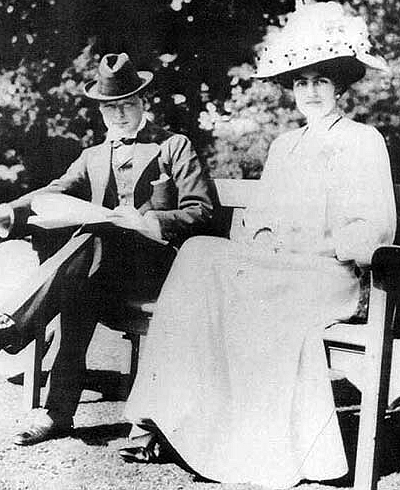
This reader has learned about Winston Churchill through a variety of means—documentaries, books, audio short courses, movies.  The latter is certainly a form of historical fiction, in this case for the movie theater.  This reader knew Churchill was married and had some children but knew nothing about his wife beyond this.  Thus this reader was delighted to have Lady Clementine chosen as a book for one of her book discussion groups.

This reader was initially surprised that Lady Clementine is a historical fiction book about her vs a biography, but the bigger surprise was that it is written in first person and narrated by Lady Clementine.  This reader has come to understand that her preference for the approach to historical fiction is like that used in Dreamers of the Day—a fictional character and their story occurs in parallel to historical events depicted or mentioned in the novel.   Coincidentally Dreamers of the Day introduced this reader to a major meeting held after WWI to set up the modern Middle East.  Two major players were Churchill and Gertrude Bell, a figure previously unknown to this reader.    Dreamers of the Day led this reader to read a biography of Gertrude Bell.

However, once this reader decided to set aside some discomfort with the approach, this reader found Lady Clementine to be interesting and informative.  The focus is appropriately on Lady Clementine, but given her spouse and the nature of their relationship, Winston Churchill certainly plays a big role.  His nature to demand a tremendous amount from his wife and those serving him is certainly consistent with other sources with which this reader is familiar.  

This book filled in this reader’s lack of understanding of The Dardanelles Campaign which injured Churchill’s career substantially.  It draws out the major contributions Lady Clementine played in several critical aspects of WWII including courting the Americans to join the WWII war effort, spearheading efforts to obtain donations to support the struggling Russian people while they were enduring the ravages of war, and improving the quality of air raid shelters in the UK in which citizens spent countless hours while their country was incessantly bombed by the Germans.  The disappointing learning for this reader (and Lady Clementine) was that, in the end, it isn’t clear how much credit Churchill gave to Lady Clementine for the role she played in enabling his personal success or the success of the war effort.  This likely isn’t surprising given the general view of the place of women at the time and given Churchill’s self-centeredness.  Lady Clementine points this out in an interesting way.  Although both Churchill and Lady Clementine were from the upper class, they relied on the Churchill’s small income as a government official (small since most government officials of this rank were independently wealthy) and income from his writing to support their family and fulfill the entertaining obligations expected of his rank.  Despite their limited income, Churchill insisted on drinking expensive champagne which he ordered by the case. 

While Churchill didn’t publically acknowledge his wife’s contributions, others have done so.  Lady Clementine covers a trip she makes to Russia near the end of the war where she is surprised to receive a high honor from the government for her efforts in feeding the Russian people.   Additional research this reader did regarding Lady Clementine revealed that she was appointed a grand dame cross in the Order of the British Empire and was created a life peer member of the House of Lords when Churchill passed. 

This reader found it interesting where the author chooses to end her book—at the end of the war and before Churchill again loses his position as Prime Minister.  Perhaps this is due to a desire to keep the book at about 300 pages or perhaps the author didn’t have sufficient primary source material to describe Lady Clementine’s life during this period.  Certainly most of her most notable efforts are appropriately covered. 

While devoid of the references in a more academic treatise, Benedict has clearly done substantial research.  This reader was disappointed the author didn’t provide any details of this research in her notes.  However she does share her motivations for writing this book.  While British citizens alive during WWII may have known about her, especially those in London where she played a personal role in visiting the bombing debris, standing watch for incoming bombers, and improving the air raid shelters, this book allows Lady Clementine to be visible well beyond this population.  This reader does thank the author for that and for piquing her interest in learning more about Lady Clementine—a measure this reader uses when assessing the impact of what she reads. 

The Mountains Sing–Learn About Vietnam

The Mountains Sing

By Nguyen Phan Que Mai

Published 2020

Read Aug 2020

Que Mai was born in northern Vietnam in 1973 in the midst of the war known globally as the Vietnam War and called the Resistance War Against America to Save the Nation by the government of Northern Vietnam.  She has authored 11 books of poetry, fiction and non-fiction.   The Mountains Sing is her first book written in English.  She draws upon her family’s history and her extensive research to tell the story of the Tran family of Nghe An Province in north central Vietnam.  She brings to the reader the experiences of this family as it lives through a long period of great turmoil which left this reader with a new perspective of the people of this area and the struggles they have endured. 

The reader meets Grandma Dieu Lan (born 1920 to Mr and Mrs Tran) and granddaughter Huong (born 1960 to Grandma’s daughter Ngoc and her husband) in 1972 in Ha Noi where Grandma is a school teacher and Huong a student.  They are anxiously awaiting the war to be over and for Grandma’s six children and families to be reunited and returned to them.  While Grandma and Huong are hiding in a cave to shelter from the Dec 18, 1972 major extended bombing of Ha Noi, Grandma begins telling Huong the story of her family starting in 1930. Her stories which, progress in time from 1930, alternate with Huong’s narration of the family’s story moving forward from that day in the cave.

Grandma Dieu Lan was born into a land owning farming family.  All the members of the family worked taking care of animals and working in the field.  She marries, begins having a family, and is happy. But change is underway.  She tells Huong about the family trials during the Japanese occupation, the Great Famine, and the Viet Minh’s execution of the Land Reform.  During the Land Reform, her family is torn apart and then works to recover itself.  The Vietnam War disperses the family again as the sons are drafted to fight with the Viet Minh and Huong’s mother, a doctor, leaves to find her husband.  Huong’s narration covers the period of the war through letters and diaries and discussions with her mother and uncles after they return from the war.  Her narration also describes her family’s post-war period through 1980 as they work to find a new normalcy in the newly united county under communist rule.

The author makes several choices that enables the reader’s engagement and gives the reader a sense of the family’s culture.  As with many families with six children, life paths the children take, freely chosen or not, can cause substantial family conflict and this is true for Grandma’s children.  Que Mai sprinkles the text with Vietnamese words and uses a variety of approaches to provide their definition.  Several characters, and in particular Grandma Dieu Lan, use proverbs to express their feelings—and to help buoy spirits in difficult times. 

Que Mai uses her book to make clear that the Vietnamese people are more than some of the impressions that have been suggested—poor, illiterate farmers.   Grandma Dieu Lan’s farming parents believed in education—they hired a tutor for her brother AND her.  She becomes a teacher.  Her children are educated and Huong attends school and wins a place at a premier high school.  She gives Huong books as presents including a Vietnamese translation of “Little House on the Prairie”.  This book allows Huong to understand that Americans, who have pledged to bomb her people into submission, also work hard and love their family.  Both Huong and an uncle see young American soldiers taken prisoner or killed by the Viet Minh army and wonder about the humanity of these American solider and how their family members would be treated if they were prisoner of the American enemy.  Huong wonders at one point if people read more about each other if they would find other ways to solve their problems besides war. 

Que Mai uses Huong’s description of her journaling after an uncle’s death to explicitly show some of her themes regarding war:  “I wrote for Grandma, who’d hoped for the fire of war to be extinguished, only for its embers to keep burning her.  I wrote for my uncles, my aunt, and my parents, who were helpless in the fight of brother against brother, and whose war went on, regardless of whether they were alive or dead.”  But her book covers more than the Vietnam War and introduces the reader to a broader history of the struggles of these people who have been occupied by foreigners for centuries and whose struggles continued after their expulsion.  In the final chapter, Huong and her family are at Grandma’s grave.  Huong tells us she has converted Grandma’s stories into a manuscript which she brings to the grave.  She says “Grandma once told me that the challenges faced by the Vietnamese people throughout history are as tall as the tallest mountain.  I have stood far enough away to see the mountaintops, yet close enough to witness how Grandma became the tallest mountain herself:  always strong, always protecting us.”

This remarkable book will engage the reader’s brain and your heart and give the reader a new perspective on this time and these people and on the concept of the usefulness of war in general. 

The Weight of Ink–Historical Fiction Meets Modern Historians

The Weight of Ink

By Rachel Kadish

Published 2017

Read June 2020

This book was recommended to our book discussion group as a highly worthy read.  Its length (592 pages) led to its timing as the first book of the fall season giving us the summer to read it.  This reader consumed it in fairly short order while listening to it on a 24 hour road trip plus some.    As is increasingly popular, the novel has two parallel sets of inerconnected stories.  In this case the settings for each are in the London area, but separated by time—about 400 years. 

One set of sections is set in 2000.   Professor Helen Watt, a professor of history at a London university, has hired Aaron Levey, an American graduate history student at her university, to help her assess a trove of documents found under the staircase of a house undergoing renovation.  She has three days to get a sense of their historical significance to make a recommendation regarding their acquisition by her university before an outside appraiser is engaged.  Helen is about to reach mandatory retirement age and would love to have a final positive bang for her academic career which has felt stifled by the men in her department. Aaron is struggling with his thesis topic and welcomes a short break from it, although working with Helen isn’t easy either.  The papers they are reviewing are from the 1650’s and 1660’s from the household of Rabbi HaCoen Mendes who had come from Amsterdam to London to join fellow members of the Amsterdam Portuguese Inquisition refugee community who had since migrated to London and were generally concealing their religion to stay out of harms way.  The rabbi had been blinded during the Inquisition so required a scribe to read and write for him.  These documents were, at least in part, in this scribe’s handwriting.  Shortly before their three days end, Helen and Aaron make the discovery that the scribe is a woman, a surprising finding as women weren’t generally sufficiently educated to serve in such a position, and even if they were, it wasn’t considered appropriate.

The other set of sections is set during the time of the writing of the documents Helen and Aaron are reviewing and provide the story of the documents and their authors.  We learn that two children of the Amerstam refugees had studied with Rabbi HaCoen Mendes in Amsterdam before he left for London.  After their parents were lost in a fire, the siblings were sent to live with the rabbi in London.  The brother left the home and refused the rabbi’s request to be his scribe.  Ester Velasquez, the sister, was relieved of her household duties to become his scribe, at least temporarily.  Rabbi Mendes manages to delay plans for Amsterdam to replace Ester as scribe (she should, of course, marry and have a family—the only option for women besides service in others’ households).  

So over the course of 592 pages readers spend time in 2000 and the 1660’s. The story set in 2000 progresses the course of study of the documents by Helen and Aaron and their academic competitors after the university’s acquisition of the documents (Aaron continues working with Helen after that three day assessment period).  Who will publish what first?  It gives a picture of research on this kind of document—where and how review can occur, what care of the documents is required, information about the ink in the documents and how that complicates research, and what the research can and can’t reveal.    It includes Helen’s struggles with the department chair regarding her continued access to the documents following her required retirement and her battles with Parkinson’s disease which complicates her study.  This section also dips into Helen’s past to give us the backstory that led her to focus on Jewish history.  We get background on Aaron, his struggles both professional and personal and his evolving perception of Helen.  The story set in the 1660’s progresses the story of Ester as scribe for Rabbi Mendes, his household, who provides financial support, and Ester’s life.   Interestingly, this is the time of the Black Plague in Europe and how Ester experiences it likely falls on readers’ ears differently if they are reading this book during the Covid-19 Pandemic of 2020 vs other times. 

 The stories of Helen and Ester compare and contrast the possible paths in their respective times for women with clear, quick minds if their inclination or choice isn’t fixed upon marriage.   Supporting characters Aaron Levy and Mary, another member of the London Jewish community who engages Ester as a companion so she can socialize with London society, provide additional stories highlighting the conventions of dating, courtship, and marriage in the two periods.

This novel is classified on this website as Historical Fiction.  Like other well-written Historical Fiction, this novel has its story interacting in an appropriately consistent manner with actual history.  In this case the real historical characters are the famous Rabbi Menasseh ben Israel and Baruck Spinoza, both members of the Amsterdam refugee community of the Spanish/Portugues Inquisition.  Menassah was on a mission to populate England with Jews to enable the coming of the Messiah (which apparently was anticipated by Christian scholars at the time too).  Spinoza was a member of the Amsterdam refugee community who was excommunicated by the rabbis when he was only 23 as his philosophies were contrary to the accepted teachings of the times.  Some of the documents Helen and Aaron study are letters between Menasseh and Rabbi Mendes.  Some of the documents are letters between Spinoza and a little known scholar. 

Although there were sections that could have been more concise without losing any substance or feeling, this reader greatly enjoyed this book.  The modern characters were certainly believable.  One of the points of the book was to create Ester’s character to demonstrate what she could offer if she could exist.  Certainly her courage and desires were believable.  The historical and philosophy information/lessons were appreciated by this reader and well woven into the story.  Similarly the theme of the constraints on women’s role in society over time was not heavy handed.    That historians can’t find the whole story despite their best efforts is an interesting assertion the author make which is certainly true in this case.

This book can be enjoyed over a short period of time—like a 24 hour road trip—or at a more leisurely pace.  This reader anticipates enjoying re-reading at least parts before the book discussion, especially as it’s not for several months!