Q’s Legacy–why we have 84 Charing Cross Road

Q’s Legacy

By Helene Hanff

Published 1985

Read Jan 2026

Q’s Legacy is a memoir by Helene Hanff which she wrote after her book, 84 Charing Cross Road became a major success. 

The reader gets to know why 84 Charing Cross Road exists.  She describes her fleeting experience in college and her lucky acquisition of a job at a bookstore that provided her with a lot of time to read.  She decided to get her own English literature degree so seeks out a professor who had published appropriate book(s) about it.  She started looking alphabetically and found no one to her liking until she reached volumes of lectures by Sir Arthur Quiller-Couch, a don at Cambridge.  As she was literally living “hand to mouth” then (and for most of her life), she begins by obtaining books he recommended through her library but decided owning them would allow more time to completely digest them.  She couldn’t find used copies she was willing to buy in New York City and chances upon an advertisement for Marks and Co Bookstore at 84 Charing Cross Road, London.  She writes to them with a list of books and strict budget.  Thus begins the relationship between Helene and Frank Doel, buyer for the bookstore. 

She describes the ups and downs of her writing career.  She made good money when writing for live TV that was produced in New York City and that enabled her to move into a larger apartment with its own kitchen and bathroom.  That gig dried up when TV moved to Hollywood and she didn’t follow it.  She tried writing plays, none of which went anywhere.  She wrote history books for children until that gig dried up as well.  Throughout this time a publisher named Genevieve (Gene) believed in her and encouraged her to try to publish 84 Charing Cross Road as a book vs a magazine article which she was writing.  Unfortunately for Gene, her company did not buy the book which became a cult classic. 

Much of Q’s Legacy tells of the aftermath of 84 Charing Cross Road.  Readers pummeled her with requests to sign her book and send it to a loved one (as she bore the shipping costs, this was a reason she didn’t really make much of any money on the book royalties).  The BBC made a TV series of it; she was invited to watch rehearsals and the taping which she describes.  James Roose-Evans adapted the book to the stage which was a triumph in the UK although not the US.  (Her generosity for sending food stuff to the bookstore during times of dramatic rationing was renowned in the UK.  The US suffered nothing similar.)  The book was written before the successful movie adaptation was made.

Some of the book describes her trip to the UK when she went for the opening of the play.  The diary part of the book dragged a bit for this reader but generally her discussion of this trip still captures her eye for detail and her wittiness.

This is a book lovers of 84 Charing Cross Road will greatly enjoy.  Readers get to know Helen Hanff, which is an absolute treat. 

84 Charing Cross Road–read it and love it

84 Charing Cross Road

By Helene Hanff

Published 1970

Read Jan 2026

In 1949 Helene Hanff wanted to obtain a “good” used copy of all the books recommended by Sir Arthur Quiller-Couch, a Cambridge don whose volume of lectures she had devoured.  She couldn’t find anything satisfactory in her hometown of New York City.   The available books were too worn and/or miserable for a collection she wanted to create.   She saw an ad for Marks and Co, an antiquarian bookseller located at 84 Charing Cross Road in London.  She wrote an inquiry to them which was answered by Frank Doel, the store’s chief buyer.  Thus began a nearly twenty-year correspondence between these two individuals.  After Doel died in 1968, and with permission of the family and company, she decided to publish a book of their correspondence.  And that’s all the book contains—the various letters written by Helene, Frank, his wife, and later his children. It’s a fascinating, short (97 pages), and fun read. 

The book was later adapted for live television drama by the BBC, for the stage and finally as a movie. 

This essay has yet to reveal the impact it had on this reader nor on those who have experienced the adapted works for the BBC, for the stage, and the movie.  Helene’s letters show her to be demanding, exacting, witty, and generous.  Frank’s letters show him to be the professional he is who is drawn into friendship with Helene as she reveals the attributes just announced.  The correspondence covered the war and post-war years when the UK was under severe rationing of food stuff.  Helene’s care packages of canned meats, candies, and dried eggs were shared by the staff and endeared her to them.  Frank’s wife begins writing to her as well and even sends her a beautiful tablecloth made by her elderly neighbor who also benefits from Helene’s generosity.

This book reminded this reader of her fondness for epistolary books, this one non-fiction, and led to reading yet another epistolary book which will be covered in this site in due time.  It also led this reader to immediately obtain a copy of Q’s Legacy, which will be covered in a separate essay. 

It’s absolutely no wonder that this slim volume is a classic that meets the definition of still being read 50+ years after its publication and is beloved by those who read it.  This reader was not surprised to learn that some of the reviewers on Amazon indicate they have copies not only of the book but also of the play and screen play.  It is a book that left a mark on this reader for providing an insight into the life and minds of real people living through the same real war and post-war time in two different countries who experienced the war so differently.

I found a wonderful quote on Stuckinabook’s blog:  “Amongst those of us who write or read book blogs, there are two varieties: those who love Helene Hanff’s 84, Charing Cross Road, and those who have yet to read it.”  (1).  Well said.   

Spying on the South–Olmsted and Horwitz in the South 160 years apart

Spying on the South:  An Odyssey Across the America Divide

By Tony Horwitz

Published 2019

Read Oct 2025

Tony Horwitz was a Pulitzer Prize winning journalist who said “I love the past and the present in equal parts.  If I’m doing only history, I feel restless to get out on the road and explore the contemporary scene.  And if I’m focusing only on the present day, I want to pause and duck into an archive and flesh out the history of what I’m seeing.” (1)

In this book, Tony Horwitz documents his travels along the path Fredrick Olmsted took in 1853-1854 while reporting for the brand-new publication, The New York Times.  Horwitz purposefully travels via similar means where possible—a barge on the Ohio River, a steamboat on the Mississippi River, mules in Texas—and to visit the same towns and plantations that Olmsted visited where possible.   

We learn about Fredrick Olmsted and why he was taking this journey.  Olmsted, who had dallied in a variety of occupations without settling on any of them, wanted, in part, to see for himself what slavery was really about and to learn if it might be possible for the north and south to peacefully settle their differences by dealing with factual accounts.  Simiarly Horwitz was interested in seeing the south firsthand in current times to better understand it. 

Horwitz’s compares and contrasts what he sees on his trip with Olmsted’s which happened 160 years earlier.  The trip along the Mississippi was especially interesting to this reader.  The steamboat that took Horwitz south was a river cruise ship vs a working boat carrying Olmsted which was taking south product—both material and human.  Horwitz’s steamboat cruise stopped at plantations that were fully working in Olmsted’s day and are now tourist stops that gave a glimpse of the history Olmsted saw. 

Olmsted and Horwitz each spend quite a bit of time in Texas, which is pertinent since it is so large and, as Horwitz notes, quite diverse.  His ability to speak about what he’s witnessing in the present and to also give pertinent historical information was quite engaging for this reader.  His observations about the parallels between modern-day concerns about migration across the southern border of the US and the concerns Mexicans had when whites from the east began migrating into Texas are quite relevant and provide an interesting perspective of that part of Texas and on the current migrant situation.  

Both men were quite adept at engaging with people they met during their travels.  Olmsted’s previous foray into farming and working on a ship likely gave him conversation starters.  Horwitz was willing to participate in local activities including mud-racing which surely enabled people to warm up to him.  And he was good at having a beer or two to lubricate discussions.  Olmsted’s views of the south evolved over the course of his travels and so did Horwitz’s — because of their close interactions with the people they met.  

Horwitz’s journey occurred during the run-up to the 2016 election, a time when persistent differences between “red” and “blue” were beginning to form into major divisions.  This interestingly parallels the time of Horwitz’s journey when the division between north and south regarding slavery policies were beginning to boil over.  As we progress through a second Trump administration, it seems an especially interesting time to read this book and gain some understanding of the way people think in this part of the country now and 160 years ago.  Is it different?  Read the book to find out!

The last chapter gives a look at Olmsted’s life post this trip and helps us understand how he came into the profession for which most of us remember him—as a designer of many parks throughout the east.  We learn he architected well beyond these parks as well.

This is a great book for discussion as demonstrated by this reader’s book discussion group recently.  The discussion reinforced some things this reader learned while reading and introduced additional perspectives and learnings as well. 

The photo is Olmsted in 1857

Caste by Isabel Wilkerson

Caste

By Isabella Wilkerson

Published 2020

Read Jan 2023

This reader devoured Wilkerson’s “The Warmth of Other Suns” before this website was started.  Wilkerson was a journalist working for the New York Times when she wrote it and her use of stories of three real people who participated in the Great Migration of blacks from the south to the rest of the county was remarkable and effective.

This reader began reading Caste shortly after it was published.  The first section of the book was somewhat confusing to this reader and led her to put the book down for awhile.  When the book was selected for this reader’s book group, this reader restarted the book and was once again awed by Wilkerson’s ability to teach with stories, many of which told of her own experiences.  Wilkerson proposes that a caste system was developed in this country, starting with the earliest settlers who used white and black indentured people to serve their masters and enable their wealth.  Elites, poor whites, then blacks making up the coarsest caste levels which still exist more that we’d like to believe despite the changes in laws that make all citizens with, supposedly, voting rights.

Wilkinson compares and contrasts the various caste systems—India, Nazi Germany, the US.  It was difficult for this reader to learn that Nazi Germany looked to the US for guidance for their own caste system and thought that the US’s version was more draconian than they were comfortable invoking. While there have been a variety of reactions to this book—her “solution” too utopian; her analysis right on or not deep enough, ect—it is a book well worth reading.  It will invoke new ways of thinking about the societal problem that still exists and is likely growing as new “non-white” immigrants continue to flock to the US and its stated ideals.   

American Nations–A Useful and Sobering View of the History of the USA

American Nations:  A History of the Eleven Regional Cultures of North America

By Colin Woodard

Published 2011

Read May 2022

May 2022 is when this reader finished reading this enlightening and sobering book.  This reader has been working on reading this book for about a year.  Why so long?  The book is very approachable but simultaneously packed with historical information that takes time to digest.

Woodard starts with an Introduction that is very valuable to the reader.  Woodard explains his use of the term “nation”: “a group of people who share—or believe they share—a common culture, ethnic origin, language, historical experience, artifacts, and symbols”.  This differs from a “state” which he describes as “a sovereign political entity”.   He introduces the eleven nations with a brief summary of their characteristics and founding.    Having this initial snippet of each nation prepares the reader for what follows.

Part 1:  Origins 1590 to 1769 gives details of the founding of each of the following nations in order of their founding:  El Norte, New France, Tidewater, Yankeedom, New Netherland, The Deep South, the Midlands, and Greater Appalachia.  It’s sobering to note that between Jamestown and the Declaration of Independence there were about 160 years of waves of people arriving and settling in the New World with very different intentions for coming to the New World and with very different sets of values.  Those different intentions and values and intentions continue to permeate the values and aspirations of the people that live in those different areas—nations– of the country today.   

Part 2:  Unlikely Allies 1770 to 1815 is extremely interesting and helps dispute a concept we tend to have that the thirteen colonies were well unified in fighting for independence from King George.  It seems that is very far from the truth.  This account shows the waves of fighting for independence by the various nations, sometimes even their initial reluctance to do so, and sometimes actually warring against each other.  This section also covers the writing of the Constitution which is considered an amazing achievement.  It was amazing considering the very divergent views of the various nations.  In fact, some of the nations considered seceding from the union because of essentially anti-democratic aspects pushed by many we consider the Founding Fathers (who were from Tidewater).  In fact, these Founding Fathers did have an intention to suppress democracy and retain power for those like them—the elite.  It’s becoming more common knowledge that the Constitution not only allowed for slavery but prevented its abolishment for twenty years.  This was clearly a period of substantial conflict between the nations. 

Part 3:  Wars for the West 1816-1877 covers yet the continuing turbulent time, this section lasting over fifty years.  Yankeedom, the Midlands, The Deep South all spread westward with different intentions consistent with the values held by each of the nations.  Yankeedom needed more land for farming so communities of families headed west, just as communities of families had first come to the New World.  They established new towns, taxed themselves to build needed infrastructure, especially schools.  Overtime the religious orthodoxy of Yankeedom was eroded but the values of serving community remained well entrenched.    The Midlands moved west as well and recreated the towns and communities from which they migrated.  They were accompanied by a large immigration from Germany.  Although they shared the community-focused trait of Yankeedom, The Midlands were more heterogeneous in religious practices and were untroubled by diversity although “skeptical of slave labor, warfare, and the cult of the individual”.  The Borderlanders of Appalachia travelled west largely to live beyond the effective reach of government.  They left not in communities but rather as individuals or very small groups.  An interesting comparison of Yankeedom and the Borderlanders is given. Only a small part of it is recited here:  Yankeedom Midwesterners put their homes on the road, used written contracts, and buried their dead in town graveyards. Appalachian Midwesterners built their homes in the middle of their plots, negotiated verbal, honor-bound agreements, and put their relatives to rest in family plots or isolated graves.  The Borderlanders also preferred candidates who advocated for ordinary people and perceived Yankee neighbors as meddlesome and threatening to their individual freedom.  The slave culture of Tidewater was mainly hemmed in by Appalachia and lost some of its power over time.  It and the second/third-born sons of English gentry that founded it had been a dominant force when the Constitution was written.  The slave culture of The Deep South spread westward expanding its cotton economy which required a substantial slave population and which fed the demands of textile mills in both  New England and Old England.  “What others regard as an authoritarian society built on an immoral institution that concentrated wealth and power in the hands of a small elite, Deep Southern oligarchs viewed as the pinnacle of human achievement.  Theirs was a democracy modeled on the slave states of ancient Greece and Rome, whose elites had been free to pursue the finer things in life after delegating all drudgery to slaves and a disenfranchised underclass.”

An extremely interesting chapter in this section “War for the West” details the build up to the Civil War and describes it not as a struggle between “the North” and “the South” but rather a conflict between two coalitions.  One side was the Deep South and Tidewater.  The other side was Yankeedom.  The other nations considered breaking off and forming their own confederations “freed from slave lords and Yankees alike.”  The United States nearly broke into four pieces.  But for the attack on Fort Sumter which coalesced the coalitions, history might be very different.

Part four:   Culture Wars:  1878 to 2010 covers the topics of the Founding of the Far West, Immigration and Identity, Gods and Missions, Culture Clash, War/Empire/Military, and two chapters on the Struggle for Power—the Blue, Red, and Purple Nations.  Viewing these topics through the lens of American Nations gave this reader a new perspective on this part of our (always turbulent!) history as well.

The Epilogue chastens us to recognize that the United States is actually fairly fragile.  “A time might come that the only issue on which the nations find common ground is the need to free themselves from one another’s veto power.  Perhaps they’d join together on Capitol Hill to pass laws and constitutional amendments granting more powers to the states or liquidating may of the functions of the central government.”  (The author doesn’t suggest the Supreme Court might expedite this but over the last few days it seems that’s its intention.)  The author indicates a few paths that might be followed as the country splits into parts, consistent with the “respective national heritages”.   To remain the United States, “The United States needs its central government to function cleanly, openly, and efficiently because it’s one of the few things binding us together.”  

While we may think the current state of our government is unusual and that we’ve had stability for two hundred plus years, this book actually highlights how turbulent the history of the United States of American has actually always been and continues to be.  The path forward is not easy to predict but the author’s call to “respect the fundamental tents of our unlikely union” is very relevant. 

This reader is recommending this book to friends and family—it should be read by all those wishing to understand the current state of the USA.


Leadership in Turbulent Times—Relevant Lessons for Today

Leadership in Turbulent Times

By Doris Kearns Goodwin

Published 2018

Read Aug 2020

Doris Kearns Goodwin served in Lyndon Johnson’s White House and helped him write his memoirs after he left office, the latter while she was a professor at Harvard University.  Her experiences with him and extensive research led to publication of “Lyndon Johnson and the American Dream”.  She later wrote “No Ordinary Time:  Franklin and Eleanor Roosevelt:  The Home Front in World War II”“Team of Rivals”, a book about Abraham Lincoln’s cabinet and presidency, and “The Bully Pulpit” about Theodore Roosevelt friendship with William Howard Taft.  Thus she had spent countless hours with the men highlighted in this book long before she began writing it.  She remarks in the foreword to this volume that she found much to learn about them through the “elusive theme of leadership”.   She also points out in the foreword that Lincoln’s model leader was George Washington, Theodore Roosevelt’s great hero was Lincoln, Franklin Roosevelt molded his career on Theodore Roosevelt’s, and Lyndon Johnson considered Franklin Roosevelt his “political daddy”.  So these men become a “leadership family tree” of sorts.

Goodwin discusses each man in chronological order, Abraham Lincoln, Franklin Roosevelt, Theodore Roosevelt, and Lyndon Johnson, in three sections:  Ambition and the Recognition of Leadership; Adversity and Growth; The Leader and the Time:  How they Led.  She uses a story-telling approach to her work and engages the reader deeply into the topic at hand for each person.  She shows how each man’s beginning and adversity shaped his leadership approach and his view of himself.  Each man’s leadership was shaped by the needs of the country at the time and the needs of the country impacted his particular leadership approach. This reader was particularly interested in how Johnson engaged Congress which enabled him to get the Civil Rights Act of 1964 passed as well as the Voting Rights Act of 1965 and a number of other sweeping bills.  He knew that without involving stakeholders early and often and without close interaction with Congress he wouldn’t get things done.   These approaches haven’t been very visible in recent years.

Goodwin switches the order in the Epilogue:  Of Death and Remembrance starting with Lyndon Johnson, with whom she had a deep relationship forged during his administration and especially while writing his memoirs.  She appropriately calls out the failings of his leadership with respect to the Vietnam War and recounts Johnson’s ruminations of these during his post-presidency period.  She recounts his last public appearance.   “The plight of being “Black in a White society,” he argued, remained the chief unaddressed problem of our nation.   “Until we address unequal history, we cannot overcome unequal opportunity. “ Until blacks “stand on level and equal group,” we cannot rest.  It must be our goal “to assure that all Americans play by the same rules and all Americans play against the same odds.”  Unfortunately the gains in civil rights he personally drove through Congress from the White House, while enabling enormous progress, have stalled and the goal he delineates remains incomplete.

Goodwin does not provide a formula for leadership.  However, her final statements in the book sheds light on the essence of what the nation needs in these current extremely turbulent times:  “ Kindness, empathy, humor, humility, passion, and ambition all marked him [Lincoln] from the start.  But he [Lincoln] grew, and continued to grow, into a leader who became so powerfully fused with the problems tearing his country apart that his desire to lead and his need to serve coalesced into a single indomitable force.  [Italics added by this writer] That force has not only enriched subsequent leaders but has provided our people with a moral compass to guide us.  Such leadership offers us humanity, purpose, and wisdom, not in turbulent times alone, but also in our everyday lives.”

This is a useful book for learning how four presidential leaders developed into leaders and provides models for leaders moving forward.  This reader hopes those seeking political office read these words and incorporate these lessons into their own work to serve.

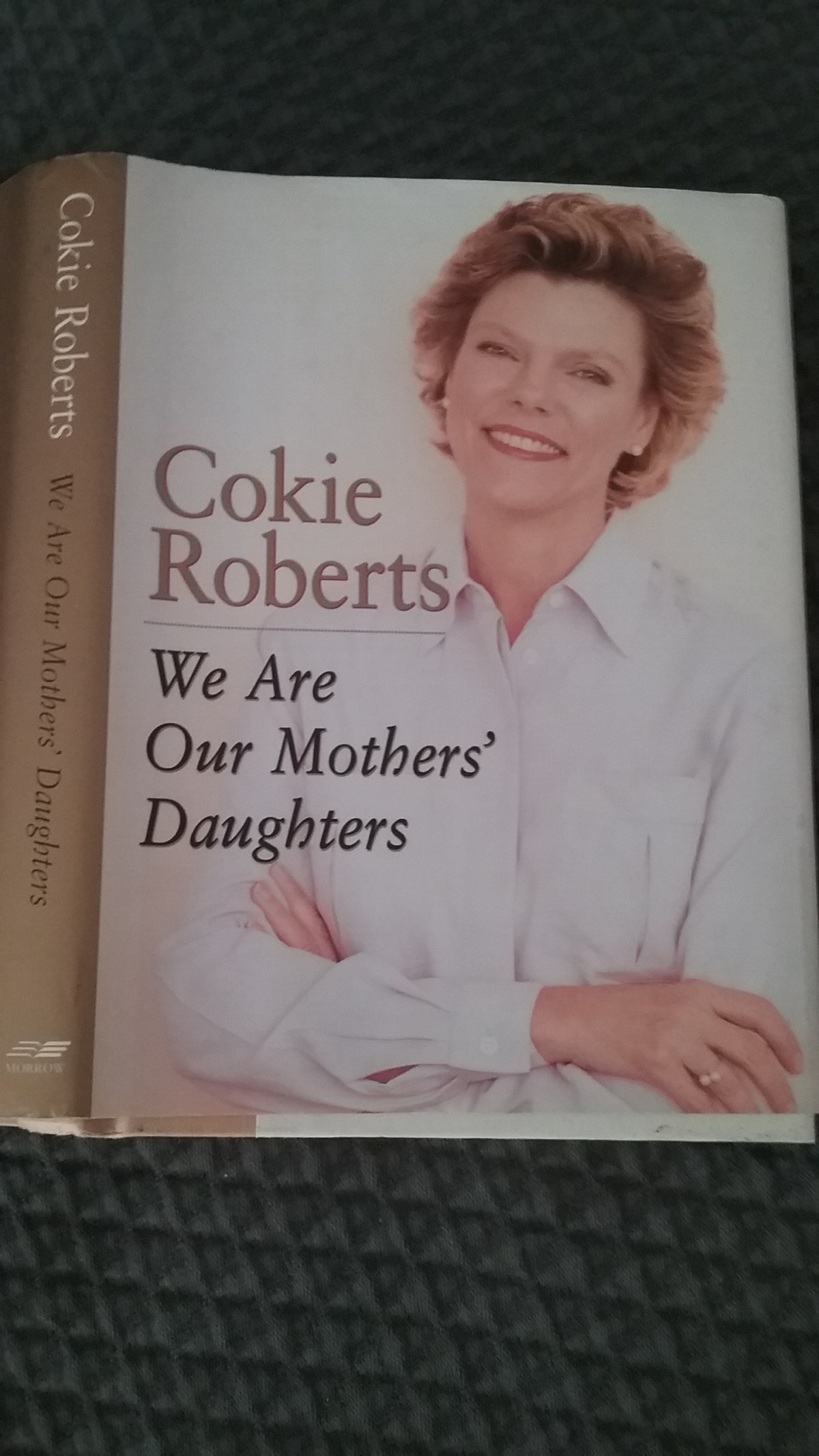
We Are Our Mothers’ Daughters–a Slim Powerful volume from Cokie Roberts

We Are Our Mother’s Daughters

By Cokie Roberts

Published 1998

Read Sept 2020

This reader found a copy of the 1998 edition of this small book in a Little Library—a great place to find reading treasures.  Apparently there is a second edition published in 2009 that my comments can’t cover.

This reader has listened to NPR for about 30 years so Cokie’s contributions to radio news and those of the other “Founding Mothers” of NPR are well known to this reader.  This reader is also familiar with Cokie’s participation on This Week with David Brinkley and her turn at the helm of that vehicle with Sam Donaldson.  It is somewhat sobering to this reader that this generation of news reporters in these vehicles, whom this reader has followed for 30+ years, is leaving us to retirement or beyond.   We lost Cokie to complications of cancer in 2019.

Cokie’s book is a highly personal one—chapters on her personal experiences as Sister, Aunt, Friend, Reporter, Wife, and Mother/Daughter give us an insight on her personal life.  She was a daughter of politician parents—Congressman Hale Boggs and Congresswoman Lindy Boggs;  a sister of a Princeton, NJ mayor (Barbara)  and of a successful lawyer/lobbyist (Tommy).  She was wife and eventual column co-author of journalist Steve Roberts and mother of two children.  She describes her pursuit of Steve Roberts during and following graduation from Wellesley College in 1964 when she had a goal of marriage and motherhood before she was too old (they married when she was 22 and he 23).  She describes her decisions over the years to follow Steve to New York, Greece, LA, and then Washington, D.C.  Through it all she realized she too must work to be complete and did so with gusto so that she become a the well-known and well-respected journalist.

Cokie also chose to include chapters or chapter portions about famous and not-so-famous women and how they made inroads into “men’s world jobs” of mechanic, activist, journalist, enterpriser, and politician.  She indicates she does not provide any original research about women in history.

This book is Cokie’s take on that age-old question “What is woman’s place” and how she sees it.  She offers no answers to how can women have ‘balance” (she in fact suggests that’s really never going to happen).  She offers observations on how she has experienced life during the “great social movement” that propelled women more completely into life outside the home.  She chastens women with choices in their life-role for judging other women’s choices — especially when those judged really have very limited choices.

The best paragraph in the book quotes Margaret Chase Smith as she wrote in the introduction to the book “Outstanding Women Members of Congress” in answer to “Where is the proper place of women?”:  “My answer is short and simple—woman’s proper place is everywhere.  Individually it is where the particular woman is happiest and best fitted—in the home as wives and mothers; in organized civic, business, and professional groups; in industry and business, both management and labor; and in government and politics. Generally, if there is any proper place for women today it is that of alert and responsible citizens in the fullest sense of the word.”

If you were a fan of Cokie Roberts, you will enjoy this small volume, hearing Cokie’s voice again as she covers topics important to the hearts of women of all ages.  If Cokie Roberts is less known to you, read this book to get a sense of a memorable woman who brought much to the world of political journalism and to all those who knew her.


Provocative Mothers and their Precocius Daughters: 19th Century Women’s Rights Leaders

Provocative Mothers and Their Precocious Daughters

By Suzanne Schnittman

Published 2020

Read Aug 2020

This reader devoured this thoughtful and thought provoking book.  The author’s scholarship is remarkable.  She has reviewed countless pages of primary source documents—personal letters, diaries, and the writings of these remarkable women, as well as countless pages of secondary sources—biographies, histories, etc.  The author then concisely presents the reader with clear pictures of these reform mothers and their daughters—how the reform mothers managed motherhood and their activism, for several of the mothers on very limited incomes; how their activism translates to their parenting of their daughters; how the daughters responded to this parenting and the kind of adult they became as a result; and how the relationship between mother and daughter evolved over time.  This reader appreciated the extensive footnotes—it gave this reader confidence that the pictures presented of events and personal feelings reflect the data available about them and appreciation that the heavy lifting had been thoughtfully and thoroughly done by the author. 

The book gave this reader much to consider about both mother/daughter relationships and how new access to rights or advantages of one generation impacts both the parent/child relationship and the person/society relationship.  Some aspects of the mother/daughter relationship are likely universal and not impacted by time or place.  This likely includes hoping for the life of the daughter to be even easier/better than experienced by the mother and hoping that the daughter will support the mother in times of need.  How this translates in particular, however, is likely dependent on the constraints present in society, laws, and religious/tribal/family culture at the time.   When these constraints change substantially from one generation to the next, the relationships between parent/child and person/society might be different for one generation of children compared with another which can be both liberating for the child and troubling for the parent and society. 

This book is one you won’t forget soon and it will likely incite further exploration of the history of struggles for rights in this society that have needed amendments to the Constitution and/or federal laws to make them possible and how society has evolved as a result. 

Hidden Figures: So Much More than the Movie

Hidden Figures

By Margot Lee Shetterly

Published 2016

Read July 2020

This reader had seen the movie “Hidden Figures” which was based on this book.  When this reader’s discussion group decided to read it as part of our upcoming season, this reader was prepared for the book to cover the same ground in words vs live action.  This reader was absolutely delighted to learn that although the movie was loosely based on the book (various liberties were taken to convey major themes of the book which were supported by the author and the three main characters), the book offers much more. The movie adaptation was well done and received critical acclaim and many awards including nomination for Best Picture at the 89th annual Academy Awards.  It’s possible that the Congressional Gold Medals awarded the three women in 2019 (post-humorously for Mary Jackson and Dorothy Vaughan), the awarding of the Presidential Medal of Freedom to Katherine Johnson in 2015, and naming of NASA facilities for Katherine Johnson and Mary Jackson in 2019 and 2020 were influenced by Shetterly’s book and movie which made the major contributions of these Hidden Figures visible. 

Shetterly gives us three histories in her book:  a history of the Langley aeronautical research facility, a look at gender and race barriers faced by black mathematicians, scientists, and engineers, and  a history of segregation in schools.  She does this via the stories of three amazing mathematicians who gently but powerfully broke gender and race barriers during their tenures at Langley.  She comments early in the book that she discovered that there were hundreds of women at what is now known as Langley Research Center both black and white that made major contributions to the war efforts of WWI and WWII and to the space program that launched men into space and landed them on the moon.  In addition, these women broke race and gender barriers regarding the appropriateness and usefulness of women, black and white, in science and engineering.   By telling the stories of these remarkable women, Dorothy Vaughan, Katherine Johnson, and Mary Jackson, Shetterly engages the reader in real stories that illuminate the histories she reveals. 

Langley Memorial Aeronautical Laboratory was established in 1917 by the National Advisory Committee for Aeronautics (NACA), a US government agency created in 1915 to promote industry, government, and academic coordination of war projects.  As a civilian facility, its initial mission was to conduct research to enable successful fighter planes for WWI.  Over the years the focus of the laboratory evolved as needs of the nation evolved during WWII and during the cold war, leading to launch of manned space craft and manned landings on the moon.  The number of engineers, mathematicians, and technical support required to accomplish its missions was huge.  Unlike some aspects of the “military industrial complex”, employment levels at Langley did not waver substantially between wars.  Until the 1960s, most calculations were done manually with the support of mechanical calculators and the volume of this work was staggering—both theoretical and experimental work created large reams of data that had to be processed and analyzed.   Langley recruited hundreds of women as “human calculators” (steps below “mathematician”).  In parallel, it recruited hundreds of men into mathematician, scientist, and engineering positions. 

The gender barrier was significant regardless of race.  While all the women recruited as “computers” had BA/BS degrees in mathematics, and often physical sciences as well, they were relegated to a role and job title beneath men hired with similar credentials as “mathematician” or “scientist” or “engineer”.  This barrier eventually fell (over decades…) as the “computers” became more incorporated directly into research groups (like Katherine Johnson and Mary Jackson), their male team members began to include their names on technical papers, and their value was recognized by their supervisors.  Mary Jackson’s supervisor recognized her talent and encouraged her to take the required courses to be promoted to engineer.   Katherine Johnson’s on-going request to be included in technical group meetings including her continuing questioning of the “well women are not invited” eventually was successful and she was included in these discussions.  When a collaborator was about to leave Langley to relocate to Houston, where the new space team would be centered in the new NASA organization, he told his boss to have Katherine write up their work as it was mostly hers anyway.  Thus Katherine’s paper became the first technical report solely authored by a woman. 

The race barrier was also very significant.  There were segregated “computer” groups—the West Computing Group being all black, supervised by a white woman while the East Computing Group was all white.  Restrooms and lunch tables allowed the West Computing Group were based on their race.  Only after eight years of a “temporary” assignment as Supervisor of the West Computing Group was Dorothy Vaughan, a talented mathematician regularly requested by research groups for her computing prowess and understanding of the work, actually promoted to this position, making her the first black person promoted to a supervisory position.  A quiet protest was fought for several years by a black computer who kept removing the “black table” sign from the cafeteria table they were assigned.  Eventually the sign was no longer replaced.  Katherine Johnson simply ignored the “white only” restroom restrictions as there weren’t “black” restrooms in her building.  Mary Jackson was promoted to the engineer title after a lengthy struggle to get special dispensation from the local school board to attend required courses offered on behalf of Langley at the local (white) high school. 

Shetterly also discusses the degree and impact of segregation in schools during this period and the journey towards integration.  Education at all levels was completely segregated by race.  Graduate programs were generally not available to blacks.  Johnson and Vaughan were both encouraged to attend graduate school but neither fully pursued graduate programs for various reasons.  Johnson benefited from an undergraduate professor who designed graduate level courses for the mathematical prodigy (she graduated from college at age 18) which eventually led her to become a primary player in the determination of flight trajectories for various space missions.  Her black professor, despite tremendous capabilities demonstrated while pursuing his PhD in mathematics, only the third ever granted to a black person, could only find employment at West Virginia College, a historically black college.  After the Brown v Board of Education ruling by the Supreme Court, some Virginia public schools were actually closed to all during the period 1956-1958 to prevent integration.    

Heaven’s Ditch: God, Gold and Murder on the Erie Canal

Heaven’s Ditch:  God, Gold, and Murder on the Erie Canal

By Jack Kelly

Published 2016

Read May 2020

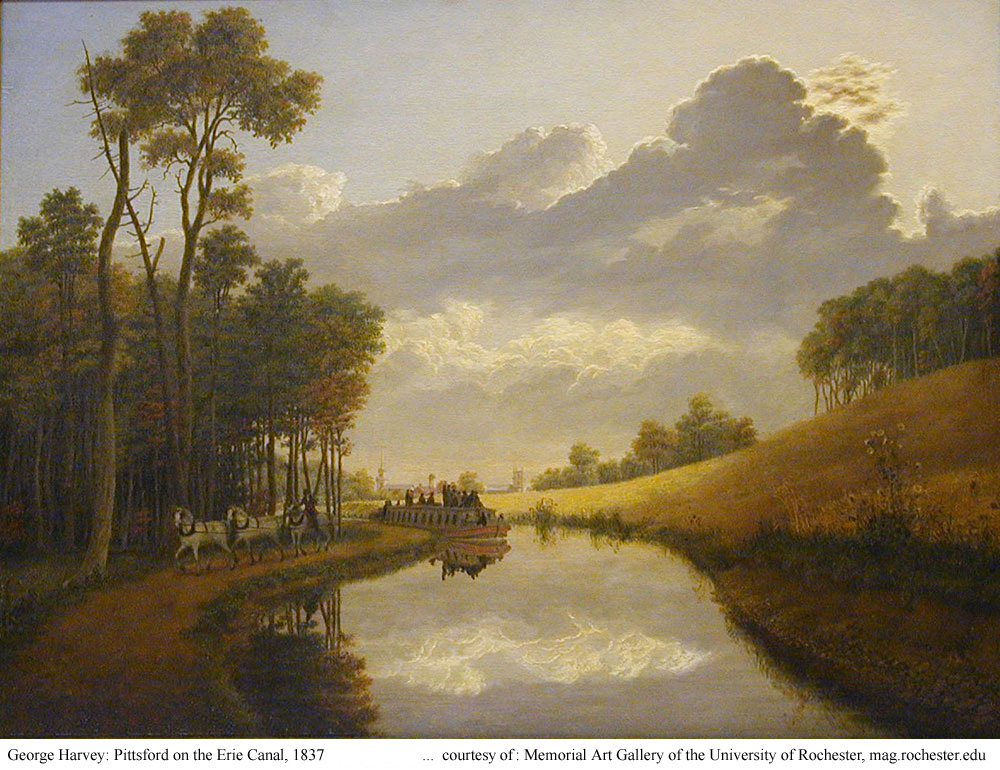
This reader has spent 30+ years living in western New York and has biked and walked along the Erie canal on a regular so anticipated this book would be an interesting read to learn more about the canal’s history.  It certainly fulfilled that promise and much more. 

Pursuing a vision to connect the Hudson and Mohawk Rivers near Albany, NY with Lake Erie, 360 miles away making it the longest canal in the world was remarkable.   Knowing that the canal would have major impact on the land between the two waters, but as importantly anticipating that the canal would have major impact on the new nation itself was enough to fuel DeWitt Clinton’s drive to build the canal, even if the US government wasn’t willing to do so.  What wasn’t known well then was that the 360 mile canal would also have to enable lifting boats 600 feet along their journey and that technologies required to allow the canal to survive winters weren’t even available in the country much less the region.  Engineers didn’t have the ready knowledge or experience to accomplish this huge task but an amazing can-do spirit meant the project was funded by the state after being refused federal funds and neatly accomplished in 8 years (1817-1825).  A course was plotted through the wilds of central and western New York, water sources were found to power the huge number of locks, and the backs of locals and Irish immigrants hand-dug the canal, later supported by tools devised by self-taught engineers.  Another self-taught engineer, Canvass White, leveraged a technology he saw in the UK to use a hydraulic cement, impermeable to water, as mortar for stones vs the original plan of using timbers (with an expected short life) to build the 83 locks.  His discovery of a source of the required limestone near Syracuse, NY, and his experiments in how to make the cement allowed the locks and arches to survive decades longer than timbers could have.  Many of these structures are still visible and/or in use.    

Kelly’s telling of the building of the canal covers the “Heaven’s Ditch” part of the title.  His parallel documentation of the cultural changes in the area covers the other parts.  Another extraordinary piece of history occurred during this same period and in this same part of the country—“The Second Great Awakening”.  In many respects this aspect of the book is larger in depth and scope than the telling of the building of the canal, covering a larger time period and geographical setting.   Kelly gives the story of three people who had huge impact on the area and beyond:  Charles Finney—“The Great Evangelist”, William Miller—who predicted (incorrectly) the date of the second coming, and Joseph Smith, Jr—who founded the religion that becomes the Church of Latter Day Saints.  Each of these men provided their followers something beyond what was available in the traditional church settings of the day. 

Kelly recounts Finney’s story.  After various jobs and approaches to education, he becomes a successful revivalist.  His revivals were often held when farmers weren’t toiling in their fields allowing entire families to trek to the revival site.  The events provided stimulating, actionable words vs the dry oratory participants heard in their traditional churches.  Kelly details major revivals held in Rochester, NY. Finney stirred abolitionist fervor that spread in the area and was carried west on the canal. 

Kelly also discusses William Miller, another influential religious leader at that time.  After various struggles with his faith, wavering between the Baptist Church and Deism, he returned with vigor to the Baptist Church.  After substantial consideration of the scriptures, he calculated the date of the second coming of Christ.  He eventually revealed this and preached about this date which would be sometime in 1843 or 1844.     Although “The Great Disappointment” arrived when expectations were not met, some of his followers reconsidered his teachings and begat the Seventh Day Adventist church that continues today. 

The impact of Joseph Smith, Jr. is more widely known.  His family left financial ruin in Vermont to settle in an area of western New York that would become Palmyra, NY and that was near the coming canal. He and family members worked on the canal as it was being dug there.  Kelly provides substantial detail regarding Smith’s humble beginning, his considerations of various religious practices, how the he engaged others to believe he had received the golden plates (although no one else ever saw them) in a clearing in a nearby woods, and how he alone was able to translate and record the history of the world that was revealed to him via these plates and later via direct revelation.  Heaven’s Ditch follows his history west to Illinois and Missouri to his eventual death and describes the others he commissions as elders, including Brigham Young.  Interesting to this reader is a review about Kelly’s book in the blog of the Association for Mormon Letters, a non-profit focused on production and criticism of Mormon literature.  The reviewer has this to say: “Every Seventh-day Adventist and Mormon certainly should read this fine book, as it will inform and illuminate.”  (1)  This reader also found very interesting that as Joseph’s power over his community rose, he followed a path common to some other men rising in power in religion, business, or government—the need to fulfill a growing sexual appetite.  His approach to reconcile this passion with his church eventually led to the acceptability of having multiple “spiritual wives”.  The author lays interesting ground for consideration for readers regarding how other religions a initiate and grow. 

The fourth person he discusses in some detail is William Morgan, who wrote an exposé of the Freemason fraternal organization that played a large role in society of that time.  He is the “murder” part of the title—-he went missing shortly before his book was published and his fate was never learned although many theories were lightly considered by various investigations. 

Although Kelly’s book title likely will capture readership of those interested in the engineering feat of the Erie Canal, readers will learn at least as much about the “Second Awakening” in the United States and the role some prominent western New Yorkers played in this important aspect of US history.  Kelly’s mission-free style informs and keeps the reader well engaged.

(1) http://associationmormonletters.org/blog/reviews/older-reviews/kelly-heavens-ditch-god-gold-and-murder-on-the-erie-canal-reviewed-by-gary-mccary/