Blog

Culpability, a novel by Holsinger

Culpability

By Bruce Holsinger

Published 2025

Read Dec 2025

The driver for this novel is an accident that occurs when a self-driving car hits and kills a couple but leaves the occupants of the self-driving car completely or relatively unharmed.  The person “driving” is Charlie, a seventeen-year-old lacrosse star, who is on his way to a championship game that is the last of his high school career.  He is heading off to the University of North Carolina which has recruited him for their team.  Sitting in the front passenger seat is his father, Daniel, a first-generation college graduate who is a lawyer.  He is writing a memo for his job while Charlie is driving.  Sitting in the second-row seats are Charlie’s mother, Lorelei, and his sister, Alice.  Lorelei is a highly published researcher and consultant in the area of AI.  She is busy working as well when the accident occurs.  Alice is the middle child and is the occupant who yells when she sees a car coming into their lane.  This is the act that causes Charlie to take the wheel which precedes the accident.  Izzy is the youngest child and is lounging in the third seat while texting with her beloved brother, Charlie as he “drives”.  Izzy suffers a broken leg.  Alice suffers a concussion and is hospitalized overnight.  Everyone else survives with only a few bruises.

To get away from the trauma of the accident and relax a bit before Charlie heads to UNC, the family rents a house on an inlet of the Chesapeake Bay they had rented the year before.  They aren’t left alone, however, as accident investigators want to talk to Daniel and Charlie.  Daniel obtains a lawyer who tells him he can represent only Charlie or Daniel but not both. 

The question is:  who or what is culpable?  Charlie who apparently overrides the AI and had been texting?  Daniel for not noticing that Charlie was texting?  The AI for not avoiding the accident?  Something or someone else?  It seems there are many secrets that the family members hold that may be relevant.

In the meantime, more troubles arise.  Father Daniel is upset that the beautiful farm across the small inlet from their rented house has been replaced with a huge home and a security staff protecting the property of a wealthy businessman, Monet.   Why the over-gentrification of their peaceful vacation area?  Father Daniel is further upset when son Charlie becomes involved with Monet’s daughter, Eurydice, and the family is invited to a party at the Monet compound.  You’ll need to read the novel to find out the rest of the complications. 

Modern themes abound in addition to the major theme of culpability of fatal accidents involving self-driving vehicles:  impact of travel sports on families; impact of wealth on decision making; relationships of dual career spouses, especially if there is a perceived “imbalance” of capabilities; fragility of life as we know it.

It’s interesting to this reader that for most of the books she’s read recently she doesn’t particularly find any of the characters very sympathetic. It’s true for this book as well.  We spend most of our time learning what father Daniel thinks and does.  He is far from sympathetic in this reader’s opinion.  He’s not communicating with his wife well.  He’s failing to connect with his son who is not behaving as he would prefer.  He drinks heavily often, sometimes driving under the influence.   

Although the book is a very quick read and at times feels a little superficial, there really is substance for rich conversation with others about it. 

Finding Grace

Finding Grace             

By Loretta Rothschild

Published 2025

Read Nov 2025

This is a debut novel for Rothschild.  You won’t learn much about the plot from this essay as this reader believes that reading it without knowing anything about it is advantageous to the reader.

The protagonist of this becomes a widower when his wife and daughter are killed in a bombing.  Most of the book takes place starting a few years after the bombing and follows the widower and his young son.  There are occasional flashbacks which are printed in italics to aid the reader in know it’s a flashback. 

Rothschild uses an interesting device: The protagonist’s wife narrates much of the novel from her position in heaven.  She is able to see what’s happening and we hear much of the action from her “viewpoint”.  We also are privy to the husband’s thoughts directly from him.  We see the other characters only through their actions as communicated by the wife or the widower. 

The majority of the book’s tension is built on a secret the husband is keeping from almost everyone regarding a woman he has met.  One good friend knows the secret and urges the widower to reveal it, but he doesn’t and weaves an increasingly complex web of “facts” created to keep his secret safe.

There is a fairly large cast of characters, one group surrounding the widower and one group surrounding the new girlfriend and, of course, they begin to intersect.  There are many topics that aren’t discussed within the groups and certainly not between the groups. 

Parenthood, managing one’s own grief, supporting a friend through their grief, and communication are big themes of this book. 

There is a fair amount of description of sex between the widower and his new girlfriend which this reader didn’t find necessary.  Perhaps the editor/publisher thought this would be a draw for some readers, but this reader found it somewhat distracting and certainly led this reader to wonder about whether the new couple’s relationship was built on anything besides sex. 

The setting is London, although the book feels pretty American.  This reader thought that perhaps the author now lives in the US, but she splits her time between the UK and Italy.  That likely explains an Italian connection.  There are a few “British’ words and few obvious “British” cultural elements, but not many which again may be an editor/publisher’s suggestion to enable sales.  There are a large number of references to modern day singers as well as “classical” artists.  This reader did not connect with most of the singer references which may suggest the author is directing the book to an audience younger than this reader.  These references may impact the longevity of the book. 

Overall, a pretty fast read.  It will be interesting to see how this author’s career develops. 

Spying on the South–Olmsted and Horwitz in the South 160 years apart

Spying on the South:  An Odyssey Across the America Divide

By Tony Horwitz

Published 2019

Read Oct 2025

Tony Horwitz was a Pulitzer Prize winning journalist who said “I love the past and the present in equal parts.  If I’m doing only history, I feel restless to get out on the road and explore the contemporary scene.  And if I’m focusing only on the present day, I want to pause and duck into an archive and flesh out the history of what I’m seeing.” (1)

In this book, Tony Horwitz documents his travels along the path Fredrick Olmsted took in 1853-1854 while reporting for the brand-new publication, The New York Times.  Horwitz purposefully travels via similar means where possible—a barge on the Ohio River, a steamboat on the Mississippi River, mules in Texas—and to visit the same towns and plantations that Olmsted visited where possible.   

We learn about Fredrick Olmsted and why he was taking this journey.  Olmsted, who had dallied in a variety of occupations without settling on any of them, wanted, in part, to see for himself what slavery was really about and to learn if it might be possible for the north and south to peacefully settle their differences by dealing with factual accounts.  Simiarly Horwitz was interested in seeing the south firsthand in current times to better understand it. 

Horwitz’s compares and contrasts what he sees on his trip with Olmsted’s which happened 160 years earlier.  The trip along the Mississippi was especially interesting to this reader.  The steamboat that took Horwitz south was a river cruise ship vs a working boat carrying Olmsted which was taking south product—both material and human.  Horwitz’s steamboat cruise stopped at plantations that were fully working in Olmsted’s day and are now tourist stops that gave a glimpse of the history Olmsted saw. 

Olmsted and Horwitz each spend quite a bit of time in Texas, which is pertinent since it is so large and, as Horwitz notes, quite diverse.  His ability to speak about what he’s witnessing in the present and to also give pertinent historical information was quite engaging for this reader.  His observations about the parallels between modern-day concerns about migration across the southern border of the US and the concerns Mexicans had when whites from the east began migrating into Texas are quite relevant and provide an interesting perspective of that part of Texas and on the current migrant situation.  

Both men were quite adept at engaging with people they met during their travels.  Olmsted’s previous foray into farming and working on a ship likely gave him conversation starters.  Horwitz was willing to participate in local activities including mud-racing which surely enabled people to warm up to him.  And he was good at having a beer or two to lubricate discussions.  Olmsted’s views of the south evolved over the course of his travels and so did Horwitz’s — because of their close interactions with the people they met.  

Horwitz’s journey occurred during the run-up to the 2016 election, a time when persistent differences between “red” and “blue” were beginning to form into major divisions.  This interestingly parallels the time of Horwitz’s journey when the division between north and south regarding slavery policies were beginning to boil over.  As we progress through a second Trump administration, it seems an especially interesting time to read this book and gain some understanding of the way people think in this part of the country now and 160 years ago.  Is it different?  Read the book to find out!

The last chapter gives a look at Olmsted’s life post this trip and helps us understand how he came into the profession for which most of us remember him—as a designer of many parks throughout the east.  We learn he architected well beyond these parks as well.

This is a great book for discussion as demonstrated by this reader’s book discussion group recently.  The discussion reinforced some things this reader learned while reading and introduced additional perspectives and learnings as well. 

The photo is Olmsted in 1857

China Dolls–historical fiction from Lisa See

China Dolls

By Lisa See

Published 2014

Read June 2025

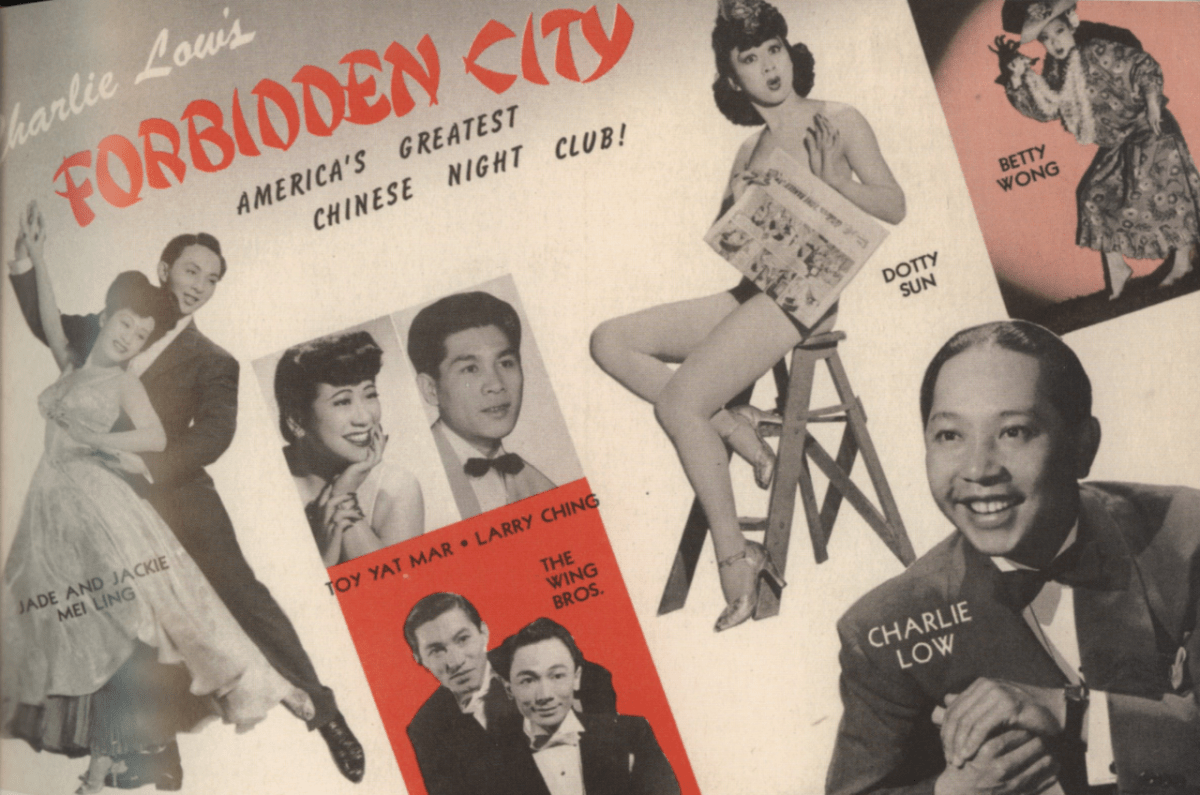
This book is classified as historical fiction which is appropriate, in this reader’s view, and the type of historical fiction that this reader likes.  There are real elements, including the Chinese American nightclub in San Francisco, The Forbidden City, and the internment camps for Japanese Americans during World War II.  We learn about these through a fully fictional story that focuses on the fictional characters, their hopes and dreams of stardom, and their relationships, rather than telling the story of a real historical figure. 

Grace is a Chinese American person from Plain City, Ohio.  Her family was the only Chinese American family in the small town and surrounding area, so she was not particularly knowledgeable about Chinese culture.  She was a star of the dance studio in her small town, and she dreams of becoming a star.  Her mother helps her leave town unbeknownst to her abusive father.  She arrives in San Francisco hoping to land a role in the 1939 Golden Gate International Exposition ( a real thing), but she fails.  She finds her way to Chinatown and asks for help from a stranger to find a nightclub she might work for.

Helen is the stranger Grace encountered.  She is from a strict and wealthy Chinese American family and lives in the family compound.  Despite her family’s disapproval she manages to get hired at The Forbidden City with help from Grace and Ruby.

Ruby is an aspiring dancer who is more streetwise than either Grace or Helen.  It turns out that Ruby is an American citizen not of Chinese ancestry but rather Japanese.  She hides this as The Forbidden City only hires Chinese and Chinese Americans. 

Narration flows across the three characters in separate chapters and tells of their hopes and dreams, successes and failures, and secrets as they progress their careers during the days of Chinese American nightclubs in San Francisco and while they are dancers at the successful Forbidden City nightclub.  World War II has substantial impact on the city and on these characters as citizens and visitors alike with Japanese background are herded into internment camps.

While the book gives an informative view of this time of Chinese nightclubs in San Francisco and the barriers and possibilities for success in show business for Chinese Americans, it is also a well written story about friendship and the impact of being in career competition with your friends.  It also gives a view of the impact of WWII and the internment camps from the view of these citizens, not all of whom are accepted to be equal citizens of the US.  In addition, it gives us the perspective of these citizens as they experience discrimination as Chinese Americans.  Helen’s character provides us a view of the challenges of honoring one’s cultural values which trying to be a member of the broader American culture.

This reader appreciated the extensive research done by the author to be able to draw a good picture of this period for this particular slice of the population.  This reader was fascinated that the while the Forbidden City touted itself to be an exotic showcase of 100% Chinese performers and was 100% staffed by people of Chinese descent, its audience was about 100% white, including a high fraction of military personnel on shore leave. 

This reader will seek other Lisa See novels to continue to explore historical times and places she chooses to show her readers. 

Foregone–compelling story from Russell Banks

Foregone

By Russell Banks

Published 2021

Read Aug 2025

This reader took a break from Louise Penny this summer and read a book by an author that has been highly reliable for this reader to provide an interesting read.

Leonard Fife entered Canada from the US in 1968, presumably to avoid the draft.  He became a documentary film maker and taught this subject at the graduate school level.  His wife, Emma, was one of his students.  She left her husband and children to be with him, and she has been with him as a producer for many years. Leonard is now quite ill and in hospice in his home.  He has invited another of his students, Malcolm, to make a documentary film about him.  The present day story line evolves over a few days of filming.

Malcolm is hoping Leonard will talk about the making of some of his great documentaries, but Leonard has other ideas.  He doesn’t answer the questions Malcolm wants him to address.  Rather, he focuses on telling his life story from the beginning. It’s not clear whether Leonard is going to make it more than a day.  Each time there is a pause, his nurse requests he take a rest.  Emma wants him to stop as well both because what he is saying isn’t pretty and because she too knows he needs to rest.  She threatens to leave the room, but he insists she stay.  He says he is telling the story for her. Leonard wants Emma to know his story.  Maybe she doesn’t want to know his whole story, but Leonard doesn’t want to die without her knowing it.

Bank’s prose is unrelenting and we also at times wish Leonard would stop but we know he won’t, and we know Banks won’t let us and we are glad for that too.

The Island of Sea Women-historical fiction from Lisa See

The Island of Sea Women

By Lisa See

Published 2019

Read Sept 2025

Lisa See gives us another fine historical fiction novel.  This one is set on Jeju Island, 51 miles south of the Korean peninsula.  We learn about life under the Japanese occupation 1910-1945 and the even more turbulent times following WWII when the Korea was divided in two with the north a spoil for the Soviet Union and the south being a spoil for the US.  The April 1948-May 1949 uprising in Jeju against the government plays a significant part of the story.  This reader enjoyed learning about the history of these times and the perspective of the Jeju residents about the various occupations.

The story rolls out in two arcs. 

During the first part of this story, we learn much about the structure of life on Jeju for families of haenyeo families.  The women bring in the income for the family by diving for sea animals and make the major decisions.  Their husbands stay at home, take care of the home and the children.  Boys are important for the family as the first-born son will ensure the parent’s remains are appropriately tended over their lifetime.  They are sent to school, paid for by the earnings of the mother and sisters who are divers.  Daughters are treasured because they will become divers and bring in revenue for their family before they are married and will provide for their own family after they marry.  Basically, the roles and actions of the wife and husband are reversed from other cultures, but inheritance and responsibility for caring for the souls of the deceased parents and grandparents etc falls to the sons.  Thus a single son is important and having multiple daughters is celebrated.

The primary story tells the story of Mi-ja, an orphaned daughter of a Japanese collaborator, and Young-sook, the daughter of the local diving collective’s leader.  It starts during the Japanese occupation of Korea.  Young-sook’s mother takes Mi-ja under her wing when she comes to their village after her parents’ deaths to live with her aunt and uncle.  She and Young-sook become very close friends as they both train to become haenyeo, women divers who harvest sea animals for sale. 

On Young-Sook’s first dive, her companion does not follow instructions and becomes engulfed by an octopus.  While she survives, her brain is damaged, and she requires supervision and care for the rest of her life.  Later, Young-Sook’s mother dies in a diving accident while helping her daughter.  Do-Soeng, mother of the damaged girl, takes over Young-Sook’s mother’s job as leader of the diving collective.

Young-Sook and Mi-Ju travel north to other diving sites for a season.  On their return to their village, they meet a handsome young man who Young-Sook fancies greatly although they don’t speak.  Young-Sook’s grandmother arranges marriages for each of the girls.  Young-Sook to Jun-bu, the son of Do-Soeng, and Mi-Ju to that handsome young man who turns out to be the wealthy son of a Japanese collaborative and who also works for the Japanese.  These events strain the relationship of the two women.  Mi-Ja moves to Jeju city with her husband.  Young-Sook’s marriage is a happy one while Mi-Ja’s is not.  Mi-Ja returns to her village for a short time to interact with her gods and hopefully increase her chances of becoming pregnant.  Both women become pregnant with their first children just before another trip of diving away from the village.  They dream that Young-Sook’s daughter and Mi-Ja’s son will marry someday. 

Events become more difficult for everyone after the US gains control of the government.  The people are surprised that there is even less freedom than when under the Japanese and any talk of being independent from the US is taken labels that person a communist.  We learn there are anti-communist purges following the 4.3 Incident, a strike that leads to a brutal encounter with the government.  Young-Sook’s husband, her first-son, and sister-in-law are executed at the Bukchon massacre in the village of Buckhon-ri, along with 300-400 others (this is a real event).  Mi-Ja and her son were present at the event as well but protected from harm due to her husband’s status in the government (Japanese collaborators were hired by the US back government).  Young-Sook asked Mi-Ja to help save her family but she did not do this.  This results in a rift between the women that continues through the rest of the story.  Young-Sook turns away from her youngest daughter, born after the massacre, when she marries Mi-Ja’s son. 

The second story arc occurs over a few days in 2008.  Young-Sook’s granddaughter and great-granddaughter arrive in Young-Sooks’ village from the US where Young-Sook’s daughter and son-in-law moved after their marriage.  This second arc tells the attempts the great-granddaughter makes to connect with Young-Sook.  The ending of this story will be left for you to discover.

Lisa See creates a fully engaging story of two girls who become friends, wives, and mothers.  She uses their story to help us understand both the society and culture of the island and the truly brutal situation Jeju residents suffered at the hands of the US-backed government after WWI.  She led this reader to learn more about the history of the island and the haenyeo sea divers.  See does an excellent job of helping us learn about various cultures and their histories through well drawn characters and their stories.  This reader will read more from this author, and she fully recommends this book to others. 

How to Read a Book–great characters and story from Monica Wood

How to Read a Book

By Monica Wood

Published 2024

Read Aug 2025

This was the first Monica Wood book for this reader.  It was recommended to this reader by a fellow reader with reliable recommendations (including the Dr Siri series).  She indicated that she found it engaging and read it quite quickly as a result.  That was a good enough recommendation for this reader so the search for a copy ensued.  Libby and Cloud Library that this reader could access had the book, but with long wait times.  This reader tried Hoopla which usually was a reliable source for “older” books and this reader was very pleasantly surprised to find an eBook copy available for immediate loan.

Two days later this reader had finished the book and thoroughly agreed that it was very engaging and a really enjoyable read.  Monica Wood provided a story of complex characters simply but powerfully. 

Violet is twenty-two years old and in prison for manslaughter.  She was driving the car that hit another car and killed its driver.  She was eighteen and in the process of leaving town with her boyfriend.  He made her the driver because he realized he was under the influence of too many drugs and alcohol to be trusted.  She wasn’t sober either.  Violet suddenly finds herself released from prison a bit early.  Her sister picks her up from prison and deposits her at an apartment in Portland she has secured for her.  Violet is very unsettled with this as she expected to return to her small town, not Portland, and especially because her sister has told her that neither she nor any other family member wants anything to do with her. 

Violet had been a member of a prison book club led by Harriet, a widowed English teacher, who is finally finding some meaning in post-retirement life through this activity that she provides for a collection of imprisoned women.  We enjoy learning about her book selections for the prisoners and their reactions to them.  An outcome of this is that this reader now has interest in reading “Spoon River Anthology”, a book this reader managed to never previously encounter.

The third main character is Frank, the husband of the woman Violet killed.  He is also retired and also has found retirement difficult until he creates a job for himself at a local independent bookstore who needs a handy-man to address maintenance issues that the young book-loving owners can’t manage themselves.  Frank is interested in speaking with Harriet who frequents the bookstore to find and order books for her prison book club, but he is shy, and his initial attempt is ineffective.  When Violet turns up at the bookstore while Frank and Harriet are there, Frank has a bit of a meltdown when he sees Violet, whom he hasn’t seen since the trial.   Harriet scurries Violet away.  Thus, the three become connected and the story takes off. 

The action of this book occurs over a few months.  The book tells the story by alternating between the three characters which engaged this reader quickly and completely.  We root for Violet as she gets a job that she loves, but we become concerned about her boss’s actions towards her.  We hope that Frank and Harriet can find a way towards each other.  Monica Wood tells these stories in a compelling but not overly sweet way.  She also gives us the back story of each of these characters which confirms that they are coping with human disappointments as they figure out how to live day by day.

This reader truly appreciated the author’s insights regarding retirees and their transition into the “retired” state when their work life has ended.  This reader also found it interesting that the author’s third character was a young woman who is trying to re-start her life after it was disrupted in such a truly life-changing way just as she was hoping her life was starting. 

At first, the ending felt a little abrupt to this reader but then it felt quite perfect.  How else would this reader want the book to go?  

This book compelled me to read more about Monica Wood and more by her.  You’ll find posts for several of these books at this site; search the “books by author” page for Monica Wood to locate them.  This reader certainly hopes Monica Wood will keep writing!

The One in a Million Boy–another great Monica Wood novel

The One in a Million Boy

By Monica Wood

Published 2015

Read Sept 2025

The structure of this book was very appealing to this reader.  There are two story arcs:  one of a boy (unnamed), likely “on the spectrum”, and the 104-year-old woman (Ona) for whom he is doing a boy scout service project; the other of the father of  this deceased boy (we learn this very soon in the book—this is not a spoiler) as he fulfills the remainder of his son’s service project after his son’s death.  The story of the boy and Ona is told through the recordings he made of Ona as he’s drawing her story out of her and simultaneously pushing her to seek a Guiness Book of World Records regarding something about her age.  The father’s story is told in a more usual style using his thoughts to describe the past situation—he was a professional guitarist who married his girlfriend when they learn she is pregnant—which, in addition to the loss of his son, help us understand his current mindset and actions.  He is grieving for his son, he is grieving for being a bad dad, he is grieving for the failure of his relationship with the boy’s mother (they married and divorced twice), and he is continuing to try to make it as a professional musician, a very difficult career path. 

Wood can draw such wonderful pictures of real humans that, although you may never know someone like them, you now know them so well.  This reader really appreciates this gift of hers, and it certainly drives this reader to read more from her.

This reader finds it strange that she cannot find a New York Times review of this book or any other of her books since her second one, My Only Story.  Possibly this is because that review indicated “Wood, whose first novel was titled ”Secret Language,” is an often graceful writer, and her appreciation of tragic lives that still manage to embrace love is marred only by a bit too much sentimentality.”  (1) This faint praise may have unfortunately eliminated her from a list of authors they follow since this book is as good or better than many this reader has read that they have reviewed.  Her publishers may not have done enough to ensure appropriate reviews and prizes but this reader is definitely a fan and highly recommends her books. 

When We Were the Kennedys: a memoir from Monica Wood

When We Were the Kennedys:  A Memoir from Mexico, Maine

By Monica Wood

Published 2012

Read Sept 2025

This reader reads few memoirs, but this one was a must-read for this reader after reading several of her novels. 

Monica Wood grew up in Mexico, Maine, across the river from Rumford, Maine.  Oxford Pulp and Paper Company was the major employer for these two towns and the surrounding area. Her father worked for this company. 

This reader went to this mill in Rumford, Maine twice in 1977 with her employer.  The mill was no longer Oxford Pulp and Paper.  At that time, the mill was part of one of several corporations who owned the facility over the years following the sale of the mill by the family who founded it and ran it for three generations.  This reader was an intern at a supplier to the paper industry that made a retention aid product that helped retain tiny pieces of cellulose and additives (such as clay, titanium dioxide, and others) in the paper web as it was made.  Retention aids were becoming increasingly important to the paper industry at that time as it sought to reduce water pollution that the industry had historically caused.  So, this reader wanted to know more about life in Rumford, ME and its neighbor across the river, Mexico, ME. 

Two other reasons made this must-read.  First, every book by this author that this reader encountered was great so this memoir would give this reader more insight into this author.  Second, Monica Wood and this reader are contemporaries.  Ms Wook was born in 1953 and this reader in 1957, so our childhoods occurred in a similar time period in the history of the country.

Like this reader’s family, Monica Wood’s family had a stay-at-home mother and a father who worked many hours in a factory and brought home a very comfortable middle-class income. But after that, the particulars of our lives were different. They were Catholic; we were not.  The children went to Catholic school; we did not.  They lived in an apartment in a town; we lived in a house in the country.  But Wood’s talent for enabling her readers to feel completely embedded in her story meant that this reader felt she had been a resident of Mexico and knew this family intimately. 

The Prologue rapidly and engaginly introduces the reader to “My Mexico”—the origin of the name of the town, the multi-cultural aspect of the town, the product of the town—tons and tons of paper that their fathers made, the mill where it was made, and the relationship of the mill with the town, the lynchpin of that relationship and the genesis of this memoir. “Our story, like the mill, hummed in the background of our every hour, a tale of quest and hope that resonated similarly in all the songs in all the blocks and houses, in the headlong shouts of all the children at play, in the murmur of all the graces said at all the kitchen tables.  In my family, in every family, that story—with its implied happy ending—hinged on a single, beautiful, unbreakable, immutable fact:  Dad.  Then he died.” 

The bulk of the memoir is centered on a particular year of Wood’s life—1963—when she was nine and the year her dad died.  Monica Wood’s father was an immigrant—he came from Prince Edward Island, Canada. Her mother’s family was from there as well, but they met in the US.  She had two older siblings, brother James Barry who was 27 and married with two, and sister, Anne who was 22, lived at home with her parents and three younger sisters, and taught English at the local public high school.  Monica was the middle of three younger girls who came in short order much later.  The oldest of these three, Elizabeth was mentally disabled and was in second grade for the third time, sharing a desk with the youngest of the three, Cathy.  The girls started their elementary school career at the Irish Catholic school in Rumford as they had ways to support children like Elizabeth, but when the school bus service from Mexico to that school was discontinued, the girls moved to the French Catholic school.  Their rented apartment was the top floor of a 3-flat.  Their Lithuanian landlords lived on the first floor and had a lot of rules to keep the three little girls quiet. 

We learn these things as the memoir rolls out through the eyes of nine-year-old Monica as she recounts the impact of the death of her family on her and on her family.   He was 48 when Monica was born and 57 when he suddenly dropped dead on his way to work one day.  She tells us about that day and the following week of making arrangements, viewing, the funeral, and the after-funeral wake.  We listen to her nine-year-old view of this with our seasoned adult eyes and are right there with her when we were children and when we were the adults in the affairs.

 Monica realizes her mother was devastated.  They no longer fit the “normal family” mold—there was no father who brought home the paycheck.  “Thank goodness for FDR” her mother said frequently when she received social security checks as a widow with 3 small children.  Uncle Bob, a Catholic priest and Monica’s mother’s brother was also devasted and eventually has a breakdown.  This was a major impact to Monica and her sisters and Uncle Bob visited them, and the kids at their school, weekly.  He took them for great adventures, swimming and the like.  Monica recounts their family’s visit to him at the Catholic hospital/rest home in Baltimore (the same home that’s mentioned in her novel Any Bitter Thing).

Then six months after her dad dropped dead on the way to work, JFK was assassinated.    The family’s trip to The Nation’s Capital went forward as planned despite it being at the same time as JFK’s funeral.  Her mother didn’t get to see Jackie but she states she felt a strong bond with her.

Wood gives us this story of her life and this year through the voice of nine-year-old Monica.  It’s such a believable voice.  What she understands and what she doesn’t understand about what’s happening over the course of this year is very well done. 

Fortunately, Wood includes an epilogue that helps us know how the family member’s fare.  Except for her mother, who dies of cancer only eleven years after her husband’s death, the rest of the family members have good lives.   Anne, the eldest daughter, who became her mother’s primary friend in early widowhood, has an especially lovely story.

Wood chooses not to detail anything about what happens to the town as the circumstances of the mill and its workers change substantially over time.  There are only premonitions in the last chapter  “..who can imagine the strike of ’64 as the last civilized walkout, the last conflict of the “good Old days of the Oxford”? “ “The strike has tooled the first, faint alarm for what is to come, a slow vanishing, almost imperceptible at first, another thousand souls gone away at the threshold of each coming decade….”.  She turns back to the focus of this work, her family.  She now describes the excitement they feel as Annie, who just got her driver’s license, is driving their dad’s car through the town and parking it in their driveway.  “And us is this family of women, singing the car-trip son.  There is no journey we cannot make this way.”

Wood does give us an excellent view of the impact of the strike of ’64 in her book of stories, Ernie’s Ark. 

As with all Wood’s books this reader has encountered, whether fictional or not, the author takes you into the lives of her characters in a way that you feel you’re reading about people for whom you really care.  And she does this with a straightforward, non-saccharine manner. 

Any Bitter Thing–a great Monica Wood book for discussion

Any Bitter Thing

By Monica Wood

Published 2005

Read Sept 2025

This reader tore through much of Wood’s canon because each book she read was so compelling, had interesting and fully fleshed characters, and often a twist or two.  This book is no exception.

Thirty-year-old Lizzy has much to process.

Following a fight with her husband, Lizzy went for a run at night, dressed in dark clothes (not smart!) and was a victim of a hit-and-run accident that left her near death and right in the middle of the road.  The next car stops; the driver pulls her to the side of the road and then leaves without calling for help for her.  This is not the first time Lizzy has been left quite alone. 

Her parents died in a car accident when she was two.  Her Uncle Mike, a Catholic priest convinced the court and his superiors that he is the only option to take care of her, and they allowed it.  Lizzy had a great childhood with him for about 8 years.  He was a wonderful foster father for her despite having no role models for how to handle various situations as he has no nieces or nephew and their parents to guide him.  His housekeeper had opinions but was not a mother herself and he didn’t appreciate most of her suggestions.  He ddid make friends with a neighbor woman who has a child the same age as Lizzy and he sought guidance from her at times.  When Lizzy was nine, the housekeeper reports two incidents she witnessed that suggest child abuse and she is taken from him.  Uncle Mike’s sister took her in for a short while (yes there actually was an aunt but she didn’t want to take on raising a little girl while she had her hands full with several young sons of her own), only long enough to ship her to a boarding school.   When Lizzy asked her aunt about Uncle Mike, the aunt informed her that he died of a heart attack—heart conditions ran in their family.  So three times within nine years she was left quite alone in the world. 

After college, she returned as a high school counselor to the town where she spent the happy part of her childhood.  Her husband agreed to live in this town, but he really wanted to return to city life.  They argued frequently about this conflict and Lizzy also suspected he might be having an affair.  Since their last argument had driven Lizzy to take that fateful run, he felt somewhat obligated to stay with her.  He worried that she is losing it when she describes a visitation from Uncle Mike while she was in the coma despite knowing that he died shortly after their separation.

The story moves back and forth in time and between the voice of Lizzy and the voice of Uncle Mike.  It’s got some very interesting twists that I won’t reveal.

This reader thinks this has lots to offer a book discussion group.  The characters all have secrets and all have made a number of fateful decisions over time.  Did they make the right decisions? 

Bravo, Monica Wood, for another great read.