Blog

Ernie’s Ark–great stories from Monica Wood

Ernie’s Ark

By Monica Wood

Published 2002

Read September 2025

This reader has read several of Monica Wood books recently and it’s high time to post on them.  The order of the posts will not be the order in which they were read but rather the order in which they were published.   

This reader enjoys interrelated short stories, so she anticipated liking this book and she was well rewarded.  The book is by a Maine author, as is Elizabeth Strout,  author of the Olive Kitteridge books which was kicked off by a collection of short stories titled Olive Kitteridge.  A major difference between the books is that Olive Kitteridge centered primarily around a single character.  The stories in this book take place in fictional Abbott Falls, Maine during the strike against the main employer in town—a pulp and paper mill owned by Atlantic Pulp and Paper.  They tell about how various members of the community and the CEO of Atlantica Pulp and Paper are reacting to this strike.  The CEO is the third member of the founding family to lead the plant which is the major employer in the area.

The Ernie of the title is Ernie Whitten, a pipefitter at the mill, who was 3 weeks from retirement when the strike started.  His wife is dying from cancer and is in a hospital 40 miles away.  He is angry at the strike timing and about his wife’s illness and especially about his impotence to change the course of either.  He decides to compete in a contest run by the art department of a nearby college and takes a small wooden boat he builds to the college to submit it as an entry.  He learns he’s misunderstood what an “installation” is and how the contest works.  Rather than merely submitting his plan (the usual approach as the “installations” are large works of art), he decides to build his installation–an ark- in his yard.  He brings his wife home against medical advice so she can witness his gift to her.  He refuses to acknowledge the instructions from Dan Little, another striking paper mill worker who is currently working as a code enforcement investigator for the town, to dismantle the ark.  Ernie actually gets Dan to take photos of him with his wife, two dogs, and two birds on the ark.

Dan Little figures in other stories, both as a major character and as a minor character.  Many of his family members worked at or are currently working at the mill, including his youngest brother who decides to cross the picket line as a scab.  This causes great disruption in Dan’s family and with his relationship with other community members.  Dan’s ex-wife, now remarried to a philandering artist, also appears in several stories as does her step-daughter, Francine.  Ernie’s wife and their son James are also major and minor characters in some of the stories. 

This reader was very immediately captured by Wood’s book.  Monica Wood knows what she writes.  Wood grew up in Rumford, Maine whose major employer was Oxford Paper and for which the CEO was the third member of the founding family to lead the company.   There had been several short strikes over time which were all resolved amicably, providing the workers with a good wage and benefits package and the company with a labor contract that still provided an appropriate profit.  During Wood’s childhood, there was a strike at the plant that was different.  That strike was resolved only when the mill was purchased by another company, paralleling the situation in this story.  This was a turning point in the history of the mill as competition from other companies and water quality regulations began to impact the viability of the plant.  This was also a turning point in the community. 

Wood’s stories in Ernie’Ark describe the pressure the situation at the plant is having on the worker and their families who are living through the strike, how their relationship with this company has shaped them, and how this relationship is now evolving.  There is no trace that the author has an opinion about the company, the union, or the strike.  Rather she gives us very human stories of some of the workers, their families, and their struggles, both strike-induced and otherwise.   This isn’t a book about a single person but a collection of people in a community wrestling with a difficult situation that they know is bound to impact their lives significantly. 

Well developed characters, great writing, and good stories.  This is a book worth looking for and reading. 

Louise Penny Books—very bingable!

Louise Penny books in order of publication:

Book                                                 Published                        Read

Still Life                                          2005                                  July 2024

A Fatal Grace                               2006                                  May 2025

The Cruelest Month                  2007                                  May 2025

The Brutal Telling                     2008                                  June 2025

A Rule Against Murder            2009                                  May 2025

Bury Your Dead                          2010                                  June 2025

A Trick of Light                           2011                                  June 2025

The Beautiful Mystery              2012                                  June 2025

How the Light Gets In              2013                                  June 2025

The Long Way Home                2014                                  July 2025

The Nature of the Beast          2015                                  July 2025

A Great Reckoning                    2016                                  July 2025

Glass Houses                              2017                                  July 2025

Kingdom of the Beast             2018                                  July 2025

A Better Man                               2019                                  July 2025

All the Devils are Here            2020                                  Aug 2025

The Madness of Crowds        2021                                  Aug 2025

A World of Curiosities            2022                                  Aug 2025

The Grey Wolf                            2024                                  soon

The Red Wolf                            coming in 2025            not yet!

If you take a look at when these books were read, you will notice two things:  nearly a year between reading the first book and the second; and then the following 17 books in 4 months.  Why?

This reader read the first book just before discovering the Colin Cotterill books which set off a binging of all available Dr Suri books.  This reader later looked up Louise Penny books as they are set in Quebec, the destination of this reader’s bike trip planned for June 2025.  Why not read a book set near where this reader was headed?  And so, this reader became thoroughly hooked.

Why?  Several reasons. 

Availability: This reader read the entire series as audiobooks available through her library’s Hoopla service.  So, it was easy to get the next book in the series immediately after finishing one regardless of day or time. 

Great Readers: The same wonderful reader, Ralph Cosham, read books 1-10.  It is quite wonderful to hear recurring characters’ voices sound the same in each book.  Ralph Cosham unfortunately died too early, and Louise Penny was faced with shifting her readers to a new reader for her audiobooks.  She describes the reason for the change and the process she used to select a new reader, Robert Bathurst.  Since the lead character learned English primarily in London and speaks with a slightly British accent, Robert Bathurst being British worked for this reader, especially with the help of Louise Penny’s discussion of the change.   Louise Penny again shifts readers starting with the 2024 book and moving forward choosing a Quebec native.   The 2024 book wasn’t in this reader’s Hoopla library which frankly enabled this reader to take a pause and read something else!   But this reader will certainly read both the 2024 and 2025 books soon (2025 book not yet published!)

What else?  So, availability and great readers are nice but obviously it’s the writing—the characters, the stories, and the language that makes a series truly bingeworthy.

Characters and Place: Penny has developed a set of characters who reside in Three Pines, a small hamlet in the Eastern Townships of Quebec that is not on any map.  All the Three Pines books noted above involve the village of Three Pines in some way and most of the recurring characters play some role.  Over the course of the books, some of the roles change so those listed are the roles initially in the series. 

Chief Inspector Armand Gamache, the lead character, is head of the homicide division of the Surte du Quebec. 

Jean-Guy Beauvoir:  second-in-command to Gamache

Isabelle LaCoaste:  critical member of Gamache’s team 

Reine Marie Gamache: Armand’s wife and retired lead archivist for the National archives housed in Montreal. 

Clara and Peter Morrow: Three Pines residents; artists

Ruth: Three Pines resident; nationally recognized poet; she adopts a baby duck, Rose who becomes a constant companion.

Myrna: Three Pines resident; retired psychologist who now runs a used and new bookstore and lives in the loft above the store

Olivier: owner of the Three Pines Bistro

Gabri:  Olivier’s partner and operator of the Tree Pines B&B

And there are others including the Gamache’s children and pets.

Armand and Reine Marie remain in love after a few decades of marriage.  It’s interesting to this author that this series and the Dr Siri series have a protagonist who has remained in love with his wife and married to her throughout a long career (although Dr Siri’s wife has died before the series starts).  This is in contrast with many drama series this reader watches on TV in which the lead detective is divorced and often estranged from his children or their marriage is dissolving. 

And The Stories

There is some sort of mystery in each book although sometimes it takes awhile to show up.  Similarly with murder—there is usually one but sometimes it occurs late in the book.  But Gamache is always dealing with something be it solving a murder, convincing others that a seemingly natural death is a murder, tracking down a friend’s husband, protecting a speaker whose message he finds disturbing, seeking to clear corruption from the Surte’s academy, etc.  Penny brings contemporary topics into the stories—the Covid pandemic, opioid addition, fentanyl trafficking, eugenics, impact of the internet, and more.  There is some movement of the story arc of Gamache and his friends and family as well in each book.  In some books, the personal story is at least the initial primary story but, in those cases, there is a story that weaves in that involves a criminal act. 

Penny’s writing is compelling.  Her books seem to move slowly at times, but many times the actual timeframe covered slowly is happening over only a few days.  The slowness arises from absorbing descriptions of the surrounding landscape or from revealing the thoughts of one of the characters.  We are privy mostly to Gamache’s thoughts and feelings but at times we hear those of others, most usually his second in command, Jean-Guy, or of Isabelle LaCoaste, another team member. At other times the action she is describing is quite intense and this reader found herself closing the book for a few minutes to rest before continuing. 

Throughout the series the reader is reminded frequently (but not too frequently) of Gamache’s virtues, including his willingness to take a chance on police personnel that others aren’t (Jean-Guy, Isabelle are two examples), his commitment to the Surte’s motto: Service, Integrity, Justice, and his kindness. 

While a reader can start with any book in this series, it’s worth starting at the beginning and moving through the series so that the evolution of the characters and their relationships can be most fully appreciated.   This reader is glad she found the series long after it began so that she wasn’t confronted with having to wait for new entries to be published until now.  This reader is about to join the large number of Louise Penny enthusiasts’ wait for new additions to this excellent series. 

Mutiny on the Bounty and Two Years Before the Mast—rousing sea yarns

Mutiny on the Bounty

By Charles Nordhoff and James Norman Hall

Published 1932

Read April 2025

Two Years Before the Mast

By Richard Henry Dana Jr

Published 1840

Read Jan 2024

This reader is discussing these two books together because of their similarities, especially as books about sailing vessels and their crews in the era of sextants and the stars as the only instruments. 

Richard Henry Dana Jr spent two years on a merchant ship sailing from Boston in 1834.  This book is a memoir of his journey.  This ship went along the eastern coast of South America and rounded the tip of South America at Cape Horn, and headed north to its destinations—-several ports along the California coast including  San Diego Bay, San Pedro Bay, Santa Barbara Channel, Monterey Bay, and San Francisco Bay. It’s goal: fill the ship with around 40,000 cow hides and deliver them back to Boston.  Getting to and from California was certainly a long adventure, but the ship spent over a year while in California, going up and down the coast gathering hides while some of the ship’s crew, including Dana, worked on land to help gather and process the hides. 

Mutiny on the Bounty is a historical fiction novel that retells the  events of the mutiny against Lieutenant William Bligh, commanding officer of the English ship HMS Bounty in 1789.  This ship’s goal was to retrieve breadfruit plants from Tahiti and return them to England.  The story is told by narrator Roger Byam, an officer, who is loosely based on actual crew member Peter Heywood.  Byam recounts his recruitment, life on the ship, and especially multiple episodes of brutal discipline ordered by Bligh throughout the trip.  Fletcher Christian, second in command of the ship, and several crewmembers took control of the ship while in port in Tahiti, and sent Bligh and eighteen of his officers off in a very heavily laden small ship.  Although odds were very much against Bligh and his small ship making it back to England, they do.  A ship is sent back to Tahiti to capture the perpetrators of the mutiny and bring them to justice.  Most of those actually part of the mutiny left Tahiti on the HMS Bounty with Fletcher and those remaining in Tahiti, including Byam, were not involved in the mutiny.  When the ship arrives in Tahiti, Byam and others volunteer information about the mutiny and were surprised that they were taken into custody, accused of mutiny, and taken to England to stand trial.  The mutiny occurs about 1/3 of the way through the novel, the rest of the novel recounting the situation of the men while they were resident on Tahiti, while they were held in custody, their trials in England, and what happens after these trials.

Both books are based on real events.  Both are told by a first-person narrator.  Both books describe what life is like on these sailing ships including great detail of various jobs of the crewmembers and their daily routines.  Both books recount the discipline ordered by their commanders, the severity of which varied by the specific commander.  Bligh’s approach was clearly must more severe than the two commanders whom Dana served.  Dana’s book provided more details of the costal geography and botanical and animal life.  Both books give information about the peoples and culture of the ports they visited.  Both narrators learned the language of the people resident in the island/coast they visited and provided translation for other ship members. 

These are books that this reader would likely not have encountered except that they were part of the program for her book discussion group.  This reader found the books generally engaging but reading the two books in each of two consecutive reading seasons felt a little repetitive.  As this reader’s son was deployed on a Navy ship, it was interesting to gain some insight about ship life.  Of course, the specific details in 1789/1840 are different than in 2024, many concepts are similar.  Dana’s book also provided this reader with a new understanding of the California coastal history.  By the time Dana was there, Spain no longer held sway, but Mexicans sent to settle the various cities still ruled them.  This reader is satisfied that she read them, but she does not intend to read the two other books in the Bounty trilogy. 

Demon Copperhead–Kingsolver knocks it out of the park with this one

Demon Copperhead

By Barbara Kingsolver

Published 2022

Read Aug 2023

This reader has not always been a fan of Barbara Kingsolver.  While her stories have been interesting, her novels have sometimes felt like a lecture, not unlike the feeling this author gets from Wendall Barry novels.  Hence this reader was a bit reluctant to invest in this novel as it’s a reasonably long one at 560 pages. 

This reader started this novel via an audiobook but was not sure the southern accent of the reader was something this reader wanted to endure.  So an e-book was obtained, and reading was restarted.  This reader eventually got used to the southern accent and moved seamlessly between  the audiobook and the e-book.

There is much comparison elsewhere about the clearly planned parallels with Dicken’s David Copperfield with respect to characters and types of challenges the narrator faces and will leave to others to discuss them in detail.  The primary one of interest to this reader is that both narrators end up orphaned and must endure growing up in the face of the challenges poised by the society of the times.  In this case, one huge challenge was the quagmire faced by many thrown into the foster childcare program of their local county.  In Demon’s case (using his nickname), his stepfather’s unexplained views of the family next door to Demon and his mother combined with their own strained resources and energy meant that Demond is forced into the foster childcare program.  His foster parents are not unlike many—the payment they receive in return for housing the child is a significant portion of their income.  In addition, Demon’s foster parents also rely on him for additional financial support either via his physical labor on their farm or by working outside the home and garnishing his wages.  His case workers’ very heavy caseloads are also not uncommon.

The novel is very engaging although at times heartbreaking.  The reader will hope that his football injury doesn’t lead to opiate addiction.  The reader will hope his relationship with a very troubled girl won’t lead to more difficulties for him.  This reader hoped that since Demon is the narrator, the book wouldn’t be finished by someone else relaying information of his death. 

An interesting aspect of the novel is the distinctions Demon sees between life in his rural community vs life in the big city where his neighbors’ daughter lives.  His neighbors take Demon and their grandson to see their daughter, June Peggot, and her niece, Emmy, where they stay for about a week (during which time Demon’s mother marries his stepfather who turns abusive shortly after the wedding).  The lack of the ability to grow your own vegetables and to just go outside easily are quite noteworthy to Demon.  June, an RN, and Emmy return to Lee County both to enjoy those attributes and to be away from a prejudicial environment against “country hicks”. 

This book is very engaging and generally free from the lecturing tone this reader experienced in some other of Kingsolver’s works.  As someone raised in a rural/small town county, this reader found her depiction of foster childcare was believable, her comments about country vs city lifestyles were appropriate and were not judgmental, and her general depiction of rural/small town life was accurate  .  The devastation of the opiate and general drug crisis, especially in this region of the country, was well described and again non-judgmental or exploitative. 

This reader’s book club found much to discuss and ran out of time to cover all the possible points to discuss.  Since this club meets for 2.5 hours, that’s something.

Lucy by the Sea—Strout’s pandemic novel–a good one!

Lucy by the Sea

By Elizabeth Strout

Published 2022

Read March 2023

By now you may be aware that this reader reads everything by Elizabeth Strout.  This essay’s posting date so long after its reading shouldn’t imply any negative connotations about this reader’s opinion of it—merely the usual problem of reading faster than the essays get written.

This novel continues our interaction with Lucy Barton.  She first appeared in My Name is Lucy Barton (2016) then in Anything is Possible (2017) and again in Oh William(2021).  Now we see Lucy Barton about 20 years after her divorce from Wiliam, her first husband of about 20 years, as a fairly newly widowed from her second husband, whom she adored, and at the very beginning of the Covid-19 pandemic.  William, divorced from his second wife, is a scientist and sees the writing on the wall regarding this new disease.  He convinces Lucy to go to a house he rented in Maine.  She’s reluctant to leave her beloved New York where her children reside.  She plans to take only her iPad, despite being a writer by occupation.  William packs her laptop as he knows this isn’t going to be as short a stay as Lucy imagines.

They settle into this rented house which is near Crosby, Maine, a town Strout readers have visited in other books.  In fact, their house is pretty near Bob Burgess’s place and Lucy and Bob become walking friends.  Other past characters have cameo appearances but reading any of the previous Strout books is unnecessary to appreciate this novel.

This book is definitely about the Covid-19 pandemic—how people approached it, their fears, their reaction to being cooped up in their homes, their longings for family and friends they aren’t seeing, etc.  But it also is a book like other Strout books—about relationships.  In this one, it’s about Lucy mourning her husband David, finding a new friend in Bob Burgess, worrying about her grown kids, and sharing living quarters with an ex-husband. 

It’s classic Elizabeth Strout and this reader enjoyed every word of it. 

Lady Chatterley’s Lover—Who has really read it?

Lady Chatterley’s Lover

By D.H. Lawrence

Published: privately in 1928, 1929, and 1930; edited version in the UK in 1932; first unexpurgated edition by Penguin House in the UK 1960

Read: June 2024

This novel is among those that everyone “knows” about but not so many have read.  Lawrence had to publish it privately to get it into the public’s hands.  A heavily edited version was published in the UK two years after Lawrence’s death.  It wasn’t until 1960 that an unexpurgated edition was published in the UK by Penguin House.  The publishing house was tried in a very public case for publishing obscenity but won and published a new edition in 1961.  The book was banned in many countries, including the US.  The US ban was overturned in 1959 and was read widely in the 1960’s as the US culture was undergoing a significant shift in its view of women and sex freedom. 

What made this book so appalling?  Two quotes found in the Wikipedia article on the book  (1) are quite telling: “I’ve not taken ten minutes on Lady Chatterley’s Lover, outside of looking at its opening pages. It is most damnable! It is written by a man with a diseased mind and a soul so black that he would obscure even the darkness of hell!”  (Senator Reed-Smoot in 1930) and “is this the kind of book “you would wish your wife or servants to read” (Mervyn Griffith-Jones, chief prosecutor in the Penguin House trial, 1960).   As usual, a banned book that hasn’t really been read and a paternalistic comment.  In the US trial, this book apparently established a standard of “redeeming social or literary merit” when assessing material to be banned as obscene. (1)

So what did this reader find when reading this potentially obscene novel nearly 100 years after it was published privately? 

In the opening chapter we learn that the protagonist, Lady Constance Chatterley (at that time just Connie), and her older sister had some sexual interactions with boys while they were teenagers.  So here in the first chapter is the first content considered objectionable—teenage girls having sex.  Not only that, but Connie also considered sex the least interesting aspect of her interaction with her lovers—the dialog with the boy being the most engaging.  And then Connie reflects on the sex act in ways a Senator Reed-Smoot may not have appreciated. 

Connie marries “up” to Sir Clifford Chatterley while he is home on leave and they have a month’s honeymoon.  Unfortunately, the honeymoon does not result in a pregnancy as desired by her father-in-law which is a problem as her husband returns from the Great War paralyzed from the waist down and impotent thus ending their sex life before it hardly started.  They move to his country estate, which is rather isolated, her only other human interactions with people who visit him, and the servants.  In time, her husband decides he would like to have an heir, and he tells her so.  The implication is clear—have sex with someone else—of acceptable class.    She eventually has an unsatisfactory affair with one of them. 

Eventually Connie meets her lover, the estate’s gamekeeper (not the gardener!).  The book does become much more steamy here as she moves from having sex done to her (with permission) to making love with her lover. 

Although this book is quite steamy at times, there is more going on in this book than that including expectations of parents for grandchildren, class issues, what’s right and wrong for men vs women. 

This reader looks forward to an interesting discussion of this book next season. 

The Dark Forest and Death’s End—the Rest of the 3 Body Problem Trilogy

The Dark Forest

By Cixin Lui

Translated by Joel Martinsen

Published 2008 (China); 2015 (US)

Read April 2024

Death’s End

By Cixin Lui

Translated by Ken Lui

Published 2010 (China); 2016 (US)

Read Nov 2024

These two books complete the trilogy known as Remembrance of Earth’s Past by Cixin Lui which began with The 3 Body Problem which this reader has previously discussed.  This reader found each book in the trilogy to be extremely remarkable.  In addition to being great “hard core” science fiction, these books challenge the reader to confront the Fermi paradox and a possible solution to it—the dark forest hypothesis.  The Fermi paradox is essentially the unanswered question “where are they?”  Shouldn’t we expect there to be life elsewhere in the universe?  Then why isn’t there evidence that it exists? 

The 3 Body Problem provides the story of the search for life elsewhere in the universe that, due to somewhat rouge efforts of one scientist, both receives contact from another civilization (Trisolaran) and responds to that contact which sets up a series of events that puts life on earth at peril.  The foreign civilization wants to conquer Earth and use it for its own.

The Dark Forest provides the story of attempts to deal with the Trisolaran threat.  The Trisolaran’s superior technology includes “sophrons” that see and hear everything on Earth and block Earth’s progression of their own understanding of physics.  A “Wallfacer” project is initiated:  4 people are chosen to develop strategies to overcome the threat of Trisolaran.  They are given nearly unlimited resources to accomplish this.  The Trisolarans try to upset this project by selecting “Wallbreakers” that pair to the Wallfacers with the goal of revealing their strategies thus making them useless.  Three of Wallbreakers are successful.  The fourth Wallfacer, Lui Ji, develops the dark forest hypothesis — that there are many civilizations throughout the universe that are silent and hostile; remaining silent protects them from the other hostile civilizations.  After some plot twists and thrilling scenes not described here, Lui Ji is able to convince the Trisolarans to enter a truce to prevent their own civilization from exposure to other hostile civilizations—a Mutually Assured Deterrence approach . 

Death’s End covers a truly remarkable range of time as Earth continues to seek a path of avoiding death of their civilization by a series of approaches.  In an early section of the novel, Cheng Xin is an astrophysicist who works on the Staircase Project that is recounted in the Netflix series of the 3 Body Problem, discussed previously.  When the Lui Ji steps down as the human linchpin that has kept the Mutually Assured Deterrence approach keeping the Trisolarans at bay, that approach falls apart and a new era begins.  This reader won’t detail the numerous things that occur in this new era and beyond but Cheng  Xi  and Thomas Wade, the CIA agent leading the Staircase Project, are involved in most of them enabled by the hibernation technology introduced to us first in The Dark Forest. 

This reader was impressed by the author’s ability to thrill science fiction readers with impressive technical details of technologies that seem plausible while futuristic.  But the author accomplishes far more than that.  The substantial philosophical questions posed by the stories are quite profound and he uses credible characters to bring these questions to life.   Wallfacer Liu Ji’s relationship with his enforced role as a Wallfacer is exquisitely told—his initial rejection, the transition period, developing a useful strategy, the courage to execute it and endure early criticism, and the fortitude to carry out the deterrence mission.  Similarly, the author effectively uses the character of Cheng Xin in a believable way so that the reader experiences her feelings as she progresses through her essentially solitary life, driving potential solutions to enable the survival of Earth, and making decisions that likely impact the fate of it. 

This word “Wow” leapt to this reader’s mind over and over.  Great characters, immense questions, exceptional technical details, and incredible effectiveness in taking the reader literally billions of years into the future.  The relationship this reader has with the universe has been altered as a result of reading this remarkable trilogy.  

My Friends–thought provoking work from Hisham Matar

My Friends

By Hisham Matar

Published 2024

Read Feb 2025

Friendship, the impact of a single moment’s decision on a life, longing for home and family:   These are major themes of this newest book by Hisham Matar.  This is the first book this reader has experienced by this author. 

The book centers on Khaled, an eventual ex-pat in London from Benghazi, Libya. He went to the University of Edinburg to study literature.  His father, a man with a PhD from Cario University, cautions him to “not get drawn in”, a piece of advice that the young man really doesn’t fully understand.  There are other Libyan students at U Edinburgh, and he enjoys conversation with them.  One of them, Mustafa, suggests Khaled join him for a protest in London at the Libyan Embassy.  They will wear masks so no one can recognize them.  Although not particularly interested in politics, Khaled agrees to go, and his life is changed forever.  During the protest, Libyan troops fire upon the protesters from inside the embassy, killing several protesters and a journalist and injuring others.  (This actually happened in 1984.)  Khaled and Mustafa are among those injured and taken to hospital.  Khaled is severely hurt and spends several months in the hospital.  The friends are uncertain whether their actual identities were revealed but must now assume they have been and so enter a situation of being exiles from their country.  Fortunately, Khaled and Mustafa get asylum in the UK after the incident and gets some help from others to find a place to live.  To keep his family safe, Khaled must lie to his family about his circumstances and why he isn’t returning for summer breaks, or essentially forever.

Khaled also meets Hosam, the author of a story he heard with his father while still in Libya which requires his own exile to the UK. After Hosam and Khaled each determine they won’t be betrayed by this new acquaintance, they enter a new stage in their relationship.  Khaled, Hosam, and Mustafa meet monthly for intellectual discussions and become good friends. 

Each exile takes a different path over the years with respect to career. When the 2011 Arab spring arrives, their approach to life becomes even more distinct.  Mustafa returns to Libya to fight against Gaddafi’s regime.  Hosam returns to Libya to be with his family for awhile but then returns first to London and then leaves for California with his wife and child to live in a house his exiled father bought in the distant past.  Khaled stays in London in the same apartment he’s always been in since leaving the hospital and stays a teacher where he’s been for some time.

Khaled watches as Hosam leaves for America and recalls something his father once told him regarding friends: you only need one or two that you can trust and that provide you pleasure. 

A discussion this reader attended suggested Khaled’s apparent lack of engagement is disappointing.  However, this quote gave this reader a different view:  “I have managed, Mother, not to want a different life most of the time” Khaled imagines saying, “and that is some achievement.”  This reader agrees.  And this statement taught this reader that expectations this reader holds for others should be questioned and probably abandoned.

In addition to providing a truly stirring story about friendship, it also teaches about being an exile and it led this reader to learn more about the 2001 Arab Spring.  For these reasons, this reader is very grateful to the author. 

Wandering Stars—more from Tommy Orange

Wandering Stars

By Tommy Orange

Published 2024

Read Feb 2025

Tommy Orange’s new book is presented in 4 parts:  Prologue; Part One:  Before; Part Two:  Aftermath; Part Three:  Futures.   

The Prologue provides some historical perspective to the book that follows, first commenting on the Sand Creek massacre and then discussing two parts of history involving Richard Henry Pratt, a Brigadier-General in the US Army.  Pratt supervised Native American prisoners of war held at Fort Marion in St. Augustine, Fl.  He later founded the Carlisle Indian Industrial School in Pennsylvania.    He is known for using the phrase “kill the Indian, save the man” in reference to the ethos of the school and efforts to forcibly assimilate Native Americans into white American culture (1). 

Part One: Before is the prequel to There, There.  It is historical fiction that covers three generations of the Star/Bear Shield/Red Feather family that precedes characters in the remaining sections of the book.  This section is great historical fiction, as defined by this reader, as it sets characters in the time and place of real events—Sand Creek massacre, Fort Marion, and the Carlisle Indian School.  The stories of Jude Star, Victor Bear Shield, and Charles star directly interact with Richard Henry Pratt and give a picture of what Native Americans endured under the US Government’s active program to distinguish Native Americanism and replace it with Christian American beliefs and conduct.  Charles’ daughter, Victoria, is raised by white foster parents and denied her history until her foster mother’s death.  She has two daughters by different men who are the grandmother (Jacquie) and great-aunt/guardian (Opal) of Orvil who went to the Powwow in There, There.  Her story is the connection to There, There’s sequel that follows in Part Two: Aftermath.

Part One: Before covers a very long period of time—from the Sand Creek massacre in 1864 to 2018 in only about one hundred pages so the reader gets only small but potent glimpses of the family’s history through a variety of voices.  This reader left the section somewhat exhausted and very sad at what these family members endure through the various approaches to erase anything of their history and culture.  

Part Two: Aftermath is a sequel to There, There.  While some reviewers indicate the book stands on its own, which in many ways it does, this reader would advise reading There, There first to have a better understanding of the characters in this section and the events that transpire before and during the Powwow. 

This section slows down dramatically compared with Part One: Before.  In about one hundred pages we live with Orvil as he tries to recover from the gunshot wound that he suffered at the Powwow he attended in an attempt to connect with his Native American culture through dancing.  He descends into drug addiction as he moves from the pain killers, prescribed to help him with the pain of his wound and surgery, to a drug mixture concocted by Sean’s dad.  Sean is the adopted son of white parents.  His mother previously died of a debilitating disease.  Sean’s dad, a pharmacist, had tried to mitigate her pain and heal her through a variety of drug mixtures.  He has since left his job and makes a living (of sorts) selling these drugs with the help of Sean, and eventually Orvil.  Sean learns that his background includes Native American DNA in addition to the African DNA that his appearance has already made clear.  This provides him even more confusion about who he is than he had prior to learning this.

This section also spends time with Orvil’s brothers Loother and Lony, their great aunt/guardian Opal, and their grandmother Jacquie.  We watch as they all try to find their way through the aftermath of the Powwow, Opal’s (presumed) cancer diagnosis and treatment, and Jacquie’s reconnection to her family as she tries to stay sober.  Their paths are wide and varied but it’s clear they are trying to forge connections with each other but are living solitary and lonely lives. 

This section was also brutal to read for this reader as it’s occurring in essentially present day.  Lives like these are not outliers   Parts One and Two both include situations of adoption of non-white children by white parents.  The difficulties commonly faced by adopted children of a longing to know their “real” parents and family are compounded by orders of magnitude when they are clearly “non-white” and trying to exist in “white” society with little or no acknowledgement that this is trauma inducing. Although Orvil and his brothers live with their great-aunt/guardian who is related by blood, they are struggling to understand how they fit into white society.  There, There discussed that Opal discouraged them from trying to be “Native American” and we now understand part of the source of that.  Opal had no connection to her Native American culture save knowledge that her mother was Native American but raised “white”. 

Part Three: Futures consists of two chapters.  The first chapter is narrated by Orvil and tells of his rehab and life since then.  He survived!  We also learn that Sean survives also.  The second chapter is a letter from Lony, who had run away near the end of Part Two: Aftermath.    While this reader was glad that the lives of all these characters took a turn for the better even if not fully wonderful, this reader also wondered if this was really part of Orange’s plan for the novel.  Did his editors or publisher “kindly suggest” he end the book with some light in their lives?  This reader has done research to learn the answer to that question, partly because maybe that’s a question best left unanswered.

Ultimately, this reader recommends reading this book (after reading There, There) and discussing it with others.  It has a huge amount to say to all our society about many topics.  It’s quite pertinent in this time as the US struggles with its response to the thousands of people who are trying to become Americans and who aren’t “white”. 

Kingmaker—an amazing woman

Kingmaker

By Sonia Purnell

Published 2024

Read Dec 2024

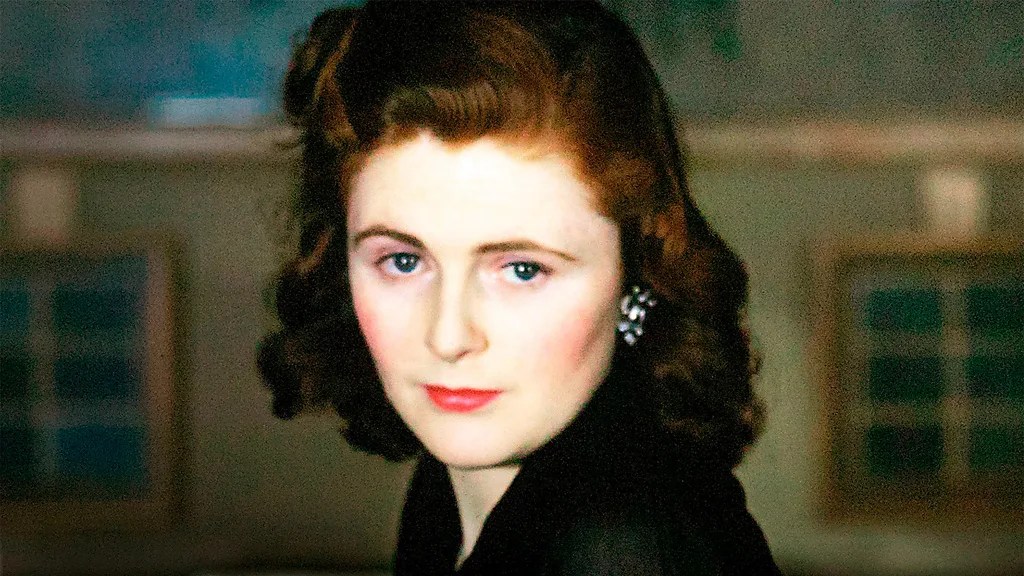
This book is a literally large biography—the large print edition this reader enjoyed had 624 pages of content and 112 pages of acknowledgements, notes, bibliography, and index.  This reader certainly enjoyed the intent of this author to give us a full picture of Pamela Beryl Digby Churchill Hayward Harriman, a clearly important figure in world history with whom I was totally unfamiliar. 

Purnell tells the story in three parts plus a prologue:  Act One:  War; Act Two:  Peace; Act Three: Power.   Details follow below.  But first, some major take aways:

  1. Pamela wants to have a meaningful role in life. 

This was not simple given the time in which she lived and the very narrow set of roles for women in general and aristocratic women in particular.  However, she was successful in accomplishing this goal and had a major impact on the US role in WWII, on the US Democratic Party in the 1980’s, and was appointed Ambassador to France in 1983 when she again played significant roles in war and trade

  •  Pamela was willing to do what had to be done.

She participated in Churchill-condoned “pillow-talk diplomacy” to help her country during WWI.

She used her alluring capabilities to attract wealthy men who could provide her financial support

But she was also willing to “roll up her sleeves” and be in action to get the Democrats back on their feet in the 1980’s and as Ambassador to France.

  •  She was a good wife

She dealt with Randoph Churchill’s debts when he wouldn’t

She nursed husbands Leland Hayward and Averill Harriman through their illnesses until death parted them.  In Hayward’s case she spent her own fortune to take care of him.  

  •  She made some big mistakes

She chose the wrong biographer to write her story and overspent to get out of the contract with him.  However, he published a very unflattering unauthorized biography of her anyway.

She made some poor financial decisions, especially in dealing with Averill’s money managers who nearly lost her the Harriman fortune completely

  • She was both generous and hurtful

She transferred substantial wealth to her son Winston and his family despite his publicly critical comments about her.  Certainly, he didn’t have a cheerful childhood; motherhood was not Pamela’s primary focus. 

She left nothing in her Will to her long-time and very loyal assistant, Janet.

In summary, she was an extraordinarily successful women for her time and education.  Her sexual prowess would be heralded were she a man but as a woman this was an out of bounds approach to life.  However, those she loved also loved her and benefited from her support and loyalty.

This biography is appropriately long as there is much to say about this remarkable woman. The author has done substantial research to provide a thorough look at her life and provides extensive references and a large bibliography.  She doesn’t whitewash her subject’s actions, but she also provides a broader context for them as well as the eventual outcome.  This reader recommends reading this book to understand the substantial impact she had.  This reader wishes we had some similarly dynamic leaders today that were as focused as she was on leaving the world a better place. 

Some highlights of the contents:

Act1, War, covers her life from birth to the end of WWII:  1920-1945.

Highlights of this period:

  • She receives only limited education—she’s a girl who should be focused on obtaining a marriage partner
  • She is presented to the king and queen but “fails” the season as she receives no marriage proposals
  • She meets Randolph Churchill, the only son of Winston Churchill, and marries him two weeks later despite being counseled otherwise.  Although the marriage itself is a disaster, she does bear Winston a grandson and she is embraced by Winston and his wife.
  • She participates in Churchill-condoned “pillow-talk” diplomacy which eventually results in the USA joining the WWII war effort with troops as well as equipment.
  • Among her liaisons are Averill Harriman and Edward Murrow, both of which she loves and who love her, but their current marriages preclude marriage with Pamela.
  • She divorces Rudloph

Act 2, Peace covers her life from 1945-1971. 

Highlights of this period:

  • She experiences post-war effort let-down common among many women highly engaged in the war-effort as they are expected to return to the expected roles of wife and mother. 
  • She manages to find a series of wealthy lovers who support her and enable her to be a woman of independent wealth, in particular:
    • Eli de Rothscheld
    • Gianni Agnelli—heir to the Fiat wealth.  Pamela grooms him for success in global business despite his Italian heritage.  Pamela hopes to marry him and even converts to Catholicism but they part as friends as they both know their marriage would not work
  • Leland Haywood—theater and Hollywood producer.  He eventually divorces his wife, and they marry.  Most of her wealth is consumed in taking care of him while he is sick.  He dies and leaves her with debts.

Act 3, Power, covers 1971-1997.

Highlights of this period:

  • Averill Harriman’s wife dies, and he and Pamela marry.  Her money problems are over due to his substantial wealth (a sizable fraction of which is moved to son Winston and his family)
  • She becomes a US citizen in 1971.
  • Averill and Pamela become a very engaged political couple.  As Averill’s health fades (he is 30 years older than Pamela), Pamela becomes the primary draw
    • After Regan is elected, she starts a PAC:  Democrats for the 80’s.  She demonstrates substantial leadership in getting in place a strategy for the party to return to power.  Her Issues Evenings bring in a lot of money, provide a forum for strategy discussions, and provide a platform for potential candidates for office to strut their stuff. 
    • 1982 the Democrats gain 26 seats in Congress
    • 1984 the PAC’s actions positively impact the Senate
  • Averill dies in 1985, his primary regret is not marrying Pamela earlier, and he leaves her a wealthy widow.  His picks for managing the wealth, Clifford Clarke and Lloyd Cutler, turn out to be mistakes.
  • She is sought after by foreign leaders when they are in DC.  Thatcher and Gorbachev are among those valuing interaction with her
  • She supports Clinton’s candidacy for President which is successful.
  • 1993 Clinton appoints her Ambassador to France.
    • She proves to be a tireless worker taking on many actions and details that other ambassadors wouldn’t/didn’t.
    • Her efforts enable much improved relationships between France and the US.  Her role in major diplomatic matters is acknowledged by Jacques Chirac and Bill Clinton
      • GATT negotiations make headway
      • US involvement in the Bosnian war is initiated which eventually brings an end to the war
    • Jacques Chirac awards her the Grand croix of the Legion d’Honneur on her death. 

Quite a life!