Blog

Troubled Blood–another Galbraith hit

Troubled Blood

By Robert Galbraith

Published 2020

Read May 2021

This reader chooses to listen to books by this author on long road trips.   Like J.K. Rowling’s Harry Potter series, each book in this series gets longer than the last one.  The stories are a little more complicated each time and the descriptions of the actions, places, and feelings get increasingly more detailed. In addition, the number and details of side stories increases.   That all suits this reader just fine.

The investigation business of Cormoran Strike and Robin Ellacott (now a salaried partner) has grown and they employ a few additional contractors to stake out various people they’ve been engaged to investigate for various reasons.  They are approached by a woman to find out what really happened to her mother, Margot Bamborough, a general practitioner who disappeared 40 years ago.  Was she a victim of a now jailed serial killer or did something else happen to her?    The woman’s partner is concerned about the financial and emotional stress of the investigation so Coromoran and Robin have 12 months to solve the mystery.

During this evolving investigation, the side stories that provide various amounts of distraction to them include: Cormoran’s siblings’ desire to have a reunion of all of Cormoran’s father’s children from various liaisons and Cormoran’s refusal to participate;  the illness and subsequent death of Cormoran’s aunt, who raised him when his mother left and who he considers his “true” mother; Cormoran’s ex’s mental breakdown and hospitalization; Robin’s move into a shared housing arrangement following the breakup of her marriage; and the lengthy negotiation of Robin’s divorce from her estranged husband.   And —since Robin is now divorcing, will the relationship between Robin and Cormoran develop beyond their professional one.

This reader enjoys the somewhat leisurely but engaging telling of all these stories with all the details Rowling/Galbraith cares to include and looks forward to future installments. 

Klara and the Sun-another from the master Ishiguro

Klara and the Sun

By Kazuo Ishiguro

Published 2021

Read June 2021

Once again, this reader was struck by the power of Ishiguro’s seemingly simple but actually extremely deep work.  Once again, this reader couldn’t start another book for several days after finishing this one so there was some time for it to settle in her brain.

The story is set in an undefined time somewhat in the future and in an undefined place in the US.  We hear the story through Klara’s first-person narrative and the dialog she recounts.  Klara is an AF—an Artificial Friend.  She is a B2—a second generation model in the “B” line.  When we meet her, she is for sale in a shop that sells AFs.  All the AFs in the shop are solar power so her initial conversation with the reader is about how the sun comes into the shop and how the AFs view it.  A question she is pondering—Can one AF consume all of the power in a single patch of sunlight on the floor? 

Klara and another AF, Rosie, are delighted to get their turn in the shop window.  Klara enjoys watching all the happenings outside the shop—the runners, the taxis that drop off people, the people that go in and out of the building across the street. Klara is very concerned when a construction machine blocks their view for several days and billows pollution.  Likely this is a machine that is breaking up the macadam and prepping the street for repaving.  The manager assures her that the machine will eventually leave but doesn’t explain further.

A girl whose age Klara estimates to be 14 talks to Klara through the window one day.  The girl’s manner of walking indicates some sort of medical issue but it hasn’t lessened her sunny disposition.  The girl visits several times and they form a bond.  The girl clearly wants to convince her mother to buy Klara.  When another customer considers Klara and Klara isn’t her usual self to avoid being purchased, the manager cautions Klara that children sometimes make promises they can’t keep and she should welcome becoming the AF for any child that expresses interest in her.

Eventually the mother and the girl, Josie, do come to the store looking for Klara who is now relegated to the back part of the store.  Josie fortunately does locate Klara and presses her mother to buy her.  The mother is concerned that Klara is a B2 and a new improved B3 line is available.  Manager remains fairly neutral but does highlight Klara’s unique ability to observe and learn.  The mother tests this by asking Klara to walk as Josie walks which she does with amazing accuracy which leaves the mother seemingly stunned but convinced this is the right AF for her daughter.

In the next sections Klara tells us about Josie’s home and we get an interesting picture of life in these times.  Josie and her mother, a “high ranking professional”, live in a rural setting with few other houses around.  Their house is large and modern and a housekeeper maintains it, cooks, and babysits Josie while her mother is at work.  Josie, like most teenagers, no longer attends in-class school but uses “an oblong” for her studies and has various tutors with whom she interacts using “the oblong”.  Parents are concerned about the social development of their children since they no longer have daily interactions with others, and they arrange social interaction events, reminiscent of “play dates” that are common for young children in our current times.  The parents try to eavesdrop on their children in the “open plan” at Josie’s house and all turn to stare when Rick, Josie’s good friend and next-door neighbor, arrives to join the event.  Rick is different from all the children at the event as his mother has decided not to have Rick “lifted” which will certainly limit his prospects including what colleges might accept him.  As usual, Ishiguro doesn’t explain what “lifting” is but we do come to learn that there are risks involved with the procedure and that perhaps this is a root cause for the death of Josie’s older sister and for Josie’s medical issues.

This reader won’t dwell on further details of the plot and leave that for future readers to discover. However, this reader will comment on some of the aspects of the culture of Josie’s world. 

As in our current society, there is much emphasis placed on getting into the “right” college.  In our current society, SAT classes, special tutors, torrents of extra-curricular activities to build the student’s resume, and coaches to help prepare college applications are commonplace.  We now understand that certain celebrities paid $500,000 + to secure college slots for their children, some of which had no interest themselves in attending college.  In Josie’s world, something has led parents to put their children through dangerous medical procedures to “lift” their children’s brains, take them out of in-person schools, pay for remote tutors, arrange for structured social interaction events, and buy AF’s to ease their children’s feelings of isolation.  Klara’s mission is laser focused to care for and support Josie in any way possible, which eventually leads her into an interesting relationship with the Sun that this reader won’t reveal here.  Rick’s mother seeks to use a “secret weapon” to help Rick get into a particular school—her past romantic relationship with a person (perhaps Rick’s father?)  now on the admissions committee of that school. 

Other aspects of today’s society remain including:   Marriage remains common but so too does divorce and the challenges it places on all parties.   Parents want what is best for their children and will do nearly anything to make that possible, but at the same time dread their children leaving.  (Josie and her mother’s visits to the city near the AF store were to have a portrait done of Josie.) Teen agers haven’t developed mature social skills and so can be mean to each other and even bully others to prop up their own self-esteem.   Childhood friendships can endure others’ taunts, parents’ concerns, and provide support that is unique.  Klara’s recounting of events that demonstrate these is interesting since she is trying to learn these cultural elements which her previous training and Manager’s input hasn’t covered.  

The conversations between Josie’s parents and Rick’s mother while they are all in the city together provide the author a means of showing other aspects of their society.  As in our current situation, jobs can be eliminated due to productivity increases and automation.  Josie’s father and his engineering colleagues were apparently displaced, possibly by AF’s.  He now lives in some sort of community of individuals who have experienced this situation.  Rick’s mother expresses some disparagement of the community but little is explained except that Josie’s father anticipates some violence in the future for unspecified reasons. 

The author gives us various glimpses of technology—recall we only learn about things through Klara’s narration, an approach this reader very much appreciated.  Cars are still used as a standard mode of transportation although taxis (or possibly “Ubers”?) are very common as well.  Rick is working on an operating system for his “birds” (drones). The author provides some insights on AF technology and its implications.   Klara describes how her visual system sometimes breaks the data it is capturing into some number of cells, each of which has a particular focus. It seems this isn’t always the case, but most likely when new or unusual situations arise.   While AFs are commonly used by families to help their children, AF’s aren’t universally embraced.  Being replaced by AFs in the workplace is a concern and, in one scene, someone going to a theater production is annoyed that a paid seat for the sold-out show might be going to an AF vs a real person.

This reader listened to an audiobook production.  The voices used by the reader gave appropriate “life” to the various characters—parents, Rick, Josie, and Klara.  This reader took longer walks/jogs than usual, and got closets and rooms tidied than might not have otherwise for reasons to have the audiobook playing.  This reader saved the final 41 min chapter to be read while driving to visit someone.  Then this reader re-listened to this very remarkable chapter again on the way home and was stunned by it both times.   In 10 short hours of listening, the author takes you into a simply told story that says much about where we may find ourselves in the not-too-distant future, and also about our current state:  what is important to us and how do we show it; what do we teach our children about what is important in life and what do they learn. 

Kazuo Ishiguro was awarded the Nobel Prize in Literature in 2017.  Their stated prize motivation: “who, in novels of great emotional force, has uncovered the abyss beneath our illusory sense of connection with the world.”

 Kazuo Ishiguro – Facts. NobelPrize.org. Nobel Media AB 2021. Mon. 17 May 2021. https://www.nobelprize.org/prizes/literature/2017/ishiguro/facts/

 Hopefully Ishiguro will continue writing and making us think deeply.

My Cousin Rachel—an unusual mystery

My Cousin Rachel

By Daphne du Maurier

Published 1951

Read May 2021

This reader much enjoyed the mystery/suspense of de Maurier’s Rebecca and hoped this book would be similarly engaging.  This reader listened to an Audible production of the book and her level of engagement is demonstrated by this reader’s determination to find occasions to continue listening.  In addition to listening in the car and while jogging, there were additional walks, lots of closet cleaning and other general tidying.  Bottom line—it was hard to turn the kindle off.

The story is set in approximately 1830 with all the societal customs of the landed gentry of Cornwall.  Philip Ashley is the nephew of bachelor Ambrose Ashley.  Ambrose owns a large estate on the Cornish coast.  Philip’s parents died when he was three and his uncle raised him.  The nanny was released from service after a very short time so Philip has grown up with limited interaction with women save the daughter of his godfather who was widowed when his daughter was young. 

After Philip graduates from college and begins working with his uncle in earnest on the estate, the uncle starts spending his winters in warmer, drier climates for health reasons.  One winter he stays in Florence to visit its gardens and collect plants for his Cornish estate.  He meets a distant cousin of his, Rachel, who was raised in Italy and is now widowed.  Letters from Ambrose to Philip describe Cousin Rachel in flattering terms.  But very surprising and suddenly his letters indicate that Ambrose, the committed to bachelorhood uncle, has married and will be staying in Florence for the summer as there are a number of business issues to address.  When the letters become increasingly infrequent and suggest Ambrose is sick, Philip goes to Florence only to learn that his uncle has recently died and has been buried and Cousin Rachel has left her estate.  Did Uncle Ambrose die of a brain tumor as Ambrose’s father did?  Philip returns to England and learns from his godfather, who was Ambrose’s lawyer and is now Philip’s guardian, that Ambrose did not rewrite his will after his marriage and that Philip has inherited everything with nothing going to his widow.  The will also stipulates that Philip’s guardian is in control of the inheritance until Philip’s twenty-fifth birthday which is in about ten months.   Cousin Rachel journeys to England and sends a letter that she has Ambrose’s clothes and books and would like to return them.  Philip invites her to the estate and she arrives.   He is prepared to dislike and distrust Cousin Rachel based on the letters from his uncle, from his conversation with Cousin Rachel’s lawyer in Florence, and from his own knowledge that Ambrose had been such a “true bachelor”.

Thus begins the story of Cousin Rachel and Philip.   The story is told by Phillip.  In the first chapter he is looking back at an experience when he was just seven and people convicted of murder were hung on fence posts for all to see and for slow disposal by birds, beasts, and nature.  He gives us a hint of the story and wonders if Rachel was innocent or guilty and implies that he might be guilty of something himself.   What follows is Philip’s narration of the arrival of Cousin Rachel, development of their relationship, a series of decisions by Phillip made as his view of Cousin Rachel evolves from suspicion to total bewitchment, infatuation, and beyond, and the consequences of those decisions.  We see Cousin Rachel only through the eyes of this twenty-four-year-old who is clearly not yet an adult and who is quite good prey for a money-hungry thirty-five-year-old widow with expensive tastes, if that’s who she is.  Phillip certainly doesn’t see her that way, at least at first, but his suspicions are aroused again by another letter that is found in some of Ambrose’s clothes.

A triumph of du Maurier’s writing is that the answer to Phillip’s question of Cousin Rachel’s guilt or innocence is never answered. Another triumph is that we get the story of a highly intelligent and beautiful woman who is continuing to make her own way through a complicated life by means of her beauty, wits, and wiles in the absence of any other paths for women of her class in this society.  As well she gives us the story of a young man who has been raised to be another Ambrose Ashley, a bachelor and well-respected estate owner.  Perhaps du Maurier is showing us to what such a plan leads with the joke being on the actually guileless master–a reverse on a more usual romance story.  This is a superbly well written and engaging read!  

Lost Children Archives–multiple stories

Lost Children Archives

By Valerie Lusisella

Published 2019

Read April 2021

This reader is still trying to decide what to think about this book.

The mother/wife/woman narrates most of the book but not all of it.  She describes their beginning—she and the father/husband/man both signed onto a project to record sounds in New York City.  She was a journalist and glad to get work that would last awhile and have medical benefits. They were assigned as a team to record as many of the 800 some languages spoken in the city.  They worked well together, fell in love, and decided to move in together.  She brought her daughter, then a little less than two years old. He brought his son, five years older.  We learn the boy lost his mother during childbirth.  We learn nothing of the girl’s father.  The adults marry and begin filing joint tax returns.  They use choose to use pronouns for the various family members that show they are one family.

The narrator picks up the story as the project is nearing its end and the adults are thinking about their next projects, although they aren’t discussing their next steps with each other.  His new sound project, for which he has secured a grant, will involve the last Apache leaders and he eventually tells her he will need silence and solitude and relocation to the southwest.  She had become involved with a Mexican woman living in the city whose daughters had tried to sneak into the country but had been abandoned by their “coyote”, found by border patrol agents, and prepared to be deported back to Mexico.  This leads her to get funding for a sound documentary about the immigrant children’s crisis at the border while still hoping she can help her friend find her children.  It becomes clear they aren’t on paths that have a clear intersection.  She tells us that she decides to find an intersection by refocusing her project on a site near the southern border.  This leads to a family road trip to the southwest.

The woman narrator gives us an interesting picture of that road trip.  They choose not to go quickly to their destination but rather avoid the interstates and fairly slowly meander their way to the southwest.  The father/husband/man declares the final destination will be in the Chiricahua Mountains as that’s where the Chiricahua Apaches had lived before they had to surrender to the “white-eyes”.  During the slow trip west, we hear stories the father/husband/man tells the children about the Apaches.  We learn more about the lost girls that the mother/wife/woman is seeking and we hear her read from a book called “Elegies for Lost Children” (a book that the author creates for this novel) that describe the journey of seven children being led by a “coyote” from Mexico into the United States.  We hear about the games the children (now 10 and 5) play in the back seat of the car including role-playing the lost children in their mother’s book.

The picture of the road trip leads us to understand that the family unit, which has only been together four short years, is coming undone and perhaps has already completely disintegrated as far as the father/husband/man is concerned.  We don’t hear anything from him.  The mother/wife/woman’s acceptance of the disintegration of the family unit grows over the course of the trip.  They become father/man and mother/woman but the bond between the two “parents” dissolves with limited effort from either party, it seems, to hold it together. 

The picture presented made this reader question the parenting capabilities of the adults.  For instance, the parent’s choices for audiobooks astounded this reader.  Cormac McCarthy’s The Road?? This reader found that book quite astonishing but the extremely dark post-apocalyptic world includes people who raise babies to eat them.  They would play this for the children?  The parents do decide this book might be a little dark for the children but when the woman’s audio-player starts up each time, the first line of that book always plays.  They decide on The Lord of the Flies as the best book they have for the family and proceed to listen to it.  This reader shouldn’t have been surprised considering how dark the “Elegies for Lost Children” is.  Fortunately, the children are clearly very connected to each other and can carry on quite well with each other despite little attention from their parents. 

Eventually the boy takes over narration of the book.  He has certainly been listening to his parents and understands that they are likely separating and that this is their last family trip.  He wants to help his mother (he has certainly fully accepted her in this role) and eventually decides to help her find the lost children his mother is desperately trying to find—the two little girls who are being sent back to Mexico.   He takes his sister on a trek across the desert to find them and leaves behind a map for their parents to let them know where they are headed—to Echo Canyon which their father has been discussing.  Thus we leave the haunting narration by the mother of the parents distancing themselves from each other and seemingly their children too as they become increasingly focused on their respective projects.  We enter an even sadder narration by the son telling about the two young children trekking across a desert with little to eat or drink but with a mission to find the lost girls.   The boy has concluded that saving the children may be more important to his mother than they are themselves. Can this book become more tragic?  This reader will leave to your own reading to learn how things turn out.

This book has received many accolades.  This reader agrees that “The Elegies for Lost Children” paints a very dark, and likely accurate, picture of the trek many immigrant children are taking to come to the United States.   The author conveys the pain parents feel as they send their children on such a trek to rejoin family already in the United States.  The author makes the reader question the rationality and humanity of the policies that create this situation. 

However, the story of the family’s disintegration is troubling.  The parents allow their four year relationship to die with seemingly little attempt to save it and with little thought of how this might impact their children.  Of course the boy will stay with the man and the girl will go with the woman.    Their children not only get lost trying to help their parents find the lost children in their mother’s book, they are about to be very lost when they lose their sibling, and are left only with their biological parent who seems to have limited interest in them.     It remains unclear to this reader why this is the story the author chooses to tell while reeling out “The Elegies for Lost Children”. 

Snow—John Banville writes a mystery

Snow

By John Banville

Published 2020

Read March 2021

As noted in a previous entry, this reader found a Benjamin Black novel in a Little Library on a road in the Finger Lakes and learned two things:  Benjamin Black is the pen name of Dublin’s famous writer John Banville; Benjamin Black’s mystery novels are well “crafted” (as the author describes) and quite the worthy read.  This reader has enjoyed another Benjamin Black novel since then and commented on it.

Recently this reader found John Banville’s Snow in a Little Library in Naples Park, Florida.  While this book was found 1500 miles away from the other Little Library, the discovery was just as welcomed as the first.  Apparently Banville (a highly celebrated Irish writer) has decided it’s acceptable to sign his “entertainments” with his real name.   

This book too is has a mystery in it.  While the book suggests it may have a classic Agatha Christie plot—the victim is found dead in the library and the killer must have been inside the house when the family retired—the book also provides a unique look into the 1957 world of Wexford County via depiction of a  fraying Anglo-Irish Protestant family and its interactions with the Catholic priest who is murdered in their slowly decaying house.  St John Strafford, the investigator from Dublin, is an unusual Garda member as he is from the same class as the family and also a Protestant.  We hear his thoughts as he moves through the investigation and through his days and nights while staying in this small town south of Dublin.  We watch him slowly unfold a number of family secrets and we see him interact with the Catholic Church as it defines what is expected from the investigation of the death of one of their priests.  

This reader won’t divulge more about the plot which is certainly darker than hoped for by this reader but as dark as should be expected by some of the details of the murder.    Rather this reader will leave you with a passage that quite took this reader by pleasant surprise and made her sit upright.  Strafford has been forced to stop his car to wait for a flow of sheep to pass across the road.  “Strafford idly studied the milling animals, admiring their long aristocratic heads and neat little hoofs, like carved nuggets of coal, on which they trotted so daintily.  He was struck too by their protuberant and intelligent-seeming shiny black eyes, expressive of social resignation tinged with the incurable shame of their plight, avatars of an ancient race, being herded ignominiously along a country road by a snot-nosed brat with a stick.”

This reader is glad Banville has decided to expand his literary efforts to this new form of “entertainment”.  Benjamin Black’s novels are much more than simple mysteries providing terrific language about not only the characters but their physical and social environment.  Banville has upped the ante even more with this entry and this reader looks forward to more. 

Tony Hillerman—Great Mysteries and Interesting Characters

Coyote Waits

By Tony Hillerman

Published 1990

Read March 2021

Skeleton Man

By Tony Hillerman

Published 2004

Read April 2021

This reader has encountered Tony Hillerman and his characters Joe Leaphorn and Jim Chee, Navajo Tribal Police officers, in the past.  Then, as now, this reader read two this series (of eighteen) nearly back to back.  Joe is the older and wiser officer and Jim Chee the younger officer trying to find his way in his world that straddles the Navajo and white world.  He straddles as well his draw to be a traditional healer and his pursuit of being a good investigative officer.   

The stories are set in and around the Navajo Nation and include either a mystery to be solved by Leaphorn and Chee (in cooperation or in parallel) or some kind of suspense story (as in Skeleton Man.  Over the course of the series, the stories of Joe Leaphorn and Jim Chee are revealed.  As with the Massie Dobbs series by Jacqueline Winspear, the reader is treated to an interesting mystery/suspense story set in a different culture and/or time and the story provides some insights into that culture/time.  In both series, the story of the main character(s) is slowly metered out but in a way that doesn’t dominate the mystery/suspense plot .  Both the character(s)’ story and the mystery engage and propel the reader into both stories.   It’s not critical to read either series in chronological order of the story(ies) of the main character(s) as there is sufficient background provided to enable you to participate in their story(ies) as told in a particular  book.  Interestingly, all three characters, Massie Dobbs, Joe Leaphorn, and Jim Chee, have entries in Wikipedia that are fairly detailed regarding their life stories. 

Unfortunately the world lost Tony Hillerman so the eighteen books are all the world will get describing the lives of Joe Leaphorn and Jim Chee and the mysteries they solve.  Lucky for this reader, there are a good number of Hillerman’s book left to read.  

The Great Santini–A difficult story the author lived

The Great Santini

By Pat Conroy

Published 1976

Read March 2021

Pat Conroy wrote a fictionalized account of his childhood and published it 14 years after the 1962 setting for the story. The main character, Ben, based on Pat, is the oldest child of Lt Col Wilbur “Bull” Meecham (who calls himself “The Great Santini”).  Bull Meecham is a Marine fighter pilot who fought battles in his plane in WWII and the Korean Conflict and now finds himself in a command position for which he was far from the first choice.  He has been assigned to lead a group of Marine fighter pilots.  He intends to make the best of the best and prove he should be promoted despite the reports in his record that suggest he is not leadership material.

Bull Meecham, a Chicago native, met his wife while stationed in the south.  She was 18 when they married.  He was considered quite a catch.  She converted to Catholicism for him, sends their children to Catholic school when there is one in town, and sets up a small alter in each house they occupy—-they move frequently from base to base. 

Bull Meecham was an amazingly abusive father and husband, expecting complete obedience and respect from all members and beating any of them who don’t live up to his expectations.  He pays little attention to his daughters who he expects to be “great tail” for their future husbands—-Marines of course–and he expects his sons to become Marine fighter pilots too.  The scene in which he and Ben are playing a game of backyard basketball was extremely telling.  Bull is going to be beaten by his high school son and he can’t stand it.  He can’t lose to anyone ever.  After being struck in the head with the ball repeatedly by his father, Ben goes inside while his father remains outside practicing basketball so he won’t ever lose again.

This was actually a difficult book for this reader to endure.   Being aware that it was based on the author’s life made it even more difficult.  No family member can possibly be left undamaged by the environment Bull creates in the household.  The only semblance of peace they get is when Bull is on assignment overseas and the family returns to the mother’s childhood home and stays with the grandparents.  These readers hoped that Ben would at some point get beyond the constant bickering he does with his sister and actually hear her pleas for help.  The two of them are each other’s dates for a school prom.  She tries to seriously talk with him and tells him that she isn’t sure she wants to live but he doesn’t hear it.  The stories of the abusive treatment by Bull of his family and squad continue for 536 pages.  This reader wondered how it could ever end.  Fortunately it does.  

One hopes that military life has changed during the nearly 50 years since the setting of this story.  One hopes that women have real avenues to break out of abusive relationships.  One hopes that children are never raised in this kind of environment so they aren’t permanently damaged by it. Obviously changes are incomplete on all accounts. 

By writing what he lived, Conroy left a canon of writing that never feels inauthentic—-he lived most of it himself.    Hopefully this writing helped him heal and hopefully this writing will help others recognize that there is much healing needed by too many people.

Raisin In the Sun– Still a Must Read and/or See

Raisin in the Sun

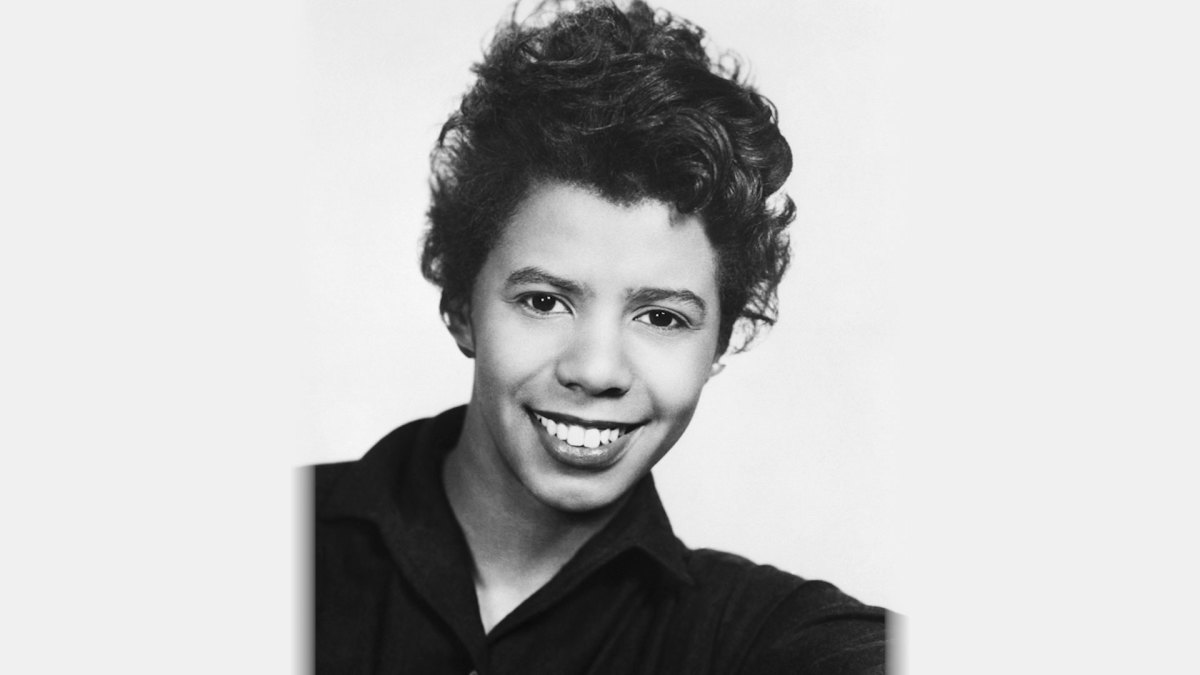
By Lorraine Hansberry

This is another example of a piece of literature that some encounter when in high school or college that this reader is only encountering as a person retired from a corporate job.

This play was remarkable when it was first produced.  Like other plays that reach Broadway, it had “try-outs” in other venues such as Philadelphia or New Haven, CT.  But it was remarkable that the play was even picked up for production at all.  After all, the playwright was a young black woman with no previous history in playwriting.  And the play was about the everyday real experiences of a black family of the current time and all the characters were black except one.  “Why would anyone want to see that” was a question that Phil Rose, the producer, was ready to get past.  Fortunately for us he believed in the play and the playwright and Raisin in the Sun was produced on Broadway, was made into a film (with the original Broadway cast and Lorraine Hansberry’s screenplay), and has been redone on the stage and film and for television as well. 

A discussion of this drama that this reader attended brought up the same question that the original critics had and likely many who watch or read this play consider—-are the themes in this play universal or is it a play about racism.  The working family has been struggling to get ahead and the grown son has not been able to bring home enough money, even with a working wife, to enable moving out of the apartment his parents started renting decades earlier.  A check from the life insurance company following the death of the father could make a difference for the family—but how to use it is the central question the family wrestles with in these scenes.  The son wants to start a business, the daughter wants to go to medical school, the mother wants to buy a home of their own—all things previously unattainable. 

Yes those sorts of situations are fairly universal.  But the drivers for the family’s dilemmas aren’t wholly universal.  Rental prices for housing in all-black neighborhoods have generally been higher than for comparable housing in white neighborhoods basically forever in the US.  The kinds of jobs available for the family members were limited then and perhaps as well now although the specifics have changed somewhat.  Then and now the jobs are often limited to service jobs, especially for those of limited education and other training.  The women in the play were relegated to domestic help and the son was a chauffeur.   Now the jobs remain in minimum wage to low paying jobs in food service and retail.  Then as now, small business loans are difficult to get without any capital. 

A huge aspect of the play is not universal.  The mother has made a down payment on a house in a currently all-white neighborhood.  A “concerned neighbor” visits the family with an offer to buy them out.  At the time, domestic terrorist actions against black families trying to move into a white neighborhood were not uncommon.  What this family will face when they move is unclear but it could be devastating to them.

Interestingly, Hansberry’s family took a case as far as the Supreme Court about a racially restrictive covenant barring blacks from buying or leasing land in a particular neighborhood.  They lost the case.  Although this type of covenant was eventually found unconstitutional, the impact of blacks moving into “white neighborhoods” led to “white flight” and many cities emptying out in the 1960’s and 70’s and beyond.  Integration of neighborhoods remains a charged situation in many cases.  So this aspect of the story is far from universal and cannot be dismissed. 

The world lost this promising playwright when she was only 34, a victim of pancreatic cancer.  Her work lives on, however, and should be read and discussed by young people as well as their parents and grandparents.  Many of the issues raised in the play remain unresolved in our society today and the inability of some to see a major theme of this play being about racism indicates we have much work to do to solve these issues. 

Brave New World—still very relevant

Brave New World

By Aldous Huxley

Published 1932

Read Feb 2021

Unlike many others, this reader didn’t read this book in high school or college but rather this reader’s first reading of this book is as a retired person who spent decades in a life science business.  

The first part of the book was riveting for this reader.  The development and utilization of biochemical and biological techniques to drive different levels of intelligence and to generate multiple copies of the same clone is discussed by the Director to a group of new students.  He then shows them the psychological conditioning techniques being used, some during sleep and some using rather harsh approaches, to influence ways of thinking, preferences, and aversions.  The only possible give-away that this wasn’t written in 2020 is the need to use only red-light on embryos of a certain age as they can’t withstand other types of light—as, the book indicates,  is the case with photographic film. 

We eventually meet Bernard Marx, an A+(levels given grades A through F indicating level of intelligence)  who has helped develop the sleep conditioning techniques.  His intellect is A+ level but he’s shorter than most and some of his thinking isn’t fully aligned with the World State’s policies. His colleagues suggest these defects are due to unplanned exposure to ethanol during this development.  He wishes to date Lenina, a B-level woman.  She’s been exclusively dating someone, which is not within policy, and her roommate has counseled her to stop doing this and adhere to the policy that “we all belong to everyone” and spread herself around a little more.  So she accepts Bernard’s invitation for a date which isn’t entirely satisfactory for either but that doesn’t preclude them from deciding to go on a holiday together.  Interestingly, all the male level A/A+ characters are interested in dating only level B/B+ women…. 

Their holiday to the Savage Land in Arizona and the direction that takes the plot provides a new set of characters and enables the author’s ability to dive deeply into the consideration of the World State’s set of policies regarding fidelity (no need—everyone belongs to everyone), parenthood (no longer considered useful but actually damaging to development of citizens), leisure (the best part of life but only so much time can be spent here so that people don’t think too much), finding bliss through soma, a potent drug readily available (why not?), happiness (it is better to be happy because of lies than be unhappy), literature (no need for it—books banished because they cause people to think too much), aging (no longer relevant—biology has done away with that).  Even the scientific questions considered are limited in the New World order so that the equilibrium of the current society isn’t disrupted. 

Brave New World came out in 1932 when the relevancy of the innovation of Ford’s Model T and Ford’s production line technology was much more apparent than it might be today.  The references to Mr. T and the “sign of the T” will likely become lost on readers less familiar with Henry Ford, his impact on manufacturing, and the Model T.  The “sexual revolution” happened between the book’s publication and today so the concept of sex outside of marriage and outside of any kind of commitment is taken as a matter of course now, a very different situation than when the book was published.  However, today’s society views regarding parenthood and the role of fathers in raising children are very different than when the book was published—-much higher expectations for deep physical and emotional involvement vs only bringing home a paycheck. 

Regardless of the differences in the views on society brought by readers today vs the readers when the book was first published, the questions the book raises regarding engineering people biologically and psychologically remain very relevant and perhaps even more so now.   In-vitro fertilization has certainly become a reality although driven by the parents of the to-be child and not The Director.   However, who owns the un-implanted embryos is a question that remains incompletely settled.   CRISPER technology has the potential for changing a person and has been used to create a set of twins that lack a receptor required for infection by HIV.  The question(s) of whether and how to use this technology is only in its infancy.  Who has the right to decide these questions?  Is it a right of all or in one or few based on their power and authority.. 

Brave New World doesn’t describe the road society travelled to reach the Brave New World state but rather it focuses on the state that’s been created.  This reader anticipates the author chose the Bernard Marx character and his story of wrestling with the Brave New World state and his place in it to provide the reader some hope that we don’t need to take the same course.  However we do need to think about how we decide what path(s) society takes as technologies are created and developed that could alter our course significantly.

This reader applauds high schools and colleges that include this book in their curriculum.  However, this reader also recommends that adults of all ages should read or re-read this book as well since they are the ones in positions of decision making that should be informed by thinking about these critical topics now. 

Alternate Sides—another Quindlen hit

Alternate Side

By Anna Quindlen

Published 2018

Read Feb 2021

Alternate Side is Quindlen’s most recent novel and true to form she gets inside a character and welcomes you to live with her.  This book is set in New York City, on a small dead-end street of three story houses now worth a fortune and occupied generally for over a decade by their current occupants.  Most were bought by couples with hefty means —at least one medical specialist (no GP’s here) or someone in high-end finance etc.  The occupants have come to know each other over the years while walking their dogs, raising their children, attending the annual street barbeque (now catered), and attending the holiday party hosted by one of the families.

Nora Nolan moved to New York about two decades ago and remains totally in love with the city.  She walks to her job as head of development (fund raising) at a Museum of Jewelry and regularly runs through the city as well.  Her husband Charlie was in law but now is in high finance although he is never quite in the inner circle at his firm.  Their twin children are now in college so they have the large house to themselves.  Charlie would like to move somewhere warm – likely also to have a fresh start at a job—but Nora has no intention of leaving her beloved city.

The book is populated with their neighbors on the street, the people who work for them, and  some of Nora’s other friends and family.  Their housekeeper/nanny, Charity, has been with them since the children were very small.  Ricky is the local handyman everyone on the block uses to fixes whatever needs it. This reader kept confusing several of Nora’s friends, likely because this reader never became invested in them and they weren’t particularly distinguishable to this reader.  The male neighbors were more memorable.  George is the self-appointed leader of sorts of the block who posts memos regarding pest control, the neighborhood BBQ, and who has taken charge of managing the vacant lot on the block that serves as a parking lot for the special few.  Jack is a perpetually angry about anything that hinders his access in or out of said parking lot.

An event occurs that accelerates some major shifts in the neighborhood, shifts that perhaps were already occurring as the various neighbors mature in middle age and beyond.

While this reader related extensively to the protagonist in Miller’s Creek,connection with this protagonist was more difficult for this reader.  This is quite likely because this reader is not in love with New York City and is always delighted to be leaving it, even though the reasons for visits are always quite satisfying.  The income level required to maintain the type of lifestyle the characters lead is also in a different stratosphere than that of this reader so the problems they encounter are less familiar.  The daughter chastises the mother humorously for use of the term “first world problem” as it’s now out of fashion, according to her, but its use was quite appropriate.

Although this reader didn’t relate strongly to the particular environment of the protagonist, Quindlen again does a great job of enabling the reader to grasp her feelings, especially in the later part of the book as her life begins to change dramatically.  The reflections on her life that the protagonist shares are quite revealing and genuine and did grab the reader in the way Quindlen’s books always have.

This reader will certainly read the next novel Quindlen publishes and hopes it is soon.