Blog

The Women–a story of Vietnam that needs reading

The Women

By Kristin Hannah

Published 2024

Read May 2024

It’s mid-1960’s and before the Coronado Island-San Diego bridge was built.  The book opens during the going-away party for the older brother and only sibling of Francis (Frankie) McGrath.  He’s graduated from Annapolis and is headed to Vietnam on a ship.  Frankie’s parents have made clear to her that their plan for her is to marry well, consistent with their stature in society.  Frankie’s dad never served in the military but has a wall of fame for those in the family who have.  The wall includes wedding pictures for the women.  Frankie has another idea, prompted by a comment by a friend of her brother at this party—women can be heroes too.  She has completed a nursing course and enlists in the army to be a nurse in Vietnam—the only military service that will ship nurses to Vietnam with no military experience.  Her brother is killed just before she leaves for Vietnam and her parents are both devastated by this loss and furious at her for enlisting.

We witness Frankie’s “trial by fire” as she’s dropped into a hospital dealing with all the Vietnam trauma we’ve heard about.  Hannah’s writing engages the reader rapidly and completely and we are quickly cheering for her and her sister nurses.  She’s smart and committed and manages to become a competent nurse that the doctors rely on—and hit on and might abuse if out at night alone.  She deflects potential relationships with married or engaged men even when she is in love with them. Things get even tougher for her when she is transferred to a unit essentially at the front. 

But the toughest challenges Frankie faces happen when her term is complete, and she returns home to a country that is routinely spitting at returning soldiers.  She learns her parents have lied to others, indicating she’s been travelling in Europe, not trying to keep soldiers alive in Vietnam.  The veteran support services don’t recognize that women were in Vietnam at all, so she has no legitimate claim to their services.  Her parents expect her to resume her role in their pre-conceived story for her and don’t even want to hear anything about her time in Vietnam.  Our hearts break as Frankie’s does. It’s not surprising this book became a best seller.  The author’s writing drives you to turn the pages; the protagonist is engaging and suffers mightily and believably state-side. The medical scenes, the relaxation scenes, the state-side scenes are all believable.  We want Frankie to find something to pull her through the transition that allows her to make a new life for herself. As an aside–this reader wondered how Frankie would have fared if she didn’t have parents who financially supported her during her darkest days, but it still worked.  Overall, the story is perfect for a movie or a streaming service series or both!  If the popularity of the book, movie, series, etc help highlight the little credit given women for the critical roles they have played in war throughout history it’s all good. 

Tell Me All About It–More Stories and More from Elizabeth Strout

Tell Me Everything     

By Elizabeth Strout

Published 2024

Read Oct 2024

Since the publication of Olive Kitteridge, this reader has read all of Elizabeth’s Strout previously published books and now often reads her newest book as soon as her place in line at the library allows.  For this book, an audio version was the first available and this reader devoured it.  The audiobook reader was great, especially when Olive Kitteridge is speaking.

Yes, Olive Kitteridge is in this book along with all of the (still living) major characters from many of the pre-Olive books, Amy and Isabelle and The Burgess Boys, as well as the Lucy Barton books, My Name is Lucy Barton, Anything is Possible, Oh William, and Lucy by the Sea as well as some of the minor ones in those books.  It’s not necessary to have read these previous books as the authors gives us sufficient background for the purposes of this book, but this reader’s experience was likely deepened having read them before this book. 

Much of this book focuses on conversations between various characters as they tell stories to each other, generally about other people and occasionally about themselves.  One such pair is Lucy Barton and Olive Kitteridge.  Lucy Barton is a successfully published author of memoirs who is now living in the Crosby, ME area with her ex-husband, William.  Lucy by the Sea told of their move there to escape the COVID-19 pandemic.  Lucy and Olive become acquainted when Olive asks Bob Burgess to have Lucy visit her so Olive can tell Lucy a story.  Lucy visits Olive at the senior living facility in which Olive, now 90, resides.  Lucy and Olive meet with some frequency to tell each other stories of “unrecorded lives”.  At one point Lucy is concerned about the purpose of the life of one of her friends who was the topic of Lucy’s story.  Olive was not impressed that Lucy asked about the purpose of a life, and when asked by Lucy for Olive’s view, Olive tells her she and her husband shared the view that the purpose of life was to work hard and help people.  This is one example of how the stories about people, which is a frequent part of most of Strout’s books, sometimes goes beyond just the story in this book into something deeper that the pair finds themselves discussing. 

This book has a focus on Bob Burgess, who was first introduced in The Burgess Boys and who reappears in Lucy by the Sea.   He takes on a murder case that is eventually resolved, he helps his brother, Jim, deal with his son, he helps his ex-wife deal with her alcoholism, he consoles his wife as she deals with her position as minister at a local church, and he walks and talks with Lucy Barton, something they started in Lucy by the Sea. Their regular walks cover a wide variety of topics and sometimes get quite philosophical.  Their walks are very important parts of both Lucy and Bob’s lives.  It becomes evident that Bob Burgess is an extraordinary person although he doesn’t realize it.  He does things for people that truly make a difference in their lives, and he makes hard decisions that impact his own life just because it’s in his nature to do what he knows should be done.

This reader became aware of an article in the Oprah Daily about the book which had this information:  “At the end of Oprah’s 107th Book Club pick, Tell Me Everything, by Elizabeth Strout, a character references an article called “Love Is Love” that helped her understand that “love comes in so many different forms, but it is always love. If it is love, then it is love.”  The article publishes this article, which was originally published by Strout in German.  It’s worth a read. It turns out there are many fine examples of love in Tell Me Everything which is definitely worth a read.   

A Thousand Ships–a view of post-Trojan Wars

A Thousand Ships

By Natalie Haynes

Published 2019

Read April 2022; May 2024

Natalie Haynes has been a stand-up comic, a print, radio, and TV journalist, and has published several non-fiction and fiction books.  She studied The Classics at Cambridge and has spent much of her career enabling the public to engage with and enjoy the classics. 

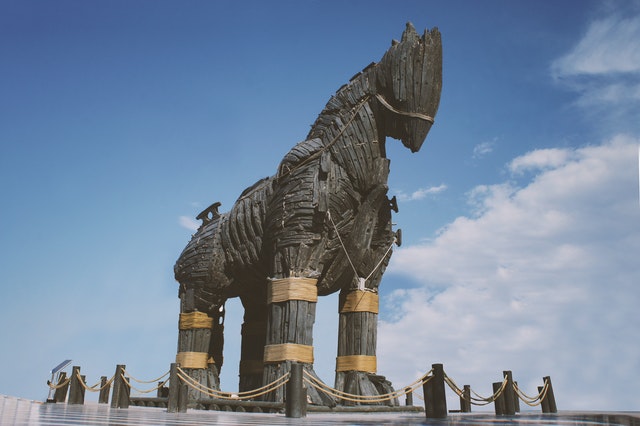
In this book she tells tales about the Trojan Wars—through the perspectives of the women involved.  This reader was quite enchanted by this book.  When unfamiliar with a particular god, goddess, or story, this reader consulted Wikipedia to get a little background which enabled great appreciation for Haynes’ witty and often cutting take on the story. 

Thank you, Natalie Haynes, for breathing life into these stories and inducing me to learn more about them.

Tom Lake—another Patchett great

Tom Lake

By Ann Patchett

Published 2023

Read July 2024

This reader has read many, but not all, of Ann Patchett’s books including her essay collection, These Precious Days. Once again, this reader is impressed with Patchett’s ability to weave a story unlike any of her previous stories.

This story is set in the spring of 2020 during the early part of the COVID-19 pandemic when avoiding others was the primary source of prevention.  Lara’s three daughters in their twenties are back on the family fruit farm near Traverse City Michigan as a result of this state of the world:  Emily, the oldest and who lives on the property, works with her father, and fully intends to continue the family farm for another generation; Maisie, a vet student who is helping neighbors with their animal problems in a social distancing way; Nell, a theater student who desperately wants to be an actress and fears this pandemic is taking away precious years from her career.   The usual crews who helped the Nelsons pick their sweet cherries are mostly not working this year because of the pandemic so it’s up to Lara and the three daughters to pick the sweet cherries which require hand picking. While they pick, they pry from their mother her story of a summer at Tom Lake, a nearby summer stock theater, where she played Emily in Our Town and had a steamy summer romance with Peter Duke who is now a famous TV and movie actor.

Patchett moves between Lara’s narration of her story and the present day to day goings on at the farm.  Patchett opens the book when Lara (then Laura) was in high school and was roped by her grandmother into registering people for auditions for her New Hampshire town’s production of Our Town.  Lara decides to audition and wins the part of Emily.  She’s uncertain about what to do with her life so attends a state university and ends up getting the part of Emily again for her college’s production of the play.  She acknowledges she has a very lucky break when the uncle of another cast member attends a performance and decides she’s perfect for a part in a movie he’s producing in Hollywood. After the movie is completed and she’s done a few commercials, it’s suggested she takes advantage of another lucky break—the actress playing Emily in a summer stock theater (Tom Lake) has abruptly left and a replacement is desperately needed. 

The structure of the book is pleasant.  The reader gets some feel for the large amount of human labor involved in raising cherries near the Lake Michigan shoreline of Michigan, gets a look at Lara’s family, and gets a glimpse of summer stock life and Lara’s steamy romance.   Some critics have complained there isn’t much that happens in this book.  Well, this book is about life and most lives don’t have lots of extraordinary events in them, but most lives do require decisions to be made now and then that influence the course of that usually ordinary life.  That’s mostly what we get in this book although Lara acknowledges the lucky breaks she had and one unlucky break she had that helped her decide a course that she clearly doesn’t regret. 

Lots of themes in this book despite the lack of any major calamity:  family, friendship, love, loyalty, honor, ambition, regret, personal bravery, loneliness/connectedness.  We see a couple of actors/actresses trying to make it in their dreadfully challenging career path and we wonder if Nell will be able to make it. The COVID pandemic provided a device for the structure of the book and fortunately doesn’t otherwise get in the way.  It’s possible its use will “date” this book more than others she’s written.  But it’s really the multiple interesting characters we get to know in depth or at least a bit that make this book the joy that it is to read.  As usual this reader looks forward to more from Ann Patchett. 

These Precious Days

These Precious Days

By Ann Patchett

Published 2021

Read Jan 2023

This is the first non-fiction book of Anne Patchett’s read by this reader.  It’s a series of essays about people she knows/knew, most of whom she loves/loved.  The author is honest about her age-57 at the time of writing- about her decision to not have children, and her lack of flinching when another writer told her a writer can’t be good unless they’ve had children.  After helping a friend clear out her father’s home of many decades, Patchett decides to start clearing out her own—she’s reached the age of disposition after having passed the phase of acquisition.  She poses the project to her husband as “pretend we’re moving” when she’s really approaching this as she prepares to die—not now hopefully but inevitably.  Interestingly she reveals she always worries she’ll die before finishing whichever book she’s in the process of writing.  Mortality is definitely something that’s often on her mind.  Maybe that’s why she’s so good at writing about people and having them feel very real. 

A good part of the book is about writing and publishing books—what to ask for from your publisher etc.  That part was somewhat interesting to this reader.  A large section is devoted to her relationship with Tom Hank’s assistant whom Patchett invited to stay with her during her chemotherapy during the Covid pandemic shutdown.  Although this essay apparently went viral when it was published in Harper’s, this reader didn’t find it among the most engaging but it certainly told much about Patchett’s willingness to meet new people and invite them to stay in her home, even if she wasn’t going to be there.  A sort of amiable way of interacting with multiple stories not her own.

A very important aspect of this book was that it left this reader with the desire to write down some of her own stories, whether anyone else would read them or not.  Writing is what makes the content real and subject to review by the author—is this the intended message or not.

This reader will likely read more of Patchett’s essays as her writing can be so engaging and often witty regardless of the topic. 

Caste by Isabel Wilkerson

Caste

By Isabella Wilkerson

Published 2020

Read Jan 2023

This reader devoured Wilkerson’s “The Warmth of Other Suns” before this website was started.  Wilkerson was a journalist working for the New York Times when she wrote it and her use of stories of three real people who participated in the Great Migration of blacks from the south to the rest of the county was remarkable and effective.

This reader began reading Caste shortly after it was published.  The first section of the book was somewhat confusing to this reader and led her to put the book down for awhile.  When the book was selected for this reader’s book group, this reader restarted the book and was once again awed by Wilkerson’s ability to teach with stories, many of which told of her own experiences.  Wilkerson proposes that a caste system was developed in this country, starting with the earliest settlers who used white and black indentured people to serve their masters and enable their wealth.  Elites, poor whites, then blacks making up the coarsest caste levels which still exist more that we’d like to believe despite the changes in laws that make all citizens with, supposedly, voting rights.

Wilkinson compares and contrasts the various caste systems—India, Nazi Germany, the US.  It was difficult for this reader to learn that Nazi Germany looked to the US for guidance for their own caste system and thought that the US’s version was more draconian than they were comfortable invoking. While there have been a variety of reactions to this book—her “solution” too utopian; her analysis right on or not deep enough, ect—it is a book well worth reading.  It will invoke new ways of thinking about the societal problem that still exists and is likely growing as new “non-white” immigrants continue to flock to the US and its stated ideals.   

A Land Remembered—Family saga and Florida history

A Land Remembered

By Patrick Smith

Published 1984

Read Feb 2023

A friend of this reader lent her a hard copy of this book.  When it became known that an audiobook was available, read by George Guidall, a favorite reader of this reader, the hard copy went back and the audiobook went on. 

This reader now lives in southwest Florida where new residents are flocking at a high rate.  Thus, this saga of three generations of MacIveys from 1858 to 1968 was particularly interesting.  During this period Florida began transforming from a wild frontier to a developer’s dream as people began vacationing in and moving to Florida’s east coast in droves.

Tobias MacIvey and his wife and infant son migrate from Georgia to the east side of Florida.  There they scratch out a meager existence.  Eventually Tobias learns to capture wild cattle, fatten them for market, and make a treacherous trip to Punta Rassa on the west coast where they sell the cattle which are then shipped to Cuba.  There is a full cast of interesting characters with whom the family interacts over time.  Much of the story focuses on Tobias’s family and their challenges living in the wilderness of Florida. 

Over time the wide open spaces across which they drive their cattle become purchased by various people and fences start going up.  Tobias buys some of this land as well.  Thus begins the family’s foray into property ownership and the transformation of Florida from a wilderness to a “settled” state in which developers buy and sell property and literally transform the geography of the state.

This book will appeal to those interested in the history of Florida, to those who are interested in family sagas, and to those who just plain enjoy good writing and a good story.  As this reader fits all of these categories,  this was a pleasurable and educational experience. 

The book was published by Pineapple Press, a niche publishing company that specializes in books about Florida in some way—non-fiction and fiction alike. 

Clare Keegan’s Brilliance

By Claire Keegan

Walk the Blue Fields Published 2007 Read Aug 2023

Foster  Published 2010 Read June 2023

Small Things Like These Published 2021 Read June 2023

This reader discovered Claire Keegan by a well-trod route for this reader:  her book club. 

The author is an amazingly gifted who can tell a profound story in a few pages.  Each novella or story has left this reader sitting back to say “Wow” as the author provides so much punch in so few words.   So much told in a few pages and simultaneously so much left unsaid but known. 

Foster and Small Things Like These were the first works read by this reader and the focus of the book group.  Both were published as novellas. Walk the Blue Fields is a book of short stories this reader chose to share with a “book buddy” while driving about a thousand miles on a trip. 

Foster paints the story of a girl sent to live with a distant relative for a few months while her mother is giving birth to yet another baby.  We engage quickly with the girl and worry with her as she adjusts to living with her aunt and uncle.  We are thrilled as the three settle into a warm pseudo family unit for a brief few weeks and we are shattered with them when the girl’s father returns to retrieve her.

In Small Things Like These we walk with the protagonist and listen to his thoughts as he interacts with his family, employees, and customers on two days—Christmas Eve and Christmas Day.  We learn with him a secret from his past which, coupled with his already firm appreciation of his mother’s employer’s treatment of him, drives him to make a life-changing decision.  Two days and 128 pages packs a powerful punch for the protagonist and the reader. 

Walk the Blue Fields gives the reader seven stories that are often melancholic, sometimes about people who have lived through or are living through extremely difficult situations, and which are always rich and memorable.  My book buddy was about to cry “uncle” — enough sad stories when we listened to the last one.  Sad yes, absurd yes, and hysterical at the same time.  We both agreed we’d likely read more of this author. 

Claire Keegan is an Irish author whose work has won a number of awards.  She was inducted into Aosdana in 2008 (an Irish association or academy of artists, each of whom must have produced a distinguished body of work of genuine originality; membership is limited to 250)(1). 

The 3 Body Problem

The 3 Body Problem

By Cixin Liu

Translated by Ken Liu

Published 2008 (Chinese)

Published 2014 (English Translation)

Read Feb 2024

Netflix series season one launched and viewed March 2024

This reader’s son recommended this book.  He had completed Liu’s trilogy, Remembrance of Earth’s Past, and thought this reader would find this book interesting.  He was right.  As a trip to see our son was imminent, this reader and her husband viewed the very recently released Netflix series based on Liu’s trilogy.  This essay will discuss both the book and the first season of the Netflix series. 

The setting of the book and series moves between the present and the era of the Cultural Revolution in China.  

The book’s first chapter and the opening scene of the Netflix series introduces us to a primary character, Ye Wenjie, as she watches her father, Ye Zhetai, a professor of physics, beaten to death by high school girls as part of a public demonstration as the Cultural Revolution worked to wipe out “Monsters and Demons”.  Ye Wenjie’s mother, Shao Lin, another physicist, publicly denounces her husband as counterrevolutionary at that demonstration because he is teaching about the theory of relativity in his classes.  This reader was surprised this scene would be at the beginning of a book originally published in China and it turns out that it wasn’t.  The translator, Ken Liu, suggested to the author that this chapter be moved from the middle of the novel to the beginning.  The author readily agreed as he originally intended this chapter to be at the beginning of the novel, but the chapter was moved to the interior of the novel to avoid issues with the government.

The reader or viewer next encounters Ye Wenjie as a member of a work crew that is clear cutting a forest near a government facility with an unusual antenna.  After she is discovered with the book Silent Spring by Rachel Carson in her possession, she is arrested and given the opportunity to go to work at that government station with the likelihood of never leaving it, or to suffer other unnamed consequences.  She goes to work at the facility, known as Red Coast Base.  She eventually learns that the base is seeking to interact with other worlds through its sophisticated antenna.   Ye Wenjie’s contributions as an astrophysicist aid the work and take it in a direction that is not fully known by her superiors.

In present times, a police detective is engaged to discover what is leading famous scientists around the world to commit suicide.  The book’s setting is present day China, and a nanomaterials scientist is the main character involved with the detective to understand the situation.  The Netflix series sets the modern-day story in and around London and uses five friends who were students together in physics at Oxford to drive the story.  At first this reader was somewhat dismayed by this but later decided it was a good move—this approach will engage a broader audience than the much more “hard-core science fiction” novel. 

In both the novel and the series, an ultra-realistic “videogame” is “played” by various scientists.  In the novel, the author spends much time on the details of what the nanomaterials scientist encounters in the story each time he plays the videogame and what he is learning.  In the Netflix series, there is less time spent on the content of the game aside from comments on the vividness of the setting and adds a young girl to the videogame story that again is designed to engage a broad audience. 

This reader greatly enjoyed the “hard core science fiction” aspect of the novel.  Details of the technologies being described and the math behind the 3-body problem were quite engaging.  The details of the forty million strong human “computer” were especially fascinating.  The Netflix series adaptation touches on some of these interesting technologies but not deeply and focuses more on the human relationships very appropriate for engaging an audience well outside of, but including, the “hard core science fiction” audience. 

Both the novel and the series force us to question a prevailing attitude — that if there is life out there somewhere beyond Earth, we should engage with them because we will learn from them and be better for it.  We’ve certainly been shaped to believe this by the frankly short Star Trek series of the sixties and the various series it spawned as well as by some science fiction.  This novel blatantly challenges us to consider the opposite. 

This first book of a trilogy ends on a somber note.  The Netflix series extends beyond the first book into later parts of the series which again will engage the audience to watch to the end of the first season and look forward to more of it.  This reader applauds this approach as the questions posed are important ones. 

A bit on the history of the novel: 

The author was born in Beijing, China in 1963.  He is described as a computer scientist and author.  This book is the first part of a trilogy, Remembrance of Earth’s Past.   This novel is the recipient of the Hugo Award for best novel (2015), the first time a Chinese author has won this award and the first time a translation has won the award. A China based publishing company approached Ken Lui and Joel Martinsen to translate the three books in the series.  Ken Lui translated books 1 and 3 while Martinsen translated book 2.  Ken Lui was born in China but came to the US with his parents in 1987 at age 11.  He received a BA in English Literature and Computer Science from Harvard, worked as a computer scientist for Microsoft, obtained a JD from Harvard Law School (2004) and worked as a high-tech litigation consultant.  He began publishing science fiction in 2002.  His work has been highly decorated with various awards and has been translated into Chinese.  He has translated the work of several Chinese science fiction writers from Chinese into English which has enabled a broader audience of Chinese science fiction.  Joel Martinsen is a free-lance translator who has much experience translating Chinese works into English. 

Golden Hill: A Novel of Old New York

Golden Hill:  A Novel of Old New York

By Francis Spufford

Published 2016

Read Feb 2024

Like many books with which this reader engages as a result of her book clubs, this is one this reader never would have known about, considered, read, or had the delight to read.  That’s a reason for book clubs!  To read things that we wouldn’t otherwise and to discuss with a group of people interested in delving into the whats, whys and wherefores of a book and its author.  

Francis Spufford’s first foray into fiction is an interesting one. BBC Radio’s blurb includes this statement:  “The best eighteenth-century novel since the eighteenth century.”  Fortunately we’re spared the spelling approach used in 1746 except for a letter by the protagonist to his father.  But what we are treated with is a rollicking novel with adventure, mystery, romance, a duel, and a little sex.  There is a wonderful twist at the end regarding the source of the story but certainly don’t read it early.    

Richard Smith arrives in New York City in November 1746, a full three decades before the Revolution.  New York City is an unimaginably small town at that time, population about 7000, with chickens and cows grazing in the countryside which is remarkably close to the downtown section.  Richard Smith is a young man who immediately upon his arrival presents to the counting house a bill for a thousand pounds from one Barnaby Banyard of London.  Smith requests cash for the bill which the counting house cannot provide—-it seems that much cash is not to be found anywhere in New York City.  Smith is willing to wait 60 days for the money so that another ship’s letter can confirm the bill’s validity.  Smith’s adventures start the very next morning when his purse, containing the cash he did obtain from the county house and the bill, is stolen and he now must figure out ways to feed and house himself for the next sixty days. 

The story takes place between November 1, 1746, and Dec 25, 1746 and it’s packed with the many adventures of Smith and his various encounters with the people of the town—the counting house owners and his daughters, lawyers, the Governor and his Secretary, persons celebrating Pope’s day in the streets, and many more.  Since New York is so small, everyone in town is aware of his presence and his activities and all are interested in his business and source of funds, but no one learns them until the very end of the book.

This is the type of historical fiction this reader enjoys:  1) fictional characters and their story with the backdrop of a real place and time that are drawn with wonderful accuracy. 2) A story that interacts with real people of the time doing realistic but fictional things. 3) A story that doesn’t imagine the feelings of real figures of the time.  In this historical fiction novel, we learn much about the city itself, the type of people that populate it, and its culture.  We learn about the competing churches and their members, “Pope Day”, the celebration of His Majesty’s Birthday, Sinterklaasavond (St Nicholas’ Eve), how Christmas Day was and wasn’t celebrated by various (all Christian) churches, and more.  We learn that the slave trade is a well-established and significant component of the economy of the time—nearly thirty years after 1619, and that most of the upper class have one or more house slaves, and how they treat them.  While the author keeps us nicely focused on the many events happening to Richard Smith through a mere sixty days, we can’t help getting a sense of the racism and sexism that was well engrained in the culture and a chance to wonder at how much or little progress we’ve made in the intervening 270 years between the story’s setting in 1746 and the book’s publication in 2016.

While this reader had to work a bit at getting started with this book, once fully engaged she was quite gripped by the story, the characters, and the picture of Old New York the book provides.  The final chapter—don’t read it until the end!—was a marvelous ending for the book.  It both provides some small sense of “what happened next” and a somewhere jarring but welcome call to the rest of what the author might have hoped we would learn about the real history of our country. 

There is a interesting YouTube video at :  https://www.youtube.com/watch?v=NhPXz5eHmIM called Golden Hill:  Francis Spufford shows us 18th Century New York that’s well worth its 2min 8 second run. 

The painting in the image shows the town in 1653.  The painter and its source:  By Johannes Vingboons – Geheugen van Nederland (Memory of The Netherlands), Selections from the Map Collections http://international.loc.gov/cgi-bin/query/r?intldl/awkbbib:@field(DOCID+@lit(awkb012367)), Public Domain, https://commons.wikimedia.org/w/index.php?curid=238390