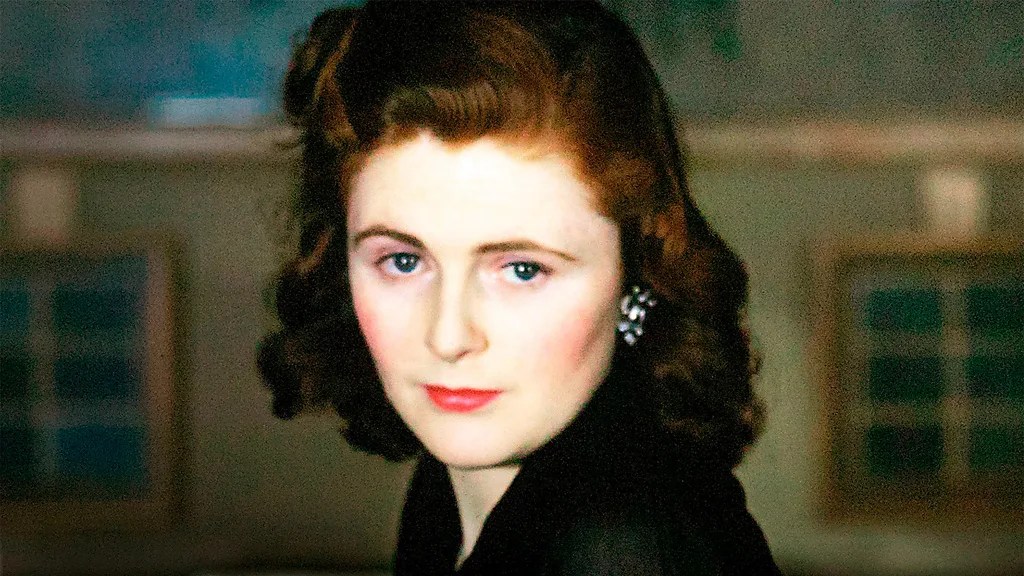
Kingmaker
By Sonia Purnell
Published 2024
Read Dec 2024
This book is a literally large biography—the large print edition this reader enjoyed had 624 pages of content and 112 pages of acknowledgements, notes, bibliography, and index. This reader certainly enjoyed the intent of this author to give us a full picture of Pamela Beryl Digby Churchill Hayward Harriman, a clearly important figure in world history with whom I was totally unfamiliar.
Purnell tells the story in three parts plus a prologue: Act One: War; Act Two: Peace; Act Three: Power. Details follow below. But first, some major take aways:
- Pamela wants to have a meaningful role in life.
This was not simple given the time in which she lived and the very narrow set of roles for women in general and aristocratic women in particular. However, she was successful in accomplishing this goal and had a major impact on the US role in WWII, on the US Democratic Party in the 1980’s, and was appointed Ambassador to France in 1983 when she again played significant roles in war and trade
- Pamela was willing to do what had to be done.
She participated in Churchill-condoned “pillow-talk diplomacy” to help her country during WWI.
She used her alluring capabilities to attract wealthy men who could provide her financial support
But she was also willing to “roll up her sleeves” and be in action to get the Democrats back on their feet in the 1980’s and as Ambassador to France.
- She was a good wife
She dealt with Randoph Churchill’s debts when he wouldn’t
She nursed husbands Leland Hayward and Averill Harriman through their illnesses until death parted them. In Hayward’s case she spent her own fortune to take care of him.
- She made some big mistakes
She chose the wrong biographer to write her story and overspent to get out of the contract with him. However, he published a very unflattering unauthorized biography of her anyway.
She made some poor financial decisions, especially in dealing with Averill’s money managers who nearly lost her the Harriman fortune completely
- She was both generous and hurtful
She transferred substantial wealth to her son Winston and his family despite his publicly critical comments about her. Certainly, he didn’t have a cheerful childhood; motherhood was not Pamela’s primary focus.
She left nothing in her Will to her long-time and very loyal assistant, Janet.
In summary, she was an extraordinarily successful women for her time and education. Her sexual prowess would be heralded were she a man but as a woman this was an out of bounds approach to life. However, those she loved also loved her and benefited from her support and loyalty.
This biography is appropriately long as there is much to say about this remarkable woman. The author has done substantial research to provide a thorough look at her life and provides extensive references and a large bibliography. She doesn’t whitewash her subject’s actions, but she also provides a broader context for them as well as the eventual outcome. This reader recommends reading this book to understand the substantial impact she had. This reader wishes we had some similarly dynamic leaders today that were as focused as she was on leaving the world a better place.
Some highlights of the contents:
Act1, War, covers her life from birth to the end of WWII: 1920-1945.
Highlights of this period:
- She receives only limited education—she’s a girl who should be focused on obtaining a marriage partner
- She is presented to the king and queen but “fails” the season as she receives no marriage proposals
- She meets Randolph Churchill, the only son of Winston Churchill, and marries him two weeks later despite being counseled otherwise. Although the marriage itself is a disaster, she does bear Winston a grandson and she is embraced by Winston and his wife.
- She participates in Churchill-condoned “pillow-talk” diplomacy which eventually results in the USA joining the WWII war effort with troops as well as equipment.
- Among her liaisons are Averill Harriman and Edward Murrow, both of which she loves and who love her, but their current marriages preclude marriage with Pamela.
- She divorces Rudloph
Act 2, Peace covers her life from 1945-1971.
Highlights of this period:
- She experiences post-war effort let-down common among many women highly engaged in the war-effort as they are expected to return to the expected roles of wife and mother.
- She manages to find a series of wealthy lovers who support her and enable her to be a woman of independent wealth, in particular:
- Eli de Rothscheld
- Gianni Agnelli—heir to the Fiat wealth. Pamela grooms him for success in global business despite his Italian heritage. Pamela hopes to marry him and even converts to Catholicism but they part as friends as they both know their marriage would not work
- Leland Haywood—theater and Hollywood producer. He eventually divorces his wife, and they marry. Most of her wealth is consumed in taking care of him while he is sick. He dies and leaves her with debts.
Act 3, Power, covers 1971-1997.
Highlights of this period:
- Averill Harriman’s wife dies, and he and Pamela marry. Her money problems are over due to his substantial wealth (a sizable fraction of which is moved to son Winston and his family)
- She becomes a US citizen in 1971.
- Averill and Pamela become a very engaged political couple. As Averill’s health fades (he is 30 years older than Pamela), Pamela becomes the primary draw
- After Regan is elected, she starts a PAC: Democrats for the 80’s. She demonstrates substantial leadership in getting in place a strategy for the party to return to power. Her Issues Evenings bring in a lot of money, provide a forum for strategy discussions, and provide a platform for potential candidates for office to strut their stuff.
- 1982 the Democrats gain 26 seats in Congress
- 1984 the PAC’s actions positively impact the Senate
- Averill dies in 1985, his primary regret is not marrying Pamela earlier, and he leaves her a wealthy widow. His picks for managing the wealth, Clifford Clarke and Lloyd Cutler, turn out to be mistakes.
- She is sought after by foreign leaders when they are in DC. Thatcher and Gorbachev are among those valuing interaction with her
- She supports Clinton’s candidacy for President which is successful.
- 1993 Clinton appoints her Ambassador to France.
- She proves to be a tireless worker taking on many actions and details that other ambassadors wouldn’t/didn’t.
- Her efforts enable much improved relationships between France and the US. Her role in major diplomatic matters is acknowledged by Jacques Chirac and Bill Clinton
- GATT negotiations make headway
- US involvement in the Bosnian war is initiated which eventually brings an end to the war
- Jacques Chirac awards her the Grand croix of the Legion d’Honneur on her death.
Quite a life!
 MarshaReads.com